


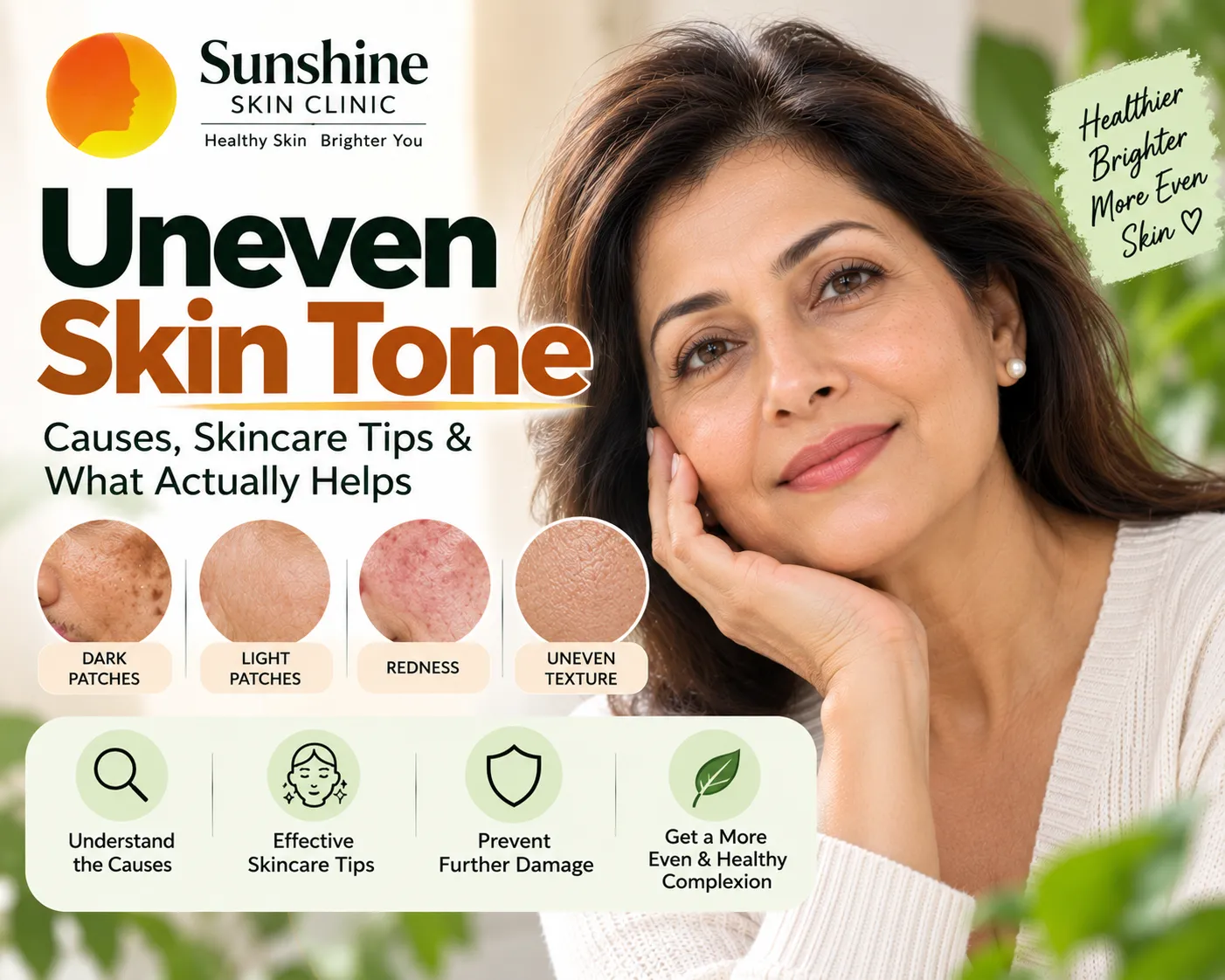
Have you ever noticed that your cheeks look darker than your forehead, your complexion appears uneven after acne, or certain areas of your skin look lighter or redder than the surrounding skin?
These changes can be frustrating, especially when your skincare routine does not seem to make much difference.
However, uneven skin tone is not a single skin condition. It is a broad description of differences in the colour or appearance of the skin. Some people develop darker patches because of excess pigment, while others experience redness, lighter patches, post-acne marks, or changes related to dryness and irritation.
This distinction matters because treatments that help one type of discoloration may not be suitable for another.
For example, a brown mark left after acne is different from melasma. A pale patch may require an entirely different evaluation from a dark spot, and persistent redness may not be a pigmentation problem at all.
The most useful approach is to understand what your skin is showing you before choosing a treatment.
This guide explores eight practical ideas that can help you understand uneven skin tone, recognise common patterns, avoid skincare mistakes, and know when professional assessment may be necessary.
What Is Uneven Skin Tone?
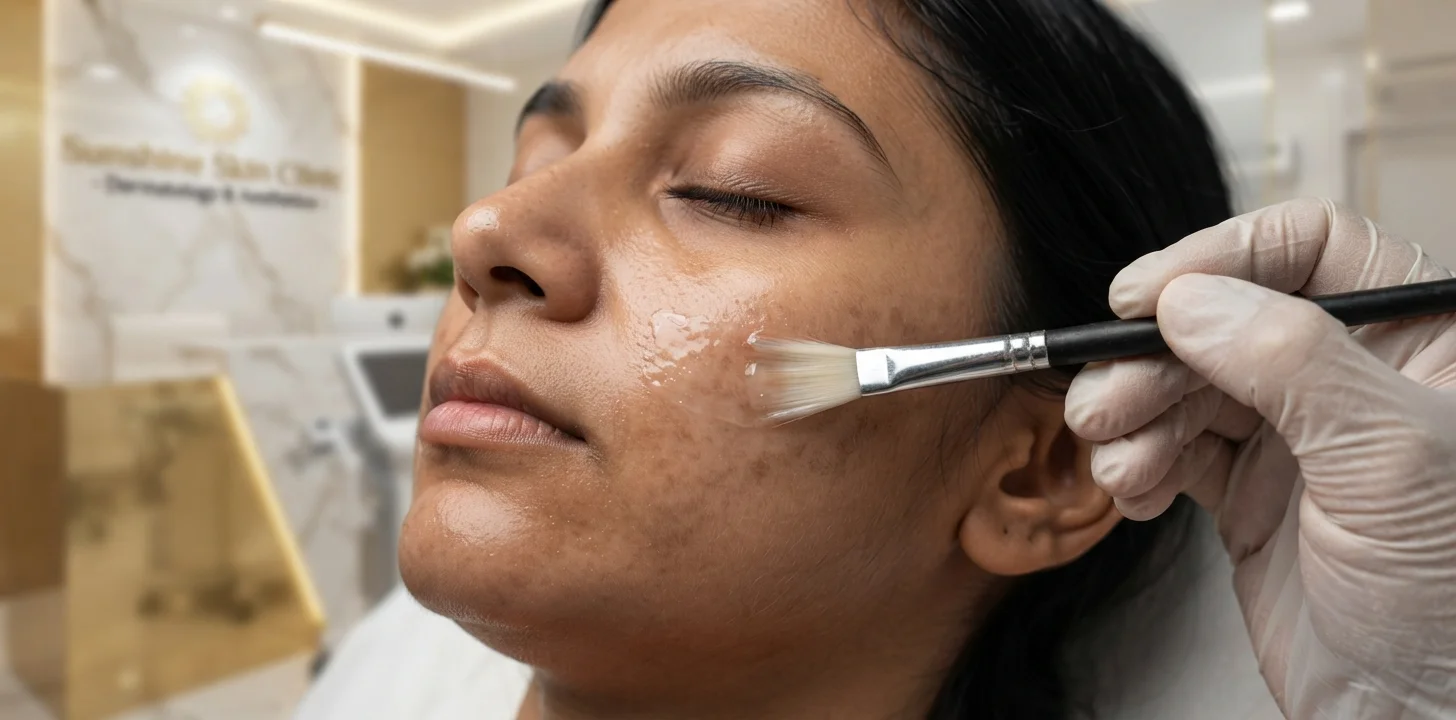
Uneven skin tone describes a complexion in which different areas of the skin have noticeably different colours or appearances.
You may notice:
- Brown or darker patches
- Marks remaining after acne
- Pigmentation on the cheeks or forehead
- Red or irritated areas
- Lighter patches
- Uneven colour between the face and neck
- Sun-related spots
- Areas that appear rough, dry, or dull
Some of these concerns involve changes in melanin, the pigment responsible for much of our natural skin colour. Others may involve blood vessels, inflammation, infections, or conditions that reduce pigmentation.
According to MedlinePlus, patchy skin colour can have several causes, including changes in melanin, vascular changes, inflammation, certain infections, and other skin conditions.
The key point is that a more even-looking complexion begins with identifying the reason for the difference in colour.
8 Important Ideas to Understand About Uneven Skin Tone
1. Uneven Skin Tone Is a Description, Not a Diagnosis
The first mistake people make is assuming that every difference in skin colour is caused by excess pigmentation.
In reality, uneven skin tone can occur for several reasons.
Hyperpigmentation
Hyperpigmentation refers to areas that look darker because of increased or uneven pigment. It can appear after acne, inflammation, skin injury, sun exposure, or in conditions such as melasma.
Hypopigmentation
Hypopigmentation refers to areas with reduced pigmentation. These areas may appear lighter than the surrounding skin.
Possible causes include certain inflammatory skin conditions, infections, injuries, and disorders affecting pigment production. Vitiligo is one example of a condition that can cause distinct lighter patches.
Redness and inflammation
Red or pink areas may result from inflammation, irritation, or changes involving small blood vessels. They should not automatically be treated with a dark-spot product.
Texture-related differences
Dryness, roughness, and changes in the skin surface can also affect how uniform the complexion appears, even when the main issue is not pigmentation.
Why does this matter?
Because a product designed to fade dark spots will not necessarily correct lighter patches, redness, or a fungal skin condition.
Before starting a treatment, determine whether the primary concern involves darker pigment, reduced pigment, redness, texture, or a combination of these factors.
2. The Pattern and Location of Discoloration Can Provide Useful Clues
The location of uneven skin tone often provides useful information about possible contributing factors.
It does not establish a diagnosis on its own, but it can help guide an appropriate examination.
Dark marks where acne previously occurred
Flat brown or darker marks in areas affected by previous pimples may represent post-inflammatory hyperpigmentation (PIH).
This happens when inflammation triggers excess pigment production or changes how pigment is deposited in the skin.
Patches on both cheeks or across the forehead
A relatively symmetrical pattern of brown or grey-brown facial patches may suggest melasma, although other conditions can resemble it.
Melasma is influenced by factors such as sunlight, hormonal changes, and individual susceptibility.
Discoloration on sun-exposed areas
Uneven pigmentation on the face, hands, and other frequently exposed areas may be associated with cumulative sun exposure.
Lighter areas
Pale or lighter patches may occur after inflammation, with conditions such as pityriasis alba or vitiligo, or with certain superficial fungal infections.
Different causes require different treatment strategies.
A useful observation technique
Rather than describing your complexion simply as “uneven,” note the specific pattern:
- Where did the colour change begin?
- Is it flat or raised?
- Is it darker, lighter, red, or grey?
- Is the distribution symmetrical?
- Is there itching, scaling, or irritation?
- Does it appear to be spreading?
These observations can help a dermatologist understand the problem more clearly. However, self-observation should not replace an examination when the diagnosis is uncertain.
3. The History of Your Skin Can Be More Informative Than Its Current Appearance
Two people may develop similar-looking dark patches for completely different reasons.
One person’s discoloration may have followed acne. Another person’s may have started after using an irritating cosmetic product. A third person’s pigmentation may have developed gradually with sun exposure.
This is why the history of a skin concern is an important part of its evaluation.
Consider whether the discoloration began:
After acne or a rash: Inflammation may have triggered post-inflammatory pigmentation.
After a cosmetic product: Irritation or contact dermatitis may be contributing.
After a burn, injury, or procedure: The skin may have developed pigmentary changes during healing.
During pregnancy or after hormonal changes: Melasma may be one possible explanation for facial patches.
After starting medication: Some medicines can cause skin discolouration. Do not stop prescribed medication yourself; discuss the possible connection with the clinician who prescribed it.
Without an obvious trigger: A dermatologist may need to consider several possible causes, particularly if the change is persistent or spreading.
Create a simple skin history
Make a note of when the problem appeared, which products you were using, whether the area was previously inflamed, and how its appearance has changed.
This small step can be more useful than repeatedly purchasing products based only on their marketing claims.
4. Dark Marks Can Persist Longer in Indian and Other Darker Skin Types
Post-inflammatory hyperpigmentation can occur in people of all skin tones, but it may be more noticeable and persist longer in people with darker skin.
This is particularly relevant when acne, eczema, irritation, or another inflammatory condition leaves behind brown marks.
A pimple may heal while the colour change remains visible for months. In some cases, deeper pigmentation takes considerably longer to fade.
The American Academy of Dermatology’s guidance on fading dark spots explains that some superficial spots may fade over approximately 6–12 months after the cause is addressed, while deeper discoloration can take years.
This does not mean every mark will take that long. The timeline varies according to the cause, pigment depth, skin characteristics, and treatment.
What does this mean for your skincare?
If your skin tends to develop dark marks after inflammation, it is important to reduce the original trigger and avoid creating additional irritation.
For example, treating active acne and preventing repeated inflammation can help reduce the formation of new marks.
The objective is not simply to lighten the skin. It is to reduce unwanted discoloration while protecting the skin’s natural barrier.
5. Overusing Skincare Products Can Make Uneven Skin Tone Worse
When the complexion looks uneven, it is tempting to combine several brightening serums, exfoliating acids, scrubs, and other active products.
But a complicated routine is not necessarily a better routine.
Excessive exfoliation or irritating ingredients can cause inflammation. In people who are prone to post-inflammatory hyperpigmentation, that inflammation may lead to additional dark marks.
This can create a frustrating cycle:
Uneven tone → stronger products → irritation → more inflammation → additional discoloration.
Signs that your routine may be too aggressive
- Persistent burning or stinging
- Redness after applying products
- Excessive peeling
- Increasing sensitivity
- New dark marks appearing after irritation
These symptoms should not automatically be interpreted as evidence that a product is working.
A more practical approach
Keep the routine simple while your skin is irritated.
Morning: Gentle cleanser, moisturiser if needed, and broad-spectrum sunscreen.
Evening: Gentle cleanser, an appropriate treatment if needed, and moisturiser.
Avoid adding multiple new active ingredients at once. If a product repeatedly causes irritation, stop using it and reassess the routine.
Prescription treatments should be used according to medical advice rather than intensified independently.
6. Sun Protection Helps Manage Several Forms of Uneven Pigmentation
Sun exposure can worsen certain types of pigmentation and contribute to additional colour changes over time.
That makes photoprotection an important part of managing concerns such as melasma, sun-related spots, and some forms of post-inflammatory hyperpigmentation.
For everyday use, look for a sunscreen that offers:
- Broad-spectrum UVA and UVB protection
- SPF 30 or higher
- Water resistance when appropriate for your activities
- A formulation suitable for your skin type
- A finish that allows you to apply enough product comfortably
Apply sunscreen generously to exposed skin. Reapply approximately every two hours when outdoors and after swimming or heavy sweating.
Shade, protective clothing, and hats provide additional protection.
What about tinted sunscreen?
For some people with darker skin tones and pigmentary conditions such as melasma, tinted sunscreens containing iron oxides can offer additional protection against visible light.
However, tinted sunscreen is not automatically necessary for every type of uneven skin tone. Its relevance depends on the underlying condition and the individual’s needs.
The broader principle is that appropriate sun protection helps limit additional pigmentation and supports other treatments.
7. Choose Skincare According to the Cause, Not Just the Promise of Brighter Skin
There is no single ingredient that can correct every type of uneven skin tone.
A treatment should match the underlying concern.
When dark marks follow acne
The priority may be to control active acne and reduce the inflammation responsible for new marks. Depending on the individual, a dermatologist may consider ingredients such as azelaic acid or selected retinoid-based treatments.
When melasma is suspected
Melasma often requires a condition-specific plan involving photoprotection and appropriate topical treatment. It can be recurrent, so long-term management may be important.
When dryness contributes to uneven appearance
Gentle cleansing and suitable moisturisation may help improve surface comfort and texture. Additional exfoliation is not necessarily useful when the skin is already irritated.
When lighter patches are present
Treatment depends on the cause. Some conditions may need antifungal treatment, while others require a different medical approach.
When redness is the main issue
The underlying cause may involve inflammation or vascular changes rather than excess melanin. A clinician may need to assess the skin before recommending a treatment.
What about chemical peels and lasers?
These procedures may be considered for selected pigmentary concerns, but they are not appropriate for every type of discoloration. Procedures that irritate or injure the skin can sometimes trigger further pigmentation, particularly in people who are prone to post-inflammatory changes.
The 2026 Indian expert consensus on hyperpigmentation disorders emphasizes accurate diagnosis, individualized management, and consideration of the risks of recurrence and pigmentary complications.
The important principle is to treat the condition that is causing uneven colour rather than trying to lighten every area indiscriminately.
8. Track Changes and Recognise When Discoloration Needs Medical Assessment
Uneven skin tone can change gradually, making it difficult to judge whether a skincare routine is helping.
Different lighting, camera settings, makeup, and skin hydration can also alter the appearance of your complexion.
Try a consistent photo record
Photograph the affected area under similar lighting and from the same angle. Avoid beauty filters and compare images taken at reasonable intervals.
Keep a short record of:
- When the discoloration first appeared
- Whether new areas are developing
- Whether existing areas are changing
- Any new products or treatments
- Irritation, itching, or scaling
- Changes in sun exposure
This helps you observe the overall pattern rather than judging the skin from one photograph.
When should you seek professional advice?
A dermatological assessment is particularly important when:
- The discoloration appears suddenly or spreads without an obvious explanation.
- There are persistent light or dark patches.
- The skin is itchy, scaly, inflamed, or uncomfortable.
- Pigmentation continues to worsen despite appropriate care.
- Products repeatedly cause a rash or burning.
- A mole or pigmented spot changes in size, shape, or colour.
- A spot bleeds, crusts, or looks different from the surrounding lesions.
MedlinePlus recommends medical assessment for persistent skin-colour changes without a known cause and for new or changing pigmented growths.
Remember that the goal of an assessment is not always to prescribe a cosmetic treatment. Sometimes the most important step is confirming the diagnosis or treating an underlying skin condition.
A Simple Daily Routine for More Even-Looking Skin
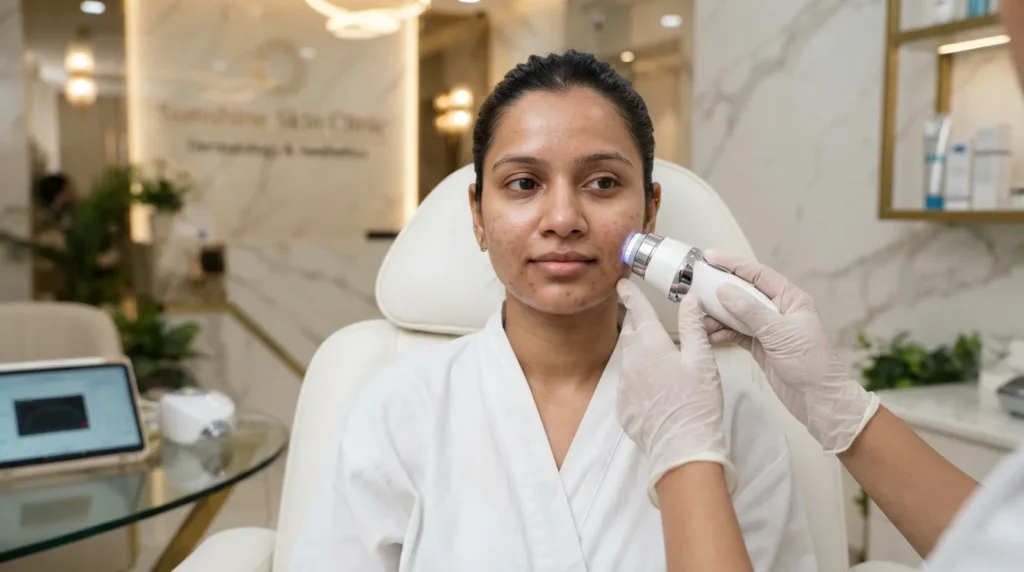
A routine can remain simple while addressing several contributing factors.
Morning
Gentle cleanser → suitable moisturiser if needed → broad-spectrum sunscreen.
If you use a prescribed treatment, follow the instructions provided by your dermatologist.
Evening
Gentle cleanser → appropriate treatment → moisturiser.
Avoid using several strong active ingredients simply because your skin looks uneven.
If you have acne, eczema, or another inflammatory condition, your routine may need to address that condition first. For persistent pigmentation, treatment may require more than general skincare.
Consistency and tolerability matter more than the number of products in your routine.
Can Uneven Skin Tone Be Corrected Permanently?
The answer depends on the cause.
Some temporary discoloration improves substantially once the trigger resolves. Other conditions, such as melasma, may recur. Certain conditions that cause lighter patches require condition-specific treatment rather than general brightening products.
Even when the complexion improves, new discoloration can develop if inflammation, sun exposure, or another trigger remains active.
A realistic goal is to improve the uniformity of your complexion, protect skin health, and reduce the factors that contribute to further changes.
No treatment can guarantee perfectly uniform skin in every individual.
Final Thoughts
Uneven skin tone is a broad term that can describe darker patches, lighter areas, redness, post-acne marks, or other changes in complexion.
The most important first step is to distinguish between these patterns. A dark mark after acne is not necessarily the same as melasma, and a lighter patch or persistent red area may need an entirely different evaluation.
Once the likely cause is understood, skincare can be chosen more logically.
For many people, a gentle routine, suitable moisturisation, consistent sun protection, and management of the underlying condition can help improve the appearance of the skin. Others may need specific medical treatment.
The goal is not to make your natural skin colour lighter. It is to understand and address unwanted colour changes while maintaining healthy skin.
A more informed approach can help you avoid unnecessary products, recognise when professional guidance is needed, and set realistic expectations for improvement.
Frequently Asked Questions About Uneven Skin Tone
What causes uneven skin tone?
Common causes include post-acne marks, sun exposure, melasma, skin inflammation, irritation, dryness, and certain infections or other skin conditions. The cause determines which treatment may be suitable.
Is uneven skin tone the same as hyperpigmentation?
No. Hyperpigmentation specifically refers to increased or uneven pigmentation that makes some areas darker. Uneven skin tone is a broader description that can include darker patches, lighter areas, redness, and texture-related differences.
Can skincare improve uneven skin tone?
Suitable skincare may help address certain causes, such as dryness, acne-related pigmentation, or sun-related discoloration. However, the routine should be chosen according to the underlying condition, and some concerns require medical evaluation.
Does sunscreen help with uneven skin tone?
Yes. Sun protection is important for several forms of pigmentation because UV exposure can worsen existing discoloration and contribute to new changes. Tinted sunscreen containing iron oxides may offer additional visible-light protection for selected pigmentary concerns.
Why does acne leave dark marks?
Inflammation from acne can stimulate pigment production, leaving post-inflammatory hyperpigmentation after the pimple heals. These flat colour changes are different from structural acne scars.
Can uneven skin tone be treated with a chemical peel or laser?
Selected procedures may help certain pigmentary concerns, but they are not appropriate for every cause of uneven colour. The diagnosis, skin type, potential risks, and possibility of post-treatment pigmentation should be considered before treatment.
Why is my face a different colour from my neck?
Differences may arise from sun exposure, pigmentation, irritation, or other factors. If the difference is persistent or unexplained, assessment can help determine the cause.
When should I see a dermatologist?
Consider an assessment if discoloration persists, worsens, appears suddenly, develops alongside irritation or other symptoms, or involves a changing mole or unusual pigmented spot.