


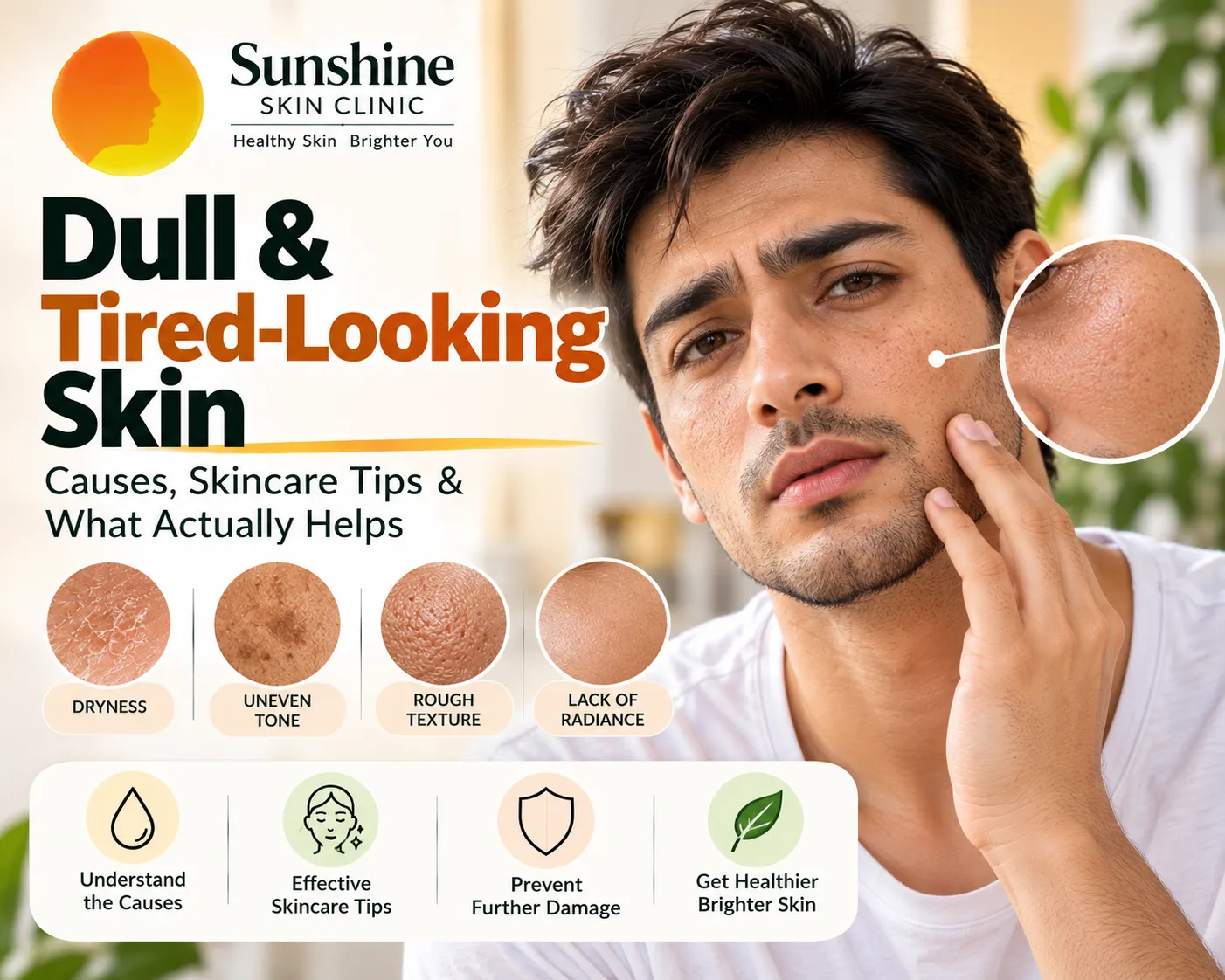
Does your skin sometimes look tired, rough, or less radiant even when you are following a skincare routine? Perhaps your face looks dull in the morning, your complexion appears uneven, or your skin feels dry and lacks its usual smoothness.
These changes are common, but they do not always have the same cause.
Dull and tired-looking skin is an appearance rather than a single medical diagnosis. It can be associated with surface dryness, dehydration, uneven texture, pigmentation, sun exposure, skin ageing, or irritation from unsuitable skincare products.
Sometimes, the problem is relatively simple: your skin needs better moisturisation or a gentler routine. In other cases, persistent changes in complexion may need dermatological assessment.
The most useful approach is not to buy another product promising instant glow. It is to understand what is making your skin look tired and choose a routine that addresses that particular concern.
This guide explores eight important ideas that can help you understand dull-looking skin, improve your skincare routine, and recognise when professional advice may be useful.
What Is Dull Skin?
Healthy skin naturally varies in colour, texture, and appearance. It does not need to look perfectly smooth, shiny, or identical every day.
The term “dull skin” generally describes a complexion that appears less luminous, uneven, rough, dry, or tired than usual.
Several factors can contribute to this appearance:
- Dryness and reduced moisture in the outer skin layer
- Uneven surface texture
- Accumulated surface debris
- Sun-related skin damage
- Pigmentation and uneven skin tone
- Changes in skin firmness with age
- Irritation from excessive skincare
- Shadows around the eyes that make the face look tired
Understanding which of these factors is relevant to you is the first step toward choosing an appropriate skincare routine.
8 Important Ideas to Understand About Dull & Tired-Looking Skin
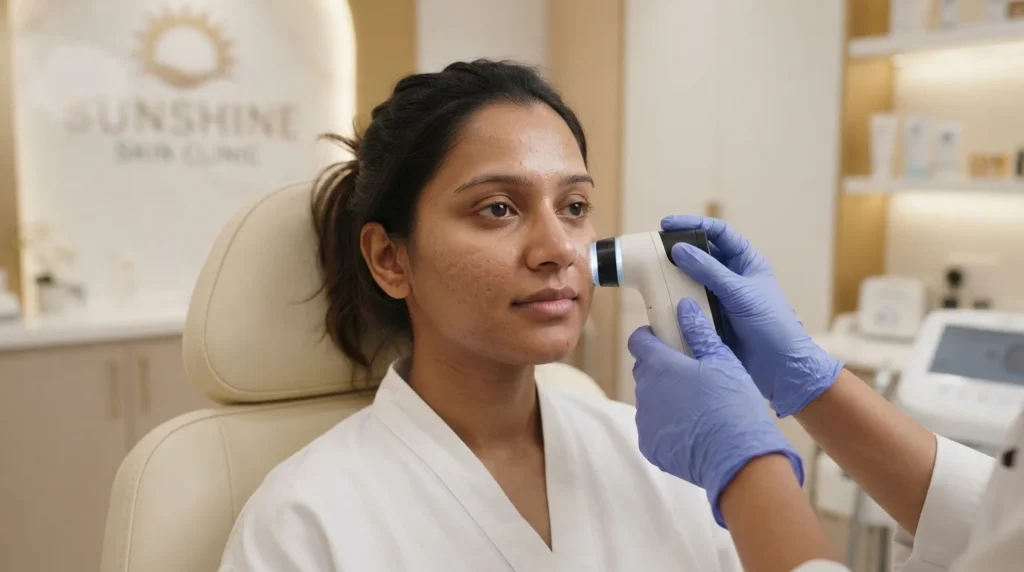
1. Dullness Is Not Always a Hydration Problem
One of the most common assumptions about dull skin is that it simply needs more moisture.
Sometimes that is true. Dry skin can appear rough, flaky, and less smooth because it loses water and its protective outer layer becomes impaired.
However, dullness can also result from other factors.
For example, someone may have oily skin with clogged pores and uneven texture. Another person may have dry skin accompanied by pigmentation. A third may notice that their skin looks less firm as they get older.
These concerns can produce a similar overall impression but require different approaches.
How can you begin to distinguish them?
Dry or dehydrated-looking skin: You may notice tightness, roughness, flaking, or fine lines that appear more prominent.
Uneven texture: The skin may feel rough or appear less smooth, even when it does not feel particularly dry.
Pigmentation-related dullness: Brown patches or uneven colour may make the complexion appear less uniform.
Age-related changes: Fine lines, changes in firmness, and accumulated sun damage may alter the skin’s appearance over time.
These categories can overlap, so this is not a way to diagnose your skin yourself. It is a way to think more clearly about what you are noticing.
The American Academy of Dermatology explains that dry skin can result from water loss, harsh cleansing, environmental conditions, ageing, medications, and certain skin conditions.
The practical lesson: Identify the main concern before choosing a treatment marketed for radiance or glow.
2. Your Skin’s Surface Can Affect How Radiant It Looks
Have you noticed that your skin sometimes looks smoother and brighter immediately after gentle cleansing and moisturisation?
Part of that change can be explained by the skin’s surface.
A relatively smooth surface reflects light more evenly. Dry patches, rough texture, and accumulated surface material can scatter light differently, making the complexion appear less uniform.
Normal skin-cell shedding helps maintain the outer skin surface. The process can change with age, skin conditions, and other individual factors.
This is one reason appropriately selected exfoliation may help some people with rough or uneven-looking skin.
However, more exfoliation does not automatically produce more radiance.
Aggressive scrubbing, frequent exfoliating acids, or strong peeling products can irritate the skin. In susceptible people, irritation may lead to redness, sensitivity, or post-inflammatory pigmentation.
A better way to approach exfoliation
First, determine whether roughness or surface congestion is actually contributing to the problem.
If exfoliation is appropriate, introduce a suitable method gradually rather than combining several exfoliating products.
If your skin is already red, peeling, burning, or unusually sensitive, prioritise gentle cleansing and moisturisation instead of trying to remove more skin cells.
Cleveland Clinic explains that exfoliation can help remove accumulated surface cells, but the method should suit the individual and should not cause excessive irritation.
3. Dehydrated Skin and Dry Skin Are Not Exactly the Same
These terms are often used interchangeably, but they describe different aspects of the skin.
Dry skin generally refers to a skin type or condition associated with insufficient surface lipids and impaired moisture retention.
Dehydrated skin commonly describes skin with reduced water content in its outer layer. It can feel tight or look temporarily less plump, and these changes may occur in different skin types.
A person with oily skin can still experience dehydration or irritation. Producing oil does not guarantee that the skin retains moisture comfortably.
What can help?
A well-tolerated moisturiser can help maintain hydration and support the skin barrier.
Depending on the formulation, moisturisers may contain ingredients such as:
- Glycerin: Helps attract and retain water in the outer skin layer.
- Hyaluronic acid: A humectant used to support surface hydration.
- Ceramides: Help support the skin’s protective lipid barrier.
- Emollients: Help soften rough skin and improve its feel.
- Occlusive ingredients: Help reduce water loss from the skin surface.
Different formulations suit different people. A lightweight lotion or gel may feel more comfortable on oily skin, while a richer cream may be more suitable for dry skin.
The AAD recommends choosing moisturisers according to skin needs and notes that ingredients such as ceramides and hyaluronic acid can be useful in appropriate formulations.
One useful habit
Apply moisturiser after cleansing while the skin is still slightly damp, provided the product is comfortable for your skin.
Also remember that drinking adequate water supports general health, but simply drinking excessive amounts of water will not automatically correct every cause of dull-looking skin.
4. An Overloaded Skincare Routine Can Make Skin Look More Tired
When skin loses its usual brightness, adding another serum or active ingredient may seem like the obvious solution.
But there is an important catch: multiple products can cause cumulative irritation, especially when several contain exfoliating or potentially irritating ingredients.
For example, a routine might combine:
Exfoliating cleanser + glycolic acid + salicylic acid + retinoid + brightening serum + scrub.
For some skin types, that combination may be too aggressive.
The resulting dryness, flaking, redness, or burning can make the complexion look less healthy rather than more radiant.
Try a skincare reset
If your skin has become irritated, consider temporarily simplifying the routine.
Morning: Gentle cleanser, moisturiser if needed, and broad-spectrum sunscreen.
Evening: Gentle cleanser and moisturiser, with prescribed treatment adjusted only according to appropriate medical advice.
Avoid unnecessary scrubbing or introducing multiple new active ingredients while the skin is irritated.
Once your skin is comfortable again, suitable treatments can be introduced gradually.
Persistent burning, swelling, a rash, or worsening discomfort should be assessed rather than managed by repeatedly changing products.
The key idea is that healthy-looking skin depends on tolerability and consistency, not on the number of products in your routine.
5. Sun Exposure Can Contribute to Uneven Tone and a Less Smooth Appearance
Sun exposure affects the skin in several ways.
Ultraviolet radiation contributes to photoageing, including changes in skin texture, pigmentation, fine lines, and loss of elasticity over time.
These changes can make the complexion look less uniform, particularly when pigmentation and roughness occur together.
For this reason, sunscreen is useful even when your main concern is dull-looking skin rather than sunburn.
Build photoprotection into your morning routine
Choose a sunscreen that provides:
- Broad-spectrum UVA and UVB protection
- SPF 30 or higher
- Water resistance when appropriate for outdoor activities
- A formulation that suits your skin type
Apply it generously to exposed skin and reapply approximately every two hours while outdoors, as well as after swimming or heavy sweating.
Shade, protective clothing, hats, and sunglasses can provide additional protection.
If pigmentation is a major part of your concern, a tinted sunscreen containing iron oxides may offer additional protection against visible light in appropriate circumstances.
Sunscreen does not instantly make skin glow, but it helps prevent additional UV damage and supports long-term skin care.
6. Sleep, Stress, and Daily Habits Matter—but They Are Not the Whole Explanation
The phrase “tired-looking skin” can be confusing because the skin’s appearance does not always reflect how tired a person feels.
Poor sleep may contribute to under-eye puffiness, shadows, and a fatigued appearance. Stress and inconsistent habits can also influence daily routines, sleep quality, and how well people manage their skin.
Smoking is associated with premature skin ageing, while environmental conditions and unsuitable skincare can contribute to dryness or irritation.
However, no lifestyle change can guarantee that every skin concern will disappear.
For example, under-eye darkness may be related to genetics, pigmentation, shadows caused by facial structure, allergies, or other factors. Sleep alone may not resolve it.
Focus on sustainable habits
- Maintain a reasonably consistent sleep schedule.
- Eat a varied, balanced diet.
- Avoid smoking.
- Cleanse the skin gently after wearing makeup or sunscreen.
- Use moisturiser and sunscreen consistently.
- Avoid frequently changing products in pursuit of instant results.
There is no need to purchase expensive supplements or follow restrictive diets simply because your skin looks dull.
If you have persistent tiredness alongside unusual pallor, dizziness, breathlessness, or other symptoms, seek medical advice rather than assuming the cause is cosmetic. Yellowing of the skin or whites of the eyes also requires urgent medical assessment. (NHS: Tiredness and Fatigue; NHS: Jaundice)
7. Choose Ingredients According to Your Main Skin Concern
The right skincare ingredient depends on whether your skin needs hydration, help with pigmentation, support for acne control, or improvement in uneven texture.
For dryness and a rough surface
Look for a suitable moisturiser containing humectants, emollients, or barrier-supporting ingredients such as glycerin and ceramides.
For uneven pigmentation
Depending on the cause, ingredients such as vitamin C, niacinamide, azelaic acid, or other pigment-modulating treatments may be considered.
However, brown patches should not automatically be assumed to be ordinary pigmentation. Melasma, post-inflammatory hyperpigmentation, and other disorders can require different approaches.
For congestion and uneven texture
Selected exfoliating ingredients or topical retinoids may be useful for certain concerns, particularly when blackheads or acne are also present.
They should be selected carefully because they can cause irritation.
For signs of photoageing
Daily sunscreen is foundational. Some people may also benefit from appropriately selected topical treatments or professional procedures.
There is no single product that simultaneously addresses every cause of dullness.
A useful rule is to choose one main treatment objective, establish a tolerable routine, and introduce additional products only when there is a clear reason to do so.
If you are pregnant, planning pregnancy, or breastfeeding, seek professional advice before using retinoids or other treatments with specific safety considerations.
8. Track Changes Over Time and Know When Dullness Needs Professional Assessment
Skin appearance can fluctuate from day to day.
Lighting, temperature, hydration, makeup, and the timing of your skincare routine can all affect how your complexion looks.
Comparing your face in different mirrors or photographs may therefore give a misleading impression of improvement or deterioration.
Create a simple four-week skin diary
Take photographs under similar lighting and from a similar distance. Avoid filters and beauty modes.
Record a few observations:
Week 1: Dryness, oiliness, roughness, pigmentation, or irritation.
Week 2: Whether the routine feels comfortable and whether flaking or sensitivity has changed.
Week 3: Whether the main concern appears to be improving, remaining unchanged, or worsening.
Week 4: Whether the improvement is consistent and whether any irritation has developed.
This is a practical observation tool, not a guarantee that visible changes will occur within four weeks.
If dullness is caused mainly by dryness or irritation, comfort and surface appearance may improve relatively quickly after appropriate care. Pigmentation, photoageing, and other concerns generally require a different timeline.
When should you seek medical advice?
Consider a professional assessment when:
- Your skin remains rough, dry, or irritated despite appropriate care.
- Pigmentation or uneven texture is persistent or worsening.
- Products repeatedly cause burning, itching, or a rash.
- Your complexion changes unexpectedly.
- You experience unusual pallor, persistent fatigue, or other symptoms alongside the skin changes.
- The skin or whites of your eyes appear yellow.
Not every tired-looking complexion requires medical testing. However, persistent or unexplained changes should not automatically be treated with cosmetic products.
A Simple Daily Routine for Dull & Tired-Looking Skin
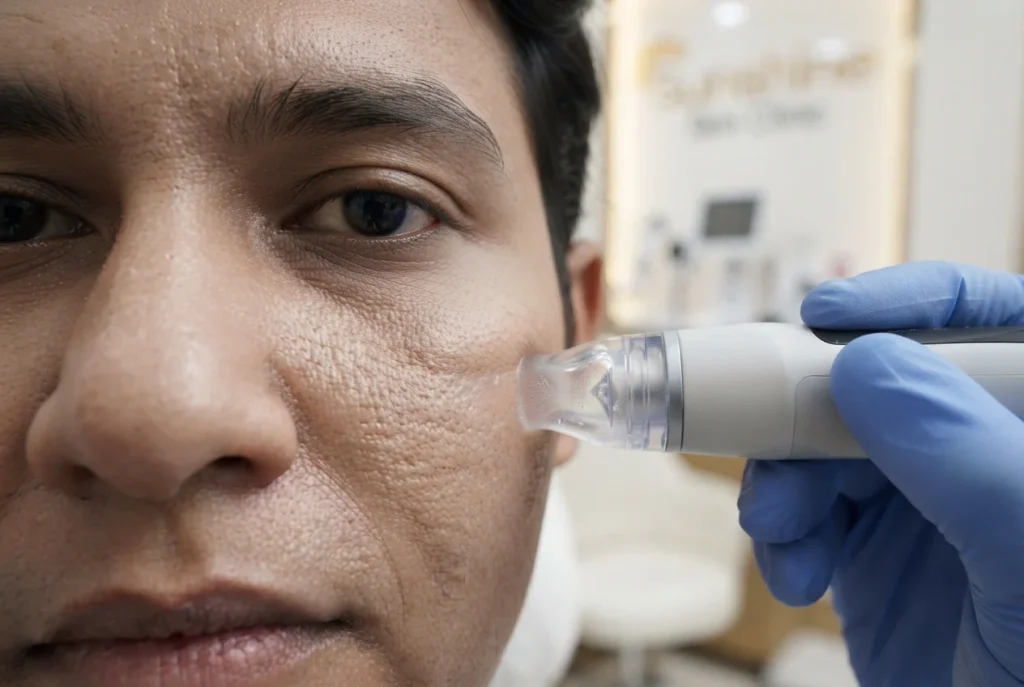
An effective routine can be simple.
Morning
Gentle cleanser → suitable moisturiser if needed → broad-spectrum sunscreen
If a specific concern such as acne or pigmentation needs treatment, an appropriate product may be included without making the routine unnecessarily complicated.
Evening
Gentle cleanser → targeted treatment if appropriate → moisturiser
Introduce active ingredients gradually. If the skin is already irritated, prioritise comfort and barrier support before adding more exfoliating products.
The most useful routine is one that suits your skin, is easy to maintain, and does not repeatedly cause irritation.
Are Professional Skin Treatments Necessary?
Not always.
Some cases of dull-looking skin improve with suitable cleansing, moisturisation, sun protection, and adjustments to irritating products.
Professional treatment may be considered when the main concern involves persistent pigmentation, uneven texture, photoageing, or another condition that is unlikely to respond sufficiently to routine skincare alone.
Depending on the diagnosis, a dermatologist may discuss options such as chemical peels, selected laser treatments, or skin-rejuvenation procedures.
However, these treatments are not interchangeable, and none is automatically necessary simply because skin looks tired.
The appropriate choice depends on the cause, skin type, medical history, potential risks, and realistic treatment goals.
Final Thoughts
Dull and tired-looking skin is not a single skin condition, so there is no universal product or procedure that can resolve every cause.
Dryness, dehydration, uneven texture, pigmentation, sun exposure, irritation, and age-related changes can all contribute to the appearance of a less radiant complexion.
The best starting point is to identify the main concern, establish a gentle routine, moisturise appropriately, protect the skin from sunlight, and introduce targeted treatments only when needed.
Remember that skin does not have to be perfectly smooth, poreless, or shiny to be healthy. Natural texture and changes in appearance are normal.
The goal is not to chase an artificial glow. It is to maintain comfortable, healthy-looking skin and address the factors that make your complexion appear dull or tired.
Frequently Asked Questions About Dull & Tired-Looking Skin
What causes dull-looking skin?
Common contributing factors include dryness, dehydration, uneven texture, pigmentation, sun exposure, irritation, and age-related changes. The cause varies between individuals, so the most useful treatment depends on what is making the skin look dull.
How can I improve dull skin naturally?
A gentle cleanser, suitable moisturiser, daily sun protection, balanced nutrition, and consistent sleep habits are sensible starting points. Avoid harsh scrubbing and unproven home remedies that can irritate the skin.
Does exfoliation help dull skin?
It may help when uneven surface texture or accumulated dead skin cells contribute to the appearance. However, over-exfoliation can damage the skin barrier and cause irritation. Choose an appropriate method and avoid exfoliating already irritated skin.
Can dehydration make skin look tired?
Yes. Reduced moisture in the outer skin layer can make skin feel tight or rough and can make fine lines appear more noticeable. Appropriate moisturisation may help, although not every form of dullness is caused by dehydration.
Which ingredients are useful for dull skin?
Ingredients such as glycerin, hyaluronic acid, and ceramides may help with hydration and barrier support. Vitamin C, niacinamide, retinoids, and exfoliating ingredients may help selected concerns, depending on the diagnosis and individual tolerance.
Can sunscreen improve skin appearance?
Sunscreen helps prevent additional UV-related damage and supports the long-term management of pigmentation and photoageing. It does not instantly correct every cause of dullness, but regular use is an important part of skin care.
When should I consult a dermatologist?
Seek advice if dullness persists despite appropriate care, skin irritation keeps returning, pigmentation worsens, or you develop an unexplained change in complexion. Unusual pallor with fatigue or yellowing of the skin or eyes requires medical assessment rather than cosmetic treatment.
Do expensive products work better for dull skin?
Not necessarily. A well-formulated, suitable product may be more useful than an expensive product that irritates your skin or does not address the underlying concern. Focus on the formulation, your skin’s needs, and consistency of use.