
When It May Be Considered
- Unusual or changing skin lesions
- Persistent or unexplained rashes
- Selected pigmented lesions
- Suspected inflammatory skin conditions
- Lesions requiring histopathological evaluation
What the Process May Include
Clinical examination → Local preparation → Tissue sampling → Laboratory examination → Result review
Why It Matters:
A biopsy can provide additional information that helps the dermatologist distinguish between different skin conditions and plan the next stage of care.
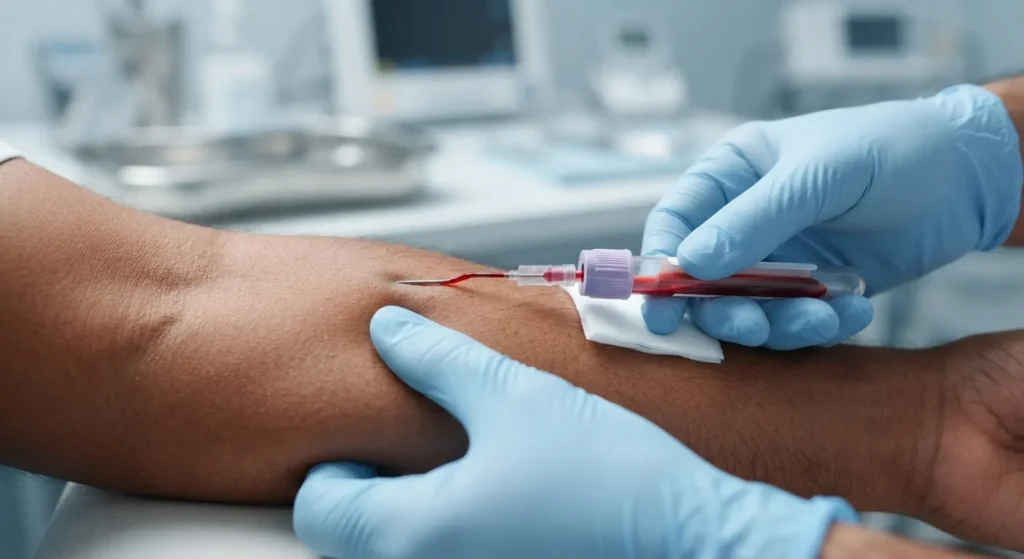
When It May Be Considered
- Selected hair-loss concerns
- Possible nutritional factors
- Certain inflammatory conditions
- Selected hormonal or metabolic concerns
- Other underlying factors identified during consultation
How It Fits Into Your Care
Consultation → Clinical assessment → Relevant tests, if required → Result review → Treatment planning
Why It Matters:
Appropriate laboratory information can sometimes help identify factors contributing to a dermatological concern and make treatment planning more informed.
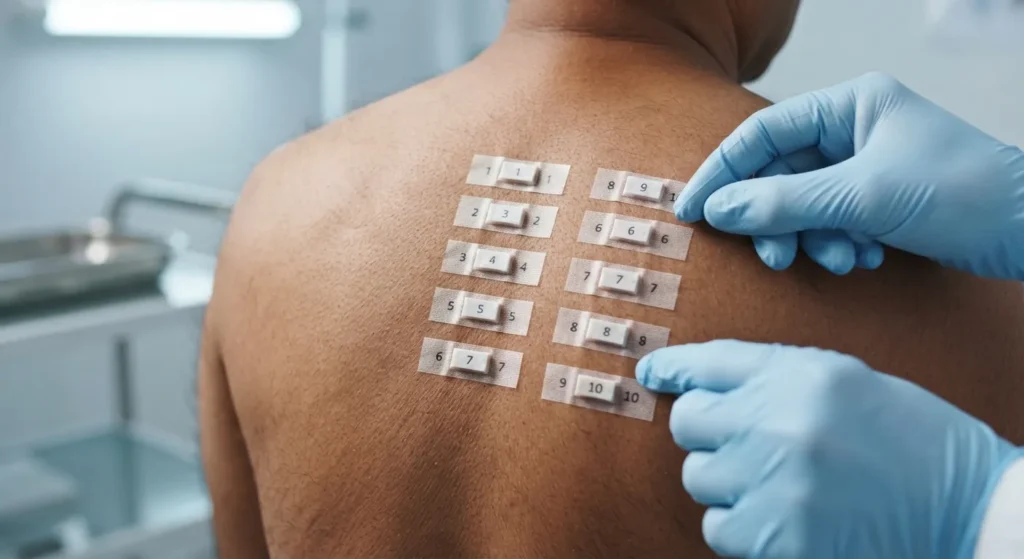
When It May Be Considered
- Recurrent contact dermatitis
- Persistent unexplained skin irritation
- Suspected cosmetic allergy
- Occupational skin reactions
- Reactions to metals or other contact substances
What to Expect
Selected test substances are applied to the skin under a controlled protocol and the skin is assessed according to the recommended testing schedule.
Why It Matters:
Identifying a relevant contact allergen may help patients and their dermatologist work toward reducing future exposure and managing recurring skin reactions.
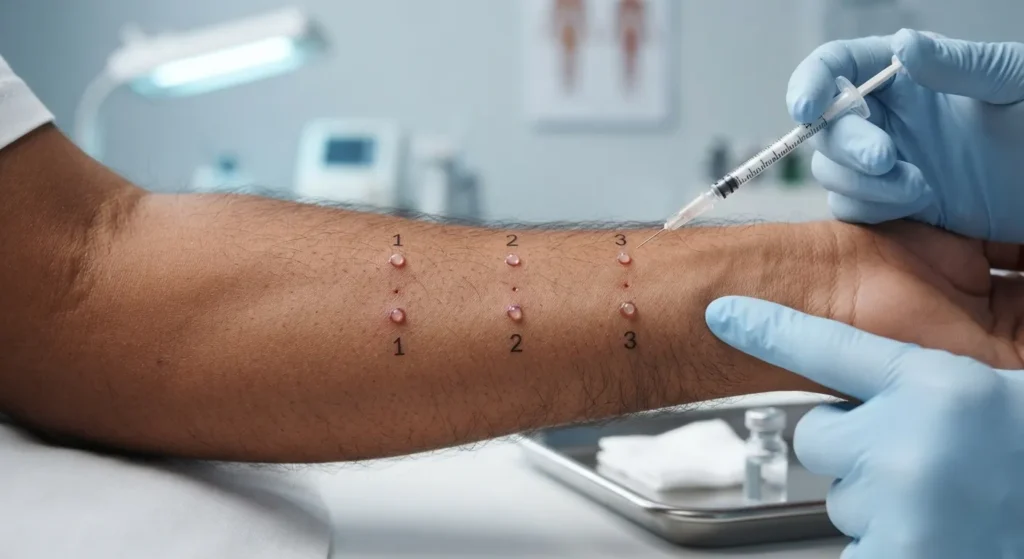
When It May Be Considered
- Selected cases of recurrent urticaria
- Specific diagnostic evaluation after clinical assessment
- Situations where additional information may support the overall evaluation
Diagnostic Process
Clinical assessment → Test selection → Sample preparation → Skin response assessment → Clinical interpretation
Why It Matters:
The test is considered as one component of a broader diagnostic assessment rather than being interpreted on its own.
What Are Dermatology Diagnostic Services?
Dermatology diagnostic services are tests and assessments used to investigate skin, hair, scalp, nail, and allergy-related concerns.
These services may help a dermatologist:
- Investigate an unusual skin lesion
- Understand an unexplained skin condition
- Evaluate recurring allergic reactions
- Support the diagnosis of certain inflammatory disorders
- Identify possible contributing factors
- Clarify a diagnosis when clinical symptoms overlap
- Monitor or investigate selected medical conditions
Not every patient needs a diagnostic test. In many cases, a careful clinical history and examination are sufficient. Testing is recommended when it is relevant to the patient’s individual condition.
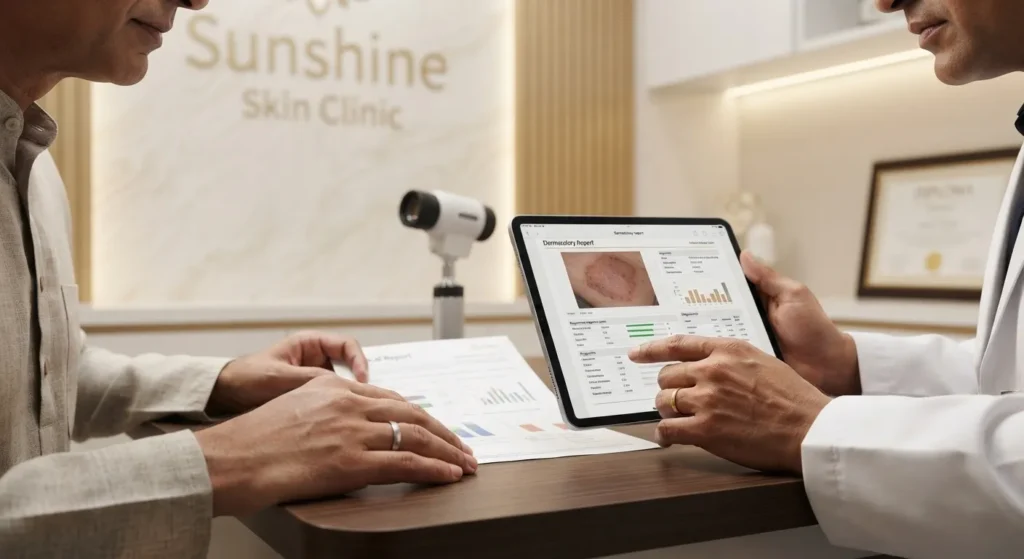
Why Accurate Diagnosis Matters
Many dermatological conditions can share similar symptoms.
For example, itching may occur with an allergy, eczema, infection, irritation, or several other conditions. Likewise, a persistent skin lesion may have different possible causes that cannot always be identified from appearance alone.
An appropriate diagnostic approach can help the dermatologist move from a general symptom to a more specific understanding of the underlying problem.
This can support:
- More informed treatment planning
- Better differentiation between similar conditions
- Appropriate selection of medication or procedure
- Identification of possible triggers
- More structured follow-up
- Better understanding of recurring concerns
Diagnosis is therefore an important part of responsible dermatology care.
Our Diagnostic Approach
At Sunshine Skin Clinic, testing is considered within the context of the patient’s complete clinical picture.
Step 1 – Detailed Consultation
Your dermatologist first discusses your symptoms, duration of the problem, previous treatments, medical history, allergies, lifestyle factors, and any relevant triggers.
Step 2 – Clinical Examination
The skin, scalp, hair, nails, or affected area is carefully examined.
Step 3 – Identify the Diagnostic Question
The dermatologist determines what information is still needed and whether a specific diagnostic test can help.
Step 4 – Select the Appropriate Test
The most relevant test is selected based on the clinical concern rather than using the same testing approach for every patient.
Step 5 – Review the Findings
The test results are considered together with the clinical examination and medical history.
Step 6 – Treatment or Follow-Up Plan
The findings may help guide the next step in treatment, additional evaluation, monitoring, or referral when appropriate.
Skin Biopsy Tests
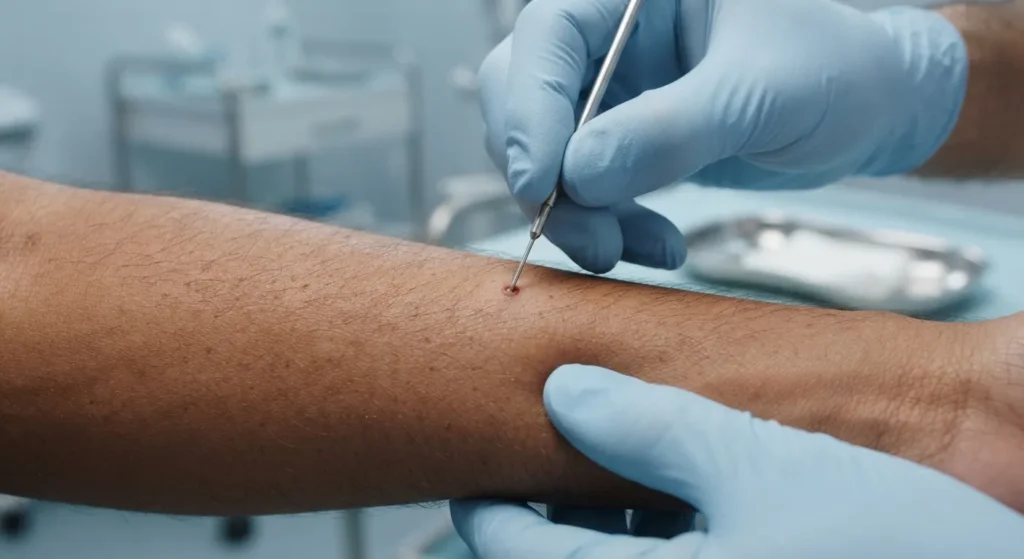
A skin biopsy is a diagnostic procedure in which a small sample of skin is collected for further examination.
It may be recommended when a dermatologist needs additional information about a lesion, rash, or other skin change that cannot be confidently diagnosed through clinical examination alone.
A biopsy can provide information that may help distinguish between different dermatological conditions.
A Skin Biopsy May Be Considered For
- Unusual Skin Lesions
- Persistent Skin Changes
- Unexplained Rashes
- Certain Pigmented Lesions
- Suspected Inflammatory Conditions
- Conditions Requiring Histopathological Evaluation
The type and depth of biopsy depend on the clinical situation and the information required.
Learn More About Skin Biopsy →
How a Skin Biopsy Is Performed
Although the exact technique depends on the type of lesion and the clinical question, the general process may involve:
Examination
The dermatologist evaluates the lesion and determines the most appropriate area for sampling.
Preparation
The skin is cleaned and prepared for the procedure.
Local Anesthesia
Local anesthesia may be used when appropriate to improve patient comfort.
Tissue Collection
A small sample of tissue is carefully obtained using an appropriate biopsy technique.
Laboratory Examination
The specimen may be sent for histopathological examination.
Follow-Up
The dermatologist reviews the findings in the context of your clinical presentation and discusses the next steps.
Blood Tests Related to Skin Conditions
Blood tests are not required for every dermatology patient. In selected situations, however, laboratory testing can provide useful information about factors that may be associated with a skin or hair concern.
Depending on the clinical condition, blood investigations may sometimes be used as part of a broader evaluation.
They may be considered when the dermatologist suspects that a skin or hair problem could be associated with an underlying systemic, nutritional, hormonal, inflammatory, or other medical factor.
Blood Testing May Be Considered During Evaluation Of
- Selected Hair Loss Concerns
- Certain Nutritional Concerns
- Some Inflammatory Conditions
- Selected Hormonal or Metabolic Factors
- Other Medical Conditions Based on Clinical Findings
The exact tests required should be determined according to the patient’s symptoms and medical history rather than through routine indiscriminate testing.
Discuss Blood Testing With Your Dermatologist →
Patch Test
A Patch Test is a diagnostic method commonly used to investigate contact allergy.
It may be considered when the dermatologist suspects that recurring dermatitis or skin irritation is being triggered by contact with a specific substance.
Potential triggers can include:
- Cosmetics
- Fragrances
- Hair Products
- Metals
- Soaps
- Detergents
- Adhesives
- Occupational Exposures
- Other Contact Substances
The test involves exposing selected areas of skin to specific substances under controlled conditions and then evaluating the skin response according to the test protocol.
When May a Patch Test Be Considered?
A dermatologist may consider patch testing when a patient has:
- Recurrent Contact Dermatitis
- Persistent Unexplained Rash
- Repeated Skin Irritation
- Suspected Cosmetic Allergy
- Occupational Skin Reactions
- Sensitivity to Specific Products
Learn More About Patch Testing →
Autologous Serum Skin Test
An Autologous Serum Skin Test may be considered in selected patients as part of the evaluation of certain recurrent urticaria or related conditions.
The test involves using a sample derived from the patient’s own blood and assessing the skin response under a controlled testing protocol.
Its use depends on the clinical situation and should be interpreted alongside the patient’s symptoms, medical history, and other relevant findings.
It is not a universal test for every type of skin allergy or rash.
Learn More About Autologous Serum Skin Testing →
When Might Diagnostic Testing Be Recommended?
A dermatologist may consider additional testing when:
- Symptoms Keep Returning
- The Diagnosis Is Unclear
- Several Conditions Have Similar Symptoms
- A Skin Lesion Appears Unusual
- A Skin Condition Does Not Respond as Expected
- An Allergy Trigger Needs Investigation
- Hair Loss Requires Additional Medical Evaluation
- Further Information Is Needed Before Treatment
Testing should always be guided by the clinical situation.
Does Every Skin Problem Require a Test?
No.
Many common dermatological conditions can be diagnosed through a detailed consultation and physical examination alone.
Diagnostic testing becomes more useful when additional information is required to clarify the cause, confirm a suspected condition, investigate a recurring problem, or support treatment planning.
This is why the dermatologist first evaluates your symptoms and clinical findings before recommending any test.
Personalized Diagnostic Planning
The same test is not appropriate for every patient.
Your diagnostic plan may depend on:
- Your Symptoms
- Duration of the Condition
- Age
- Medical History
- Previous Treatment
- Family History
- Skin Findings
- Suspected Diagnosis
- Treatment Response
- Individual Risk Factors
This personalized approach helps avoid unnecessary testing while ensuring that relevant diagnostic information is obtained when it can meaningfully contribute to your care.
What to Expect Before a Diagnostic Test
Preparation varies according to the test.
Before your appointment, the clinic may provide test-specific instructions regarding:
- Skin care products
- Medications
- Food or drink, when relevant
- Activity restrictions, if any
- Arrival time
- Previous medical reports
Always follow the instructions given for your particular test because preparation requirements differ between procedures.
What Happens After Testing?
The next step depends on the results and the clinical situation.
Your dermatologist may:
- Explain the Findings
- Confirm or Refine the Diagnosis
- Recommend Treatment
- Suggest Additional Testing
- Recommend Monitoring
- Modify an Existing Treatment Plan
- Refer for Additional Medical Evaluation When Appropriate
Test results should always be interpreted in the context of the complete clinical picture rather than in isolation.
Patient-Centered Diagnostic Care
We understand that diagnostic testing can sometimes create uncertainty or anxiety for patients.
Our goal is to make the process as clear as possible by explaining:
- Why a particular test is being considered
- What the test involves
- What information it can provide
- What happens after the test
- How the findings may influence your treatment plan
Clear communication allows patients to participate more confidently in decisions about their care.