


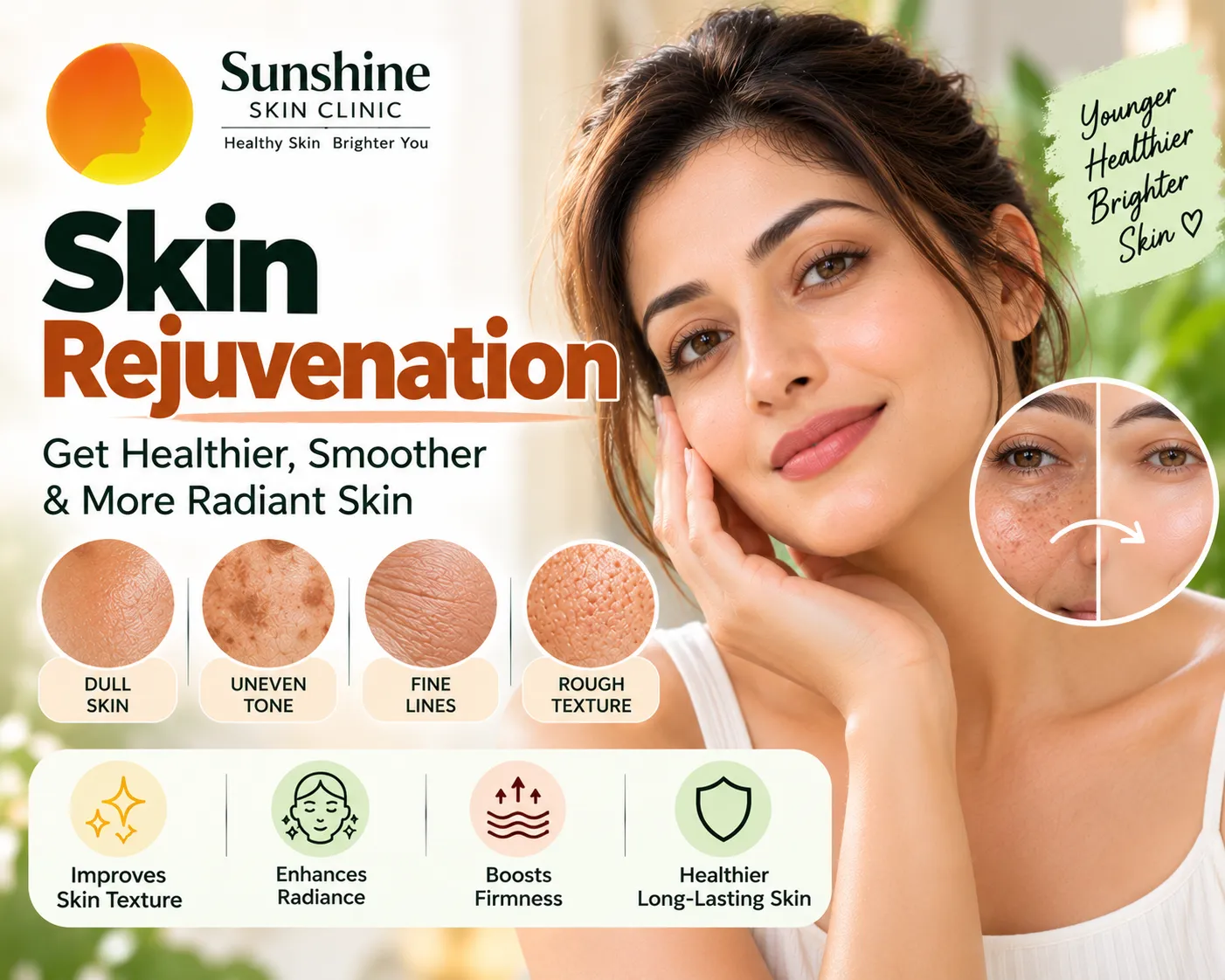
Healthy skin does not have to be completely smooth, poreless, or free from fine lines. Yet changes in texture, uneven pigmentation, dryness, and loss of firmness can sometimes make the skin look older or less refreshed than it feels.
This is where skin rejuvenation comes into the picture.
Skin rejuvenation is an umbrella term for skincare approaches and dermatological procedures that aim to improve the appearance and condition of the skin. Depending on the concern, this may involve improving hydration, smoothing uneven texture, reducing the appearance of pigmentation, softening fine lines, or addressing certain effects of sun exposure.
However, rejuvenation is not one single treatment. A procedure that helps improve superficial texture may not adequately address deep acne scars or significant skin laxity. Similarly, a treatment designed to reduce pigmentation may not be the right choice for someone whose main concern is dryness or loss of firmness.
The most useful approach is to identify the skin concern first and then determine which treatments, if any, may be appropriate.
This guide explores eight important ideas that can help you understand skin rejuvenation, compare treatment options, prepare for procedures, and develop realistic expectations.
What Is Skin Rejuvenation?
Skin rejuvenation refers to a range of methods used to improve visible aspects of skin quality, such as texture, tone, hydration, fine lines, and certain signs of photoaging.
Some approaches focus on the surface of the skin, while others aim to stimulate changes in the deeper tissues.
Depending on the individual’s concern, options may include:
- A consistent skincare routine and sun protection
- Hydrating facial treatments
- Chemical peels
- Microneedling
- Laser and light-based procedures
- Radiofrequency-based treatments
- Selected injectable treatments for specific concerns
These approaches are not interchangeable. Their benefits, risks, recovery requirements, and expected outcomes differ.
A 2026 review of photoaging research describes how both natural ageing and environmental exposures influence skin changes, while emphasizing that treatment needs to address the particular signs and mechanisms involved.
8 Important Ideas to Understand Before Choosing Skin Rejuvenation

1. Identify What You Want to Improve Before Choosing a Procedure
One of the most common mistakes is choosing a popular treatment before understanding the actual skin concern.
Someone with dehydrated skin may primarily need a better moisturising routine. Another person may have persistent pigmentation, acne scars, fine lines, or changes in skin firmness that require a different approach.
Although these concerns can occur together, they do not all respond to the same treatment.
Consider these common concerns
Dryness and dehydration
The skin may feel tight, rough, or temporarily less plump. Appropriate moisturisation and a gentle routine may help, although persistent symptoms sometimes require further assessment.
Uneven pigmentation
Brown patches, sun-related spots, and post-acne marks may need condition-specific management. Some forms of pigmentation can worsen with irritation.
Uneven texture and visible pores
Clogged follicles, acne, scarring, and changes in skin structure can all contribute. Treatment depends on which factors are present.
Fine lines and wrinkles
These may result from repeated facial movements, natural ageing, and accumulated sun exposure. Different treatments target different mechanisms.
Loss of firmness
Changes in collagen, elastin, and deeper supporting structures can affect the skin’s appearance. Some procedures may provide modest improvement, but results depend on the cause and degree of skin laxity.
Try a simple skin-concern checklist
Before considering treatment, identify your main priority:
- Better hydration
- More even-looking skin tone
- Smoother texture
- Less noticeable fine lines
- Improvement in acne-related scars
- Better skin firmness
You may have more than one concern, but identifying the main one helps make treatment decisions more purposeful.
The key idea is to choose the treatment according to the concern, rather than choosing the concern to justify a treatment.
2. Understand the Difference Between Prevention, Surface Improvement, and Structural Correction
Not every rejuvenation treatment works at the same level.
This distinction is useful because marketing language can make very different procedures sound as though they deliver identical results.
Prevention and daily care
Sunscreen, moisturisers, and selected topical treatments can help maintain skin health and reduce some visible signs of photoaging.
For example, regular sun protection helps limit further ultraviolet damage, while suitable moisturisation can improve dryness and the appearance of surface roughness.
These measures are important even when a person is considering professional procedures.
Surface improvement
Some treatments mainly target the outer layers of the skin.
Depending on the procedure, they may help with mild roughness, superficial discoloration, dehydration, or a temporarily dull appearance.
Examples include selected hydrating facials and superficial chemical peels.
Collagen remodelling and deeper changes
Other procedures aim to stimulate wound-healing responses or influence deeper skin structures.
Microneedling and selected laser or radiofrequency treatments are examples.
The extent of improvement varies with the procedure, treatment settings, skin condition, and individual response.
Why does this distinction matter?
A treatment that improves hydration may make the skin look fresher without meaningfully changing a deep scar. A collagen-stimulating procedure may help selected textural concerns but involve more downtime than a hydrating facial.
Understanding what a treatment is designed to change helps you evaluate whether its benefits are relevant to your goals.
3. Your Skin Tone and Pigmentation History Should Influence the Treatment Plan
This is especially important for people with Indian and other melanin-rich skin types.
Skin tone can influence how the skin responds to inflammation, injury, and energy-based procedures. Some individuals are more prone to post-inflammatory hyperpigmentation, in which the skin develops dark marks following irritation or inflammation.
This can happen after acne, an unsuitable skincare product, or a cosmetic procedure.
A 2026 review of skin ageing in skin of colour highlights the importance of individualized treatment and careful selection of procedures because pigmentary changes and scarring may be concerns in these skin types.
What should be assessed before treatment?
A useful evaluation may consider:
- Your natural skin tone
- Whether you develop dark marks after acne or irritation
- Existing melasma or other pigmentary conditions
- Recent tanning or sun exposure
- Previous reactions to peels, lasers, or skincare products
- Your current acne or inflammatory skin conditions
For example, someone with a history of melasma may need a different approach from someone whose primary concern is mild texture irregularity.
Ask about pigmentary risks
Before undergoing a procedure, ask what side effects are possible for your skin type and how they would be managed.
Chemical peels and laser treatments can be appropriate for selected people with darker skin, but treatment selection, depth, technique, and aftercare matter.
The goal is not simply to achieve more change. It is to obtain useful improvement while minimising avoidable complications.
4. More Treatments Do Not Necessarily Mean Better Results
It is tempting to combine several rejuvenation procedures in the hope of achieving faster or more dramatic improvement.
For example, someone might consider a chemical peel, microneedling, laser treatment, and multiple active skincare products within a short period.
But the skin needs time to recover between treatments, particularly when those treatments create controlled injury or irritation.
Combining too many interventions without considering their cumulative effects can increase discomfort, inflammation, and the risk of unwanted pigmentation.
Why treatment sequencing matters
A suitable plan may involve addressing one concern first, observing how the skin responds, and then deciding whether another treatment is necessary.
For example, if active acne or significant skin irritation is present, it may be more appropriate to control that problem before beginning certain resurfacing procedures.
If pigmentation is the main concern, it may be important to stabilise the condition and establish consistent sun protection before considering a procedure.
A better question to ask
Instead of asking:
“How many procedures can I combine?”
ask:
“What is each treatment expected to improve, and is it necessary to perform them together?”
The answer should relate to your actual skin concerns, expected benefits, recovery requirements, and individual risk factors.
A thoughtful treatment sequence may be more appropriate than an unnecessarily complicated plan.
5. Recovery Time Is Part of the Treatment Decision
People often compare rejuvenation procedures based on before-and-after photographs without considering how much recovery is involved.
However, two procedures that both improve skin appearance may require very different amounts of downtime.
Hydrating facial treatments
Some facial treatments produce a temporary improvement in hydration, softness, and the appearance of the skin surface. They usually involve less recovery than more invasive procedures, although irritation can still occur.
Chemical peels
The depth of a peel influences both its potential effects and recovery requirements.
Superficial peels may cause mild redness or flaking. Deeper peels can require more substantial recovery and carry greater risks.
The American Academy of Dermatology explains that chemical peels may improve texture, uneven colour, and certain signs of ageing, but outcomes and recovery depend on the depth and individual circumstances.
Microneedling
Microneedling produces controlled micro-injuries intended to stimulate the skin’s healing response. Temporary redness, swelling, and discomfort can occur.
Proper patient selection and aftercare help reduce the risk of complications. .
Laser and energy-based treatments
Recovery varies according to the device, intensity, area treated, and the person’s skin characteristics.
Some treatments involve limited downtime, while more intensive resurfacing procedures may require a longer recovery period.
Plan around your actual schedule
Before selecting treatment, consider:
- Upcoming social or professional commitments
- How long you can comfortably manage redness or peeling
- Whether you can follow aftercare instructions
- Your ability to avoid excessive sun exposure during healing
- Whether multiple sessions are required
A treatment is not automatically better because it promises stronger results. It should also fit your health needs and circumstances.
6. Preparing the Skin Before Treatment Can Be as Important as Aftercare
People often focus on what happens after a procedure, but preparation can also matter.
For selected procedures, a dermatologist may recommend adjusting the skincare routine before treatment, controlling active inflammation, and avoiding certain irritating ingredients for an appropriate period.
The exact instructions depend on the procedure and the person’s skin.
Before a procedure
Discuss:
- Prescription medicines and skincare products
- Previous cosmetic treatments
- Active acne, infection, or irritation
- Recent sun exposure or tanning
- History of cold sores or abnormal scarring where relevant
- Any medical conditions that may affect healing
Do not stop prescribed medication independently. Ask the treating clinician whether any changes are necessary.
After a procedure
Follow the instructions provided for cleansing, moisturisation, sun protection, and the timing of restarting active skincare ingredients.
Avoid introducing new exfoliating products or performing additional procedures while the skin is healing unless the treating clinician advises otherwise.
Why this matters
The intended benefit of a rejuvenation procedure depends not only on the device or technique but also on appropriate patient selection, healing, and follow-up.
For example, the AAD notes that microneedling requires assessment before treatment and a suitable skincare and aftercare plan. It also cautions against inappropriate at-home use because of the risks of infection, scarring, and changes in skin colour or texture. AAD: Microneedling safety.
7. Skin Rejuvenation Results Need Realistic Expectations and Ongoing Care
The phrase “skin rejuvenation” can suggest that the skin will return to an earlier age or become permanently smooth.
That is not a realistic expectation for every treatment.
Procedures may reduce the appearance of selected concerns, but they do not stop natural ageing. Results also differ from person to person.
The outcome depends on factors such as:
- The original skin concern
- Severity of the condition
- Skin type and individual healing response
- Treatment technique and settings
- Number of sessions
- Sun exposure and aftercare
- Whether other conditions remain active
For example, a treatment may improve the appearance of fine lines without eliminating them. A resurfacing procedure may improve some textural changes without removing every acne scar.
Maintenance matters
Daily sun protection, suitable moisturisation, and appropriate treatment of underlying skin conditions can help maintain skin health.
Some people may benefit from repeat procedures or a maintenance routine, depending on the treatment and their goals. Others may not need further procedures once their specific concern has improved.
The AAD explains that many treatments for sun-damaged skin reduce visible signs of photoaging but do not prevent all future changes. Continued sun protection remains important.
Think in terms of improvement, not perfection
The purpose of treatment is to improve a specific concern while preserving healthy-looking skin.
You should understand what level of improvement is realistic before deciding whether a procedure is worthwhile.
8. Track Skin Quality With Consistent Observations, Not Just Dramatic Before-and-After Photographs
Before-and-after photographs can be useful, but they can also be misleading if the images use different lighting, angles, camera settings, makeup, or facial expressions.
These differences can make the skin appear more or less improved than it actually is.
A more practical approach is to assess your skin under consistent conditions.
Create a simple skin-quality record
Before beginning a routine or treatment, note your main concerns:
Texture: Is the skin rough or uneven?
Tone: Are there visible dark spots or areas of redness?
Hydration: Does the skin frequently feel tight or flaky?
Fine lines: Which areas are you concerned about?
Firmness: Is your main concern skin laxity or contour?
Take photographs with similar lighting and distance if you want to monitor visible changes. Compare images over an appropriate period rather than judging results every day.
Also keep track of side effects, comfort, and whether the change addresses your original concern.
Why this approach is useful
It helps separate a temporary post-treatment glow from a more sustained change.
It also makes it easier to discuss whether a treatment has delivered the expected improvement or whether the plan needs reassessment.
A good outcome should be judged according to the original goal, not simply whether the skin looks different in one photograph.
Common Skin Rejuvenation Treatment Options
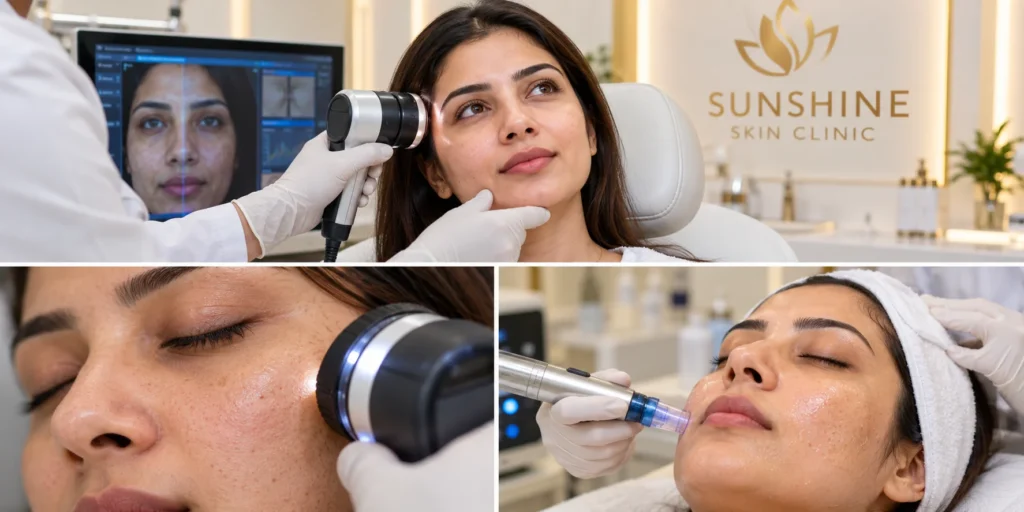
Different treatments target different aspects of skin appearance. The following overview explains their general purposes without suggesting that one procedure is suitable for everyone.
1. Skincare and Photoprotection
A consistent skincare routine is an important foundation.
Depending on the skin concern, this may include:
- Gentle cleansing
- Appropriate moisturisation
- Broad-spectrum sunscreen with SPF 30 or higher
- Selected topical ingredients for pigmentation, texture, or other concerns
For some people, these measures are sufficient to improve dryness, surface roughness, and certain forms of uneven pigmentation.
Others may need professional treatment for concerns that routine skincare cannot adequately address.
2. Hydrating Facial Treatments
Hydrating facials aim to improve the appearance of skin hydration, softness, and surface smoothness.
They may be useful for selected people whose main concern is temporary dryness or dull-looking skin.
However, a hydration-focused facial should not be expected to correct deep scars, substantial skin laxity, or every form of pigmentation.
The expected benefit depends on the procedure, formulation, and individual skin condition.
3. Chemical Peels
Chemical peels use selected chemical solutions to produce controlled exfoliation.
Depending on the peel, they may help improve superficial roughness, certain forms of discoloration, fine lines, or acne-related concerns.
Their effects and risks vary by depth. Irritation, prolonged redness, infection, scarring, and changes in pigmentation can occur, particularly when treatment is unsuitable or aftercare is inadequate.
High-strength chemical peels should not be attempted at home without appropriate professional supervision. The AAD chemical peel guidance explains the importance of trained providers and the risks associated with inappropriate treatment.
4. Microneedling
Microneedling creates controlled micro-injuries in the skin to stimulate a healing response.
It may be considered for selected concerns, including certain acne scars, uneven texture, and some fine lines.
It is not a universal solution for every pigmentary or ageing concern, and suitability should be assessed beforehand.
At-home devices that penetrate the skin can cause infection, scarring, and pigmentary changes when misused.
5. Laser and Light-Based Treatments
Lasers and light-based devices deliver energy to selected skin targets.
Depending on the technology, they may be used for certain signs of sun damage, pigmentation, redness, scars, or textural changes.
Different devices have different mechanisms and risk profiles. A device suitable for one concern may not be appropriate for another.
People with darker skin tones may need particularly careful assessment because some energy-based procedures can trigger unwanted pigmentation or other complications.
6. Radiofrequency and Ultrasound-Based Treatments
Radiofrequency and certain ultrasound-based procedures aim to affect deeper tissues and may be considered for selected concerns involving firmness or skin laxity.
The expected improvement varies, and these treatments should not be presented as equivalent to surgery or as guaranteed ways to eliminate loose skin.
Treatment choice depends on the degree of laxity, anatomy, medical history, and individual expectations.
7. Injectable Treatments
Some rejuvenation plans may include injectable treatments for specific concerns.
For example, botulinum toxin can reduce the appearance of certain expression-related lines, while dermal fillers may restore volume in selected areas.
These treatments work differently and have different risks. They do not automatically improve every aspect of skin quality, texture, or pigmentation.
Their suitability requires an individual assessment and discussion of the likely benefits and limitations.
Is Skin Rejuvenation Suitable for Everyone?
No. A treatment that is appropriate for one person may be unsuitable for another.
The decision depends on the skin concern, medical history, current medication, active skin conditions, pregnancy-related considerations where relevant, previous procedures, and ability to follow aftercare instructions.
For example, certain procedures may need to be postponed when there is active infection, severe inflammation, recent tanning, or another factor that increases the risk of complications.
A consultation should establish the likely benefit, available alternatives, expected recovery, and potential adverse effects before a procedure is chosen.
What Should You Ask Before Choosing a Treatment?

Before proceeding, make sure you understand:
- What exact concern is this treatment intended to improve?
- What degree of improvement is realistic?
- What are the alternatives, including doing nothing or using topical care?
- What are the possible side effects for my skin type?
- How much downtime is likely?
- Will repeat treatments be needed?
- What preparation and aftercare are required?
- How will we evaluate whether the treatment has worked?
These questions help keep the decision focused on your actual needs rather than the popularity of a procedure.
A Simple Skin Rejuvenation Roadmap
If you are considering treatment, a structured approach can make the process clearer.
Step 1: Identify the concern
Decide whether your main issue is hydration, texture, pigmentation, fine lines, scars, or laxity.
Step 2: Assess the skin
Consider sensitivity, active inflammation, medical history, and pigmentation risk.
Step 3: Establish a suitable routine
Use gentle cleansing, appropriate moisturisation, and regular sun protection as the foundation.
Step 4: Select a treatment only if needed
Choose a procedure based on its intended effect and the evidence supporting its use for your particular concern.
Step 5: Prepare and recover appropriately
Follow clinician-provided instructions before and after treatment.
Step 6: Measure progress
Compare results under consistent conditions and assess the original treatment goal.
Step 7: Plan maintenance
Continue appropriate skincare and sun protection, and repeat procedures only when there is a clear reason.
This roadmap is a decision-making framework rather than a prescription. Your individual plan may be simpler or more involved depending on the condition.
Final Thoughts
Skin rejuvenation is not about finding one procedure that reverses every sign of ageing. It is about understanding what your skin needs and selecting suitable ways to improve its appearance.
Some concerns respond well to routine skincare and sun protection. Others may benefit from treatments such as chemical peels, microneedling, lasers, or selected energy-based or injectable procedures.
Each option has a different purpose, and results depend on the individual, the condition being treated, and the treatment approach.
For people with Indian and other darker skin tones, the risk of post-inflammatory pigmentation deserves particular consideration when selecting procedures.
The most effective approach is not necessarily the most aggressive one. It is the approach that addresses the right concern, offers realistic benefits, minimises avoidable risks, and fits into a sustainable skin-care plan.
Healthy skin does not need to be perfect. The goal is to improve the concerns that matter to you while protecting the skin’s natural function and appearance.
Frequently Asked Questions About Skin Rejuvenation
What is skin rejuvenation?
Skin rejuvenation refers to skincare and dermatological treatments that aim to improve aspects of skin appearance, including texture, tone, hydration, fine lines, pigmentation, and certain signs of sun damage.
Which skin rejuvenation treatment is best?
There is no single best treatment for everyone. The right option depends on the main concern, skin type, medical history, expected recovery, and realistic goals.
Can skin rejuvenation improve dull-looking skin?
Some approaches may improve the appearance of dullness, especially when dryness or surface roughness contributes to it. Persistent dullness associated with pigmentation, irritation, or another condition may need a more specific approach.
Is skin rejuvenation safe for Indian skin?
Many rejuvenation treatments can be considered for Indian skin, but the procedure, settings, skin type, and pigmentation history matter. Some procedures can cause post-inflammatory hyperpigmentation, so careful selection and aftercare are important.
How long do skin rejuvenation results last?
Results vary by treatment and individual. Some effects, such as improved hydration, may be temporary, while other improvements may last longer. Natural ageing and environmental exposure continue, so maintenance may be needed.
Does skin rejuvenation hurt?
Comfort depends on the procedure. Some facial treatments involve little discomfort, while peels, microneedling, and certain laser procedures may cause stinging, warmth, or temporary discomfort.
How many sessions are needed?
There is no universal number. Some treatments are performed once, while others involve a series of sessions. The number depends on the procedure, concern being treated, response, and tolerance for downtime.
Can I combine multiple rejuvenation treatments?
Combination treatment may be useful in selected cases, but procedures should be planned according to the skin concern, cumulative risks, and recovery requirements. More treatments do not automatically produce better results.
Is sunscreen necessary after skin rejuvenation?
Sun protection is important for general skin health and is particularly relevant after procedures that make skin more sensitive. Follow the specific aftercare instructions provided by your treating clinician.
Can skin rejuvenation stop ageing?
No. Treatments may improve selected visible signs of ageing, but they do not stop the natural ageing process. A realistic goal is improvement and maintenance rather than permanent reversal.