

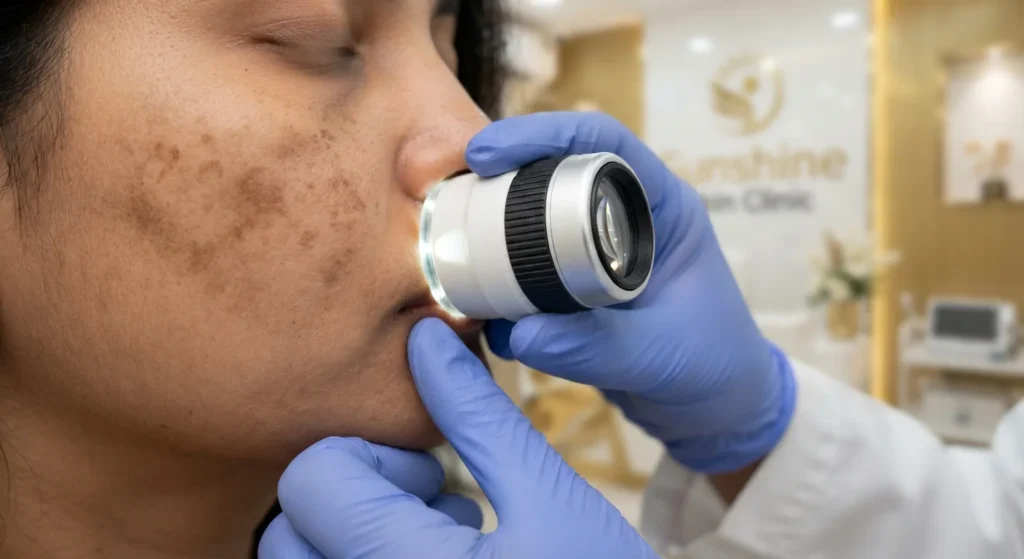
Different Types of Pigmentation
Pigmentation is a broad term rather than a single condition. The appearance and underlying cause can vary considerably.
Hyperpigmentation
Hyperpigmentation refers broadly to areas of skin that appear darker because of increased or uneven melanin.
It may develop as a result of sun exposure, inflammation, hormonal influences, skin injury, or other factors.
Post-Inflammatory Hyperpigmentation
Dark marks may remain after acne, eczema, irritation, injuries, or other inflammatory skin conditions have healed.
This type of pigmentation may gradually improve over time, although its persistence varies between individuals.
Related:
Acne Treatment →
Acne Scar Treatment →
Sun-Induced Pigmentation
Repeated exposure to ultraviolet radiation can contribute to uneven pigmentation and the appearance of dark spots, particularly on frequently exposed areas of skin.
Sun protection is therefore an important part of pigmentation management.
Hormonal Pigmentation
Hormonal changes can influence pigmentation in some individuals. Facial pigmentation associated with hormonal influences may follow a characteristic pattern and often requires a longer-term management approach.
Learn More About Melasma →
Common Pigmentation Concerns We Treat
Patients may seek dermatology care for different pigmentation-related concerns, including:
- Dark Spots
- Uneven Skin Tone
- Facial Pigmentation
- Post-Acne Pigmentation
- Sun Spots
- Hyperpigmentation
- Pigmented Patches
- Dull or Uneven Complexion
- Pigmentation After Skin Inflammation
The first step is determining what is actually causing the discoloration.
Why Does Pigmentation Develop?
There is rarely one universal cause.
Sun Exposure
UV exposure can stimulate melanin production and may worsen existing pigmentation.
Acne & Inflammation
Inflammation can leave behind dark marks even after the original skin problem has improved.
Hormonal Changes
Hormonal fluctuations may contribute to certain patterns of facial pigmentation, including melasma.
Skin Irritation
Repeated rubbing, harsh skincare products, aggressive procedures, or inflammation may contribute to post-inflammatory pigmentation in susceptible individuals.
Genetics
Some individuals naturally have a greater tendency to develop pigmentation or to develop pigmentation after inflammation.
Certain Medications or Medical Conditions
In selected situations, pigmentation may be associated with medications or underlying medical conditions, making clinical assessment important.
Why Pigmentation Keeps Coming Back
One of the most frustrating aspects of pigmentation is recurrence.
Even after pigmentation becomes lighter, it may return when the factors that contributed to it remain present.
Possible contributors include:
- Continued Sun Exposure
- Inconsistent Sun Protection
- Hormonal Influences
- Recurrent Acne
- Skin Irritation
- Incorrect Use of Strong Skincare Products
- Repeated Inflammation
This is why successful pigmentation care often includes both treatment and maintenance.
When Should You See a Dermatologist for Pigmentation?
Consider professional evaluation when:
- Pigmentation is persistent
- Dark patches are increasing
- Pigmentation keeps returning
- Facial pigmentation is symmetrical
- Dark spots appear after acne
- Home remedies have not helped
- A skin spot looks unusual or changes over time
- Pigmentation develops suddenly without an obvious explanation
A dermatologist can determine whether the concern is simple hyperpigmentation, melasma, post-inflammatory pigmentation, a different pigmented condition, or something requiring further evaluation.
Our Approach to Pigmentation Treatment
At Sunshine Skin Clinic, pigmentation is not treated using the same protocol for every patient.
Before suggesting a procedure, we consider:
- Type of Pigmentation
- Location
- Depth and Pattern
- Skin Type
- Pigmentation History
- Sun Exposure
- Active Acne or Inflammation
- Previous Treatment
- Current Skincare Routine
- Sensitivity and Irritation
- Long-Term Treatment Goals
This evaluation helps determine whether the focus should be on topical management, a procedure, combination treatment, or ongoing maintenance.
Pigmentation Treatment Options
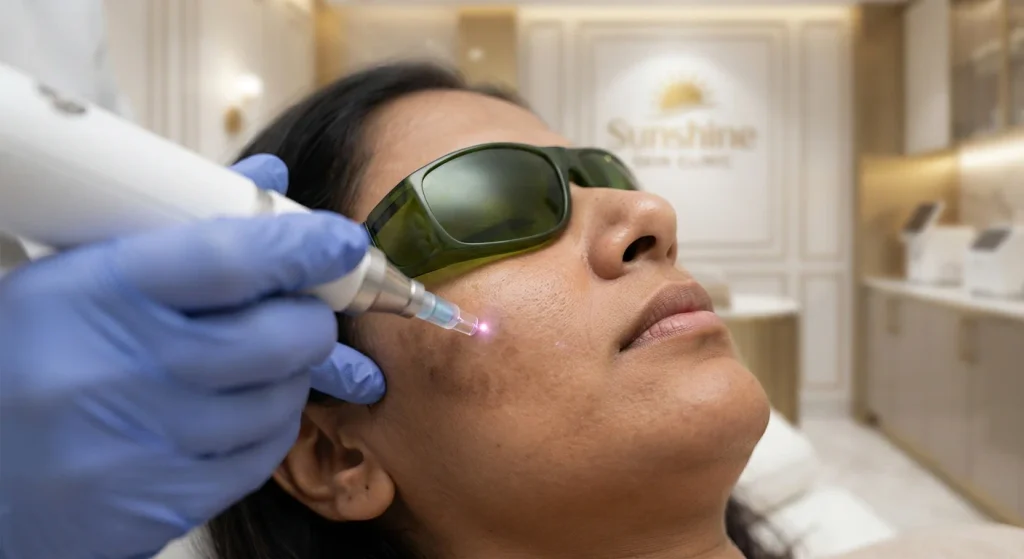
Depending on the cause, type, and severity of pigmentation, different treatments may be considered.
Medical Skincare for Pigmentation
A dermatologist-guided skincare routine may be recommended to support gradual improvement in pigmentation while maintaining the skin barrier.
The products selected depend on the patient’s skin type, pigmentation pattern, sensitivity, and existing skincare routine.
Medical skincare may also form an important part of maintenance after in-clinic treatment.
Chemical Peels for Pigmentation
Selected chemical peels can help improve superficial pigmentation and uneven skin tone by promoting controlled exfoliation of the skin.
The type and strength of peel should be selected according to the patient’s pigmentation, skin type, and clinical condition.
Chemical peels are not equally suitable for all forms of pigmentation.
Explore Chemical Peel →
Laser Toning
Laser-based toning may be considered for selected pigmentation concerns and uneven skin tone.
The technology, settings, treatment frequency, and overall protocol depend on individual skin characteristics and the specific pigmentation being treated.
A professional assessment is particularly important for patients who are prone to pigmentation changes after procedures.
Explore Laser Toning →
Laser Pigmentation Treatment
Certain laser technologies can be used to target specific pigmentation concerns.
The appropriate laser depends on factors such as the type of pigment, depth, location, skin tone, and treatment goals.
Laser treatment should always be individualized rather than selected solely because a particular technology is popular.
Explore Laser Treatments →
Skin Rejuvenation Procedures
Some patients have pigmentation together with dullness, uneven texture, enlarged pores, or other skin-quality concerns.
In selected situations, pigmentation management may be incorporated into a broader skin rejuvenation plan.
Explore Skin Rejuvenation Procedures →
Combination Pigmentation Treatment
Pigmentation often exists alongside other concerns such as acne, acne marks, dullness, uneven skin tone, or textural changes.
Depending on the clinical assessment, treatment may involve a combination of:
- Medical Skincare
- Chemical Peels
- Laser Toning
- Selected Laser Procedures
- Skin Rejuvenation Treatments
- Ongoing Sun Protection
The objective is not to use as many treatments as possible. The aim is to select the approaches that are appropriate for the individual’s pigmentation and skin characteristics.
Pigmentation and Indian Skin Types
Skin pigmentation requires thoughtful treatment planning, particularly in individuals whose skin is more prone to developing pigmentation after inflammation or procedures.
Before recommending an in-clinic treatment, the dermatologist may consider:
- Natural Skin Tone
- Pigmentation History
- Sensitivity
- Previous Procedure Response
- Active Inflammation
- Current Skincare Products
- Sun Exposure
This helps create a treatment strategy that takes both the pigmentation and the surrounding skin into account.
Pigmentation After Acne
Acne can leave behind dark marks even after the active pimple has disappeared.
These marks are usually different from true acne scars because they primarily involve a change in pigmentation rather than a depression or alteration in skin structure.
If both active acne and pigmentation are present, the treatment plan may need to address both concerns.
Explore Acne Treatment →
Explore Acne Scar Treatment →
Melasma & Pigmentation
Melasma is one of the important causes of facial pigmentation and often presents as brown or grayish patches, particularly on the cheeks, forehead, nose, or upper lip.
Because melasma can be influenced by sunlight and hormonal factors and may recur, it deserves a dedicated treatment and maintenance strategy.
Read More About Melasma Treatment →
Dark Spots & Localized Pigmentation
Not every dark spot has the same cause.
A dermatologist may evaluate whether a spot is related to:
- Previous Acne
- Sun Exposure
- Skin Inflammation
- Injury
- Hormonal Changes
- Another Pigmented Condition
Any spot that is new, changing, bleeding, crusting, or otherwise unusual should be professionally evaluated rather than automatically treated as simple pigmentation.
Freckles & Sun-Related Pigmentation
Freckles are small areas of increased pigmentation that are often influenced by genetics and sun exposure.
Some people seek treatment because they want a more even complexion, while others prefer to maintain their natural appearance.
Treatment suitability depends on the pigmentation pattern, skin type, and individual goals.
Explore Freckles Treatment →
Pigmentation Treatment for Face, Neck & Hands
Pigmentation may affect different areas of the body, and treatment planning can vary according to location.
Face
Facial pigmentation is often influenced by sun exposure, hormones, acne, and inflammation.
Neck
Darkening around the neck can have multiple possible causes and should be evaluated rather than automatically assumed to be cosmetic pigmentation.
Hands
The hands are frequently exposed to sunlight and may develop localized dark spots over time.
Treatment is selected according to the underlying cause and the condition of the skin in that particular area.
Your Pigmentation Treatment Journey
Step 1 — Consultation
We discuss when the pigmentation appeared, whether it changes, previous treatments, skincare routine, sun exposure, and any associated skin concerns.
Step 2 — Pigmentation Assessment
The dermatologist evaluates the colour, pattern, distribution, and overall condition of the affected skin.
Step 3 — Identify the Likely Cause
The clinical pattern is reviewed to determine what type of pigmentation may be involved and whether further evaluation is required.
Step 4 — Personalized Treatment Plan
Appropriate skincare, procedures, combination treatments, or maintenance strategies are discussed.
Step 5 — Follow-Up
Pigmentation often requires monitoring over time. Follow-up allows treatment response to be assessed and the plan adjusted when appropriate.
Sun Protection Is Part of Pigmentation Care
Sun protection is not simply an optional addition to pigmentation treatment.
UV exposure can contribute to pigmentation and may worsen certain pigmentary conditions. For this reason, your dermatologist may recommend appropriate sun-protection measures as part of an overall pigmentation-management plan.
Treatment without attention to ongoing triggers may make long-term control more difficult.
How Many Sessions Are Needed?
There is no fixed number of pigmentation-treatment sessions that applies to everyone.
The treatment schedule may depend on:
- Type of Pigmentation
- Depth
- Severity
- Treatment Selected
- Skin Type
- Response to Previous Treatment
- Individual Treatment Goals
Some pigmentation concerns may improve gradually with consistent skincare, while others may require a series of professionally performed procedures.
What Results Can You Expect?
Pigmentation treatment is generally aimed at reducing the appearance of uneven pigmentation and improving overall skin tone.
The degree and speed of improvement vary between individuals. Some types of pigmentation may respond relatively well, while conditions such as melasma can require longer-term management because recurrence is possible.
It is therefore more appropriate to focus on gradual, sustainable improvement rather than promising complete or permanent removal of every pigmentation concern.
Why Choose Sunshine Skin Clinic for Pigmentation Treatment?
Pigmentation can be deceptively complex. A dark spot that looks similar to another spot may have a completely different cause.
At Sunshine Skin Clinic, we focus on identifying the pigmentation pattern before choosing a treatment.
Personalized Skin Assessment
Your pigmentation, skin type, sensitivity, and history are considered before treatment recommendations are made.
Multiple Treatment Options
Depending on your condition, treatment planning may involve skincare, chemical peels, laser-based procedures, or combination approaches.
Skin-Type Consideration
We take pigmentation tendency and treatment response into account when planning procedures.
Long-Term Management
Pigmentation care does not end when a dark patch becomes lighter. Maintenance and trigger management are important for many patients.
Realistic Expectations
We focus on meaningful and sustainable improvement rather than promising unrealistic or guaranteed outcomes.
Frequently Asked Questions
What is the best treatment for pigmentation?
There is no single best treatment for every type of pigmentation. The appropriate approach depends on its cause, pattern, depth, skin type, and individual circumstances.
Can pigmentation be permanently removed?
Some pigmentation can improve significantly, but recurrence is possible for many pigmentary conditions. Long-term management may therefore be necessary.
Does pigmentation come back after laser treatment?
It can. Recurrence depends on the underlying cause and factors such as sun exposure, hormonal influences, inflammation, and individual skin characteristics.
Is chemical peel good for pigmentation?
Selected chemical peels may be useful for certain superficial pigmentation concerns. The appropriate peel depends on the patient’s skin type and condition.
Is pigmentation after acne the same as an acne scar?
No. Post-acne pigmentation is a colour change, whereas an acne scar involves a structural change in the skin.
Can pigmentation be treated on Indian skin?
Yes, but treatment needs to be individualized. Skin that is more prone to post-inflammatory pigmentation may require particularly careful treatment selection and aftercare.
How long does pigmentation treatment take?
The timeframe depends on the cause and treatment. Pigmentation may improve gradually and often requires consistent treatment and maintenance.
Should I use home remedies for pigmentation?
Aggressive or unproven home remedies can irritate the skin and may sometimes worsen pigmentation. A dermatologist-guided approach is safer when pigmentation is persistent or recurring.
When should a dark spot be examined by a dermatologist?
A new, rapidly changing, bleeding, crusting, painful, or otherwise unusual pigmented spot should be professionally evaluated rather than assumed to be routine pigmentation.