

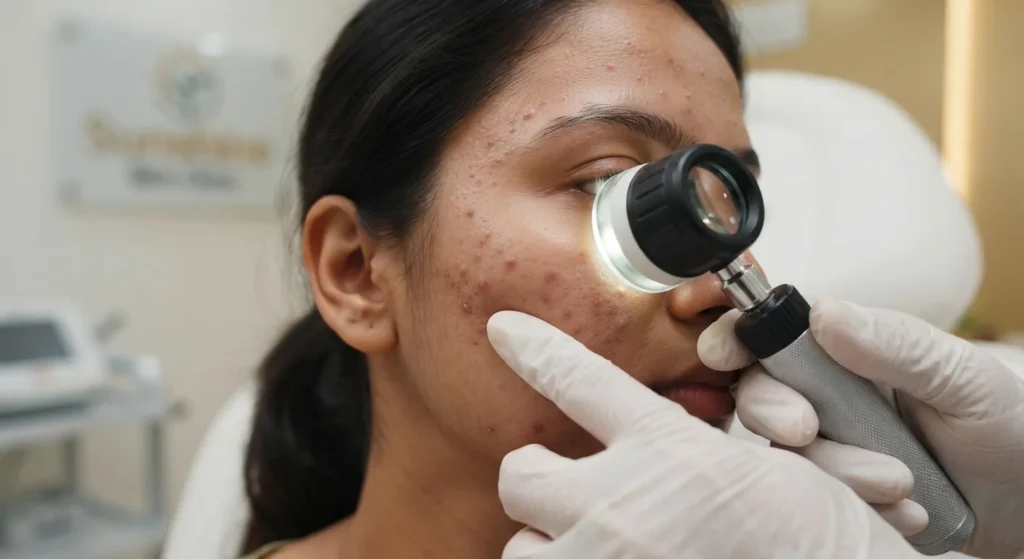
What Can Acne Look Like?
Acne does not look the same in every patient. Common forms include:
Whiteheads
Small, closed bumps that develop when a pore becomes blocked.
Blackheads
Open clogged pores that appear darker because of oxidation at the surface.
Papules
Small inflamed red bumps that may feel tender.
Pustules
Inflammatory lesions that contain visible pus.
Nodules & Cysts
Deeper inflammatory lesions that can be painful and may increase the risk of scarring.
A person may experience more than one type of acne at the same time, which is another reason individualized assessment matters.
Why Does Acne Develop?
There is rarely a single explanation for persistent acne. Several factors may contribute at the same time.
Excess Sebum
Increased oil production can contribute to clogged pores and an acne-prone environment.
Blocked Hair Follicles
Dead skin cells can accumulate within follicles and contribute to comedones.
Inflammation
Inflammatory processes can cause redness, swelling, tenderness, and more noticeable breakouts.
Hormonal Influences
Hormonal changes can affect oil production and acne activity, particularly during adolescence and in some adults.
Genetics
A family history of acne may increase an individual’s tendency to develop persistent or severe breakouts.
Skin & Hair Products
Certain cosmetic or hair-care products may contribute to clogged pores in some people.
Lifestyle & Environmental Factors
Stress, climate, sweating, friction, and other individual factors may influence acne in some patients.
The contributing factors are different for everyone, so treatment should be based on the individual’s clinical picture rather than assumptions.
When Should You See a Dermatologist for Acne?
Mild acne may sometimes be managed with appropriate skin care, but professional evaluation becomes particularly useful when breakouts are persistent, painful, recurring, or leaving marks.
Consider a dermatology consultation when you notice:
- Frequent or persistent breakouts
- Painful or deep acne
- Acne affecting the chest or back
- Recurrent acne despite home care
- Dark marks after pimples
- Early acne scarring
- Acne affecting confidence or daily life
- Sudden adult-onset acne
- Acne associated with unusual hormonal symptoms
Early assessment can also help identify whether a different skin condition is being mistaken for acne.
Our Approach to Acne Treatment
At Sunshine Skin Clinic, we don’t believe in treating every acne patient with the same routine.
Your treatment plan may take into account:
- Type of acne
- Severity
- Duration
- Skin type
- Oil production
- Presence of pigmentation
- Existing acne scars
- Previous treatment
- Current skincare routine
- Lifestyle factors
- Individual treatment goals
This allows us to separate the treatment of active acne from the management of post-acne marks and scars, when both are present.
Acne Treatment Options
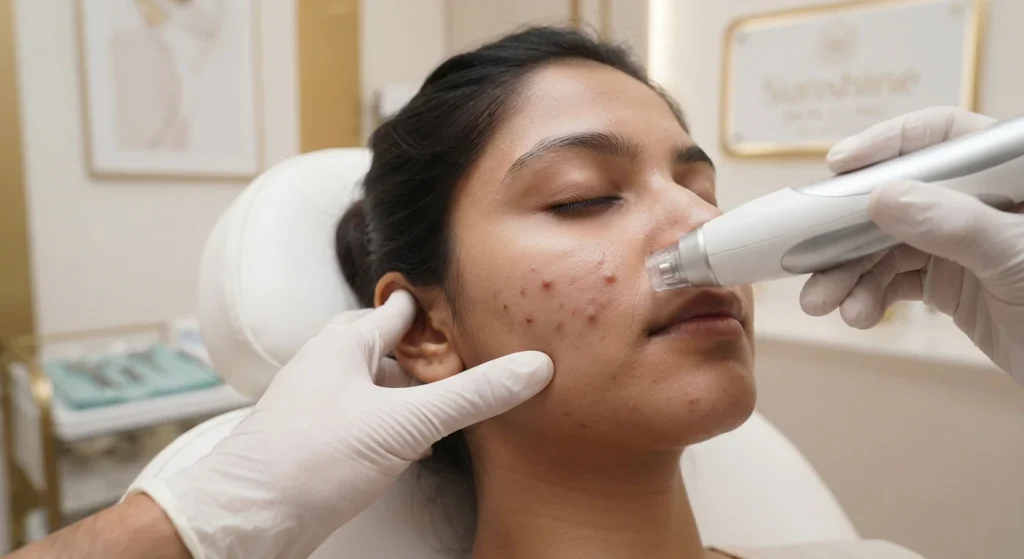
Depending on the individual’s condition, acne management may involve different approaches. The most suitable option is selected after consultation and clinical assessment.
Medical Acne Management
Medical management may be recommended to control active breakouts, reduce inflammation, manage clogged pores, and help prevent new lesions.
Acne-Focused Skincare
A suitable skincare routine can be an important part of long-term acne management. Products and routines should be selected according to skin type and treatment needs rather than following every trending product online.
Chemical Peel
In selected patients, dermatologist-guided chemical peel treatments may be considered as part of acne or post-acne care.
Explore Chemical Peel →
Acne Scar Procedures
When acne has already caused scarring, treatment planning may involve separate procedures designed to improve uneven texture or depressed scars.
Explore Acne Scar Treatment →
Laser-Based Treatments
Certain laser or light-based procedures may be considered for selected acne-related concerns depending on the patient’s skin and clinical assessment.
Explore Laser Treatments →
Treating Active Acne vs Treating Acne Scars
This distinction is important.
Active acne refers to current breakouts, inflammation, clogged pores, papules, pustules, nodules, or cysts.
Acne scars are changes in skin texture that remain after acne has healed.
They are not treated in exactly the same way.
When both conditions are present, the treatment plan may need to address active acne first or alongside an appropriate scar-management strategy, depending on the individual situation.
Read More About Acne Scar Treatment →
Acne Marks Are Not Always Acne Scars
After an acne lesion heals, many people are left with a dark or red mark. These marks are different from true structural acne scars.
Post-acne marks may gradually change with time, while depressed or raised scars represent a different type of skin change.
Understanding this difference helps patients choose more appropriate treatment options instead of assuming that every mark requires an aggressive scar procedure.
Acne & Oily Skin
Oily skin does not automatically mean that a person will develop severe acne, but excess sebum can contribute to clogged pores in some individuals.
Acne-prone oily skin generally benefits from a balanced routine that cleans the skin without excessive scrubbing or unnecessary irritation.
During consultation, we can also consider whether the patient’s current skincare or cosmetic products may be contributing to recurring congestion.
Adult Acne
Acne can continue into adulthood or begin later in life. Adult acne may appear on the lower face, jawline, chin, or other areas and can sometimes follow a recurring pattern.
Because adult acne can have different contributing factors from teenage acne, the history and pattern of breakouts become particularly useful during consultation.
A dermatologist can assess whether hormonal, medication-related, skincare-related, or other factors may be relevant.
Acne in Teenagers
Teenage acne is common and often coincides with hormonal changes during adolescence.
However, persistent or severe acne should not simply be dismissed as something that has to be endured. Appropriate management can help control current breakouts and may also reduce the likelihood of long-term marks or scarring.
A simple, age-appropriate skincare routine and professional guidance can make treatment easier to follow.
Our Acne Treatment Journey
Step 1 — Consultation
We discuss when the acne started, how often breakouts occur, what treatments you’ve already tried, and what concerns you most.
Step 2 — Skin Assessment
The dermatologist evaluates the type and severity of acne, skin type, oiliness, inflammation, and any signs of post-acne pigmentation or scarring.
Step 3 — Treatment Planning
Based on the assessment, suitable medical, skincare, procedural, or combination approaches are discussed.
Step 4 — Follow-Up
Acne can change over time, so follow-up allows treatment response to be evaluated and the plan adjusted when appropriate.
Why Consistency Matters in Acne Care
Acne often requires patience. Skin does not change overnight, and stopping a treatment plan prematurely may make it difficult to determine how well the approach is working.
Consistent use of recommended treatments, appropriate skincare, and follow-up care can all play a role in long-term management.
It is also important to avoid repeatedly switching between products or trying aggressive home remedies without understanding whether they are suitable for your skin.
Acne Prevention & Everyday Skin Care
Professional treatment is only one part of acne management. Day-to-day habits can also influence the skin.
Depending on individual needs, your dermatologist may discuss:
- Gentle cleansing
- Appropriate moisturization
- Sun protection
- Non-comedogenic product choices
- Avoiding unnecessary picking or squeezing
- Hair and skincare product review
- Consistent treatment use
The objective is to create a practical routine that you can realistically maintain.
Why Choose Sunshine Skin Clinic for Acne Care?
Acne can be frustrating, especially when it keeps returning or leaves behind visible marks.
At Sunshine Skin Clinic, our approach focuses on understanding the individual’s acne pattern rather than simply treating the most visible pimple.
Personalized Assessment
Treatment recommendations are based on your specific acne presentation and skin type.
Comprehensive Acne Care
We can address active acne as well as related concerns such as pigmentation and acne scars.
Clear Treatment Planning
We explain the recommended approach so that you understand what is being treated and why.
Long-Term Perspective
The goal is not only to manage current breakouts but also to support healthier skin and reduce the impact of recurring acne where possible.
Frequently Asked Questions
What is the best treatment for acne?
There is no single acne treatment that is ideal for every person. The right approach depends on the type, severity, duration, skin type, previous treatment, and individual circumstances.
Can acne be permanently cured?
Acne can often be effectively managed, but its course varies. Some people experience periods of improvement and recurrence. Long-term management depends on the underlying factors and individual response.
Should I squeeze pimples?
Repeatedly squeezing or picking acne can increase irritation and may contribute to post-inflammatory marks or scarring. Professional guidance is preferable when acne is persistent or severe.
Can acne cause permanent scars?
Some types of inflammatory or deep acne can increase the risk of permanent scarring. Early and appropriate management may help reduce that risk.
How long does acne treatment take?
Treatment timelines vary. Some patients may notice improvement relatively early, while others require a longer period of consistent management and follow-up.
Can adults get acne?
Yes. Acne can persist from adolescence or begin during adulthood. Adult acne warrants evaluation when it is persistent, recurring, or associated with other symptoms.
Can skincare products make acne worse?
Some products may contribute to clogged pores or irritation in certain individuals. Product selection should take skin type and acne susceptibility into account.
When should I consult a dermatologist for acne?
Professional evaluation is particularly useful for persistent, painful, deep, recurrent, or scarring acne, or when over-the-counter care has not provided satisfactory improvement.