


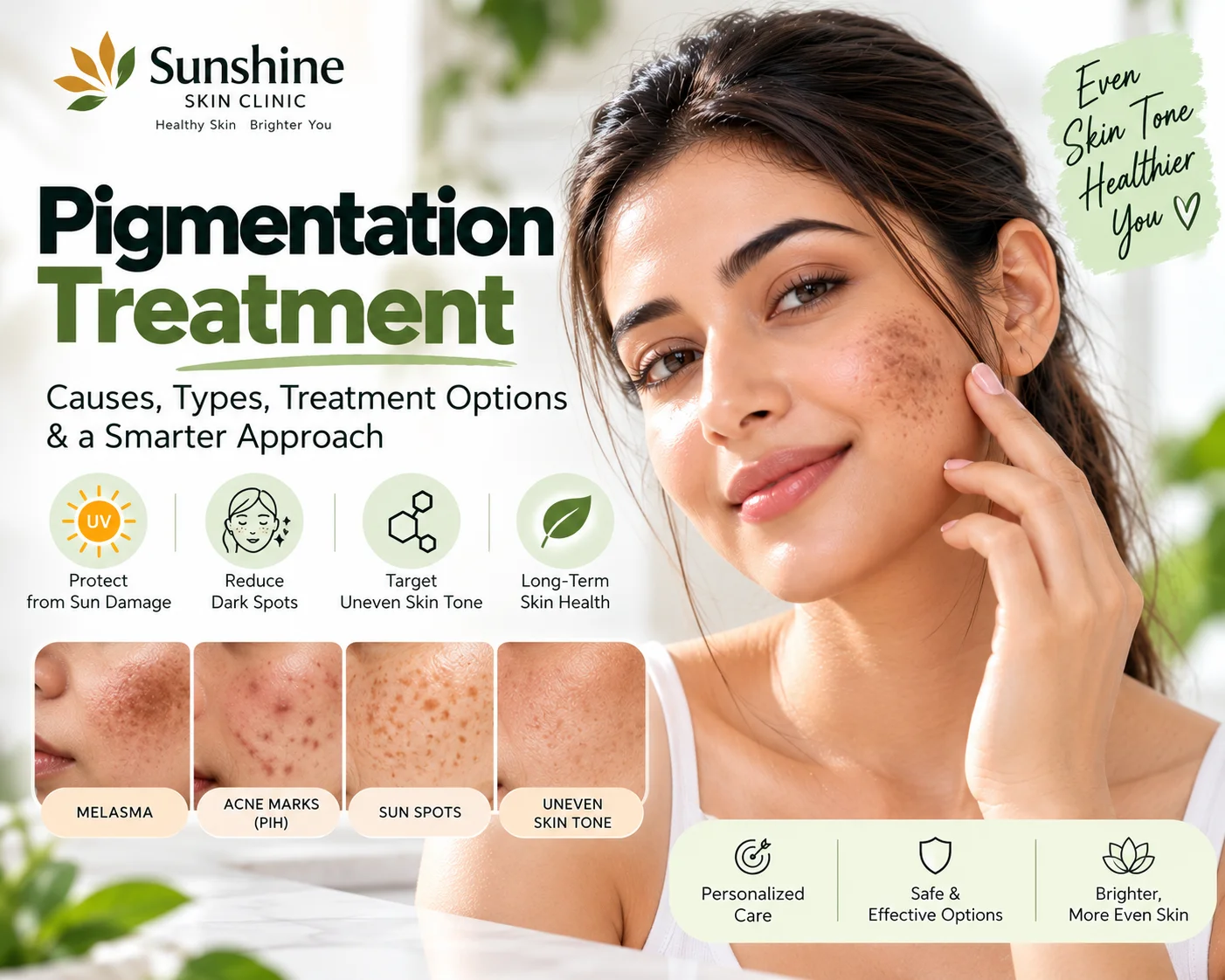
Dark spots, uneven skin tone, brown patches, or pigmentation around the mouth can be frustrating—especially when they seem to return just when the skin starts looking better.
One of the biggest problems with pigmentation is that “pigmentation” is not actually one single skin condition.
A dark patch may be related to sun exposure, acne or another inflammation, melasma, hormones, certain medications, irritation, or a different pigmentary disorder altogether. Some conditions look similar on the surface but need very different treatment strategies.
That is why effective pigmentation treatment starts with a question that is often overlooked:
Why is the skin producing or retaining extra pigment in the first place?
The 2026 Indian expert consensus on hyperpigmentation disorders highlights accurate diagnosis, proactive prevention, recurrence reduction, and individualized treatment for common disorders such as melasma, post-inflammatory hyperpigmentation (PIH), acquired dermal macular hyperpigmentation, and periorbital hyperpigmentation in skin of color.
This guide explains the different types of pigmentation, how dermatologists evaluate them, which treatments may be considered, why aggressive treatment can sometimes backfire, and how long-term control differs from simply making a dark spot lighter.
What Is Skin Pigmentation?
Skin gets its natural colour mainly from melanin, a pigment produced by specialized cells called melanocytes.
Pigmentation becomes visible when melanin production, distribution, or deposition changes.
This can produce:
- Small dark spots
- Brown patches
- Uneven facial tone
- Dark marks after acne
- Pigmentation around the mouth or eyes
- Sun-related spots
- Larger symmetrical patches such as melasma
Pigmentation may occur on the face, neck, hands, underarms, or other parts of the body.
The appearance alone, however, does not always tell you the exact cause.
8 Things You Should Understand Before Starting Pigmentation Treatment
1. “Pigmentation” Is a Symptom Description, Not a Diagnosis
This is perhaps the most important concept in the entire subject.
When someone says:
“Mere face par pigmentation hai.”
a dermatologist may still need to determine whether it is:
Melasma
Post-inflammatory hyperpigmentation
Sun-induced pigmentation
Acquired dermal macular hyperpigmentation
Periorbital hyperpigmentation
Pigmentation related to medication or irritation
Another skin disorder with a similar appearance
The 2026 Indian consensus emphasizes that hyperpigmentation disorders can be clinically heterogeneous and that accurate diagnosis is essential because conditions with overlapping appearances may require different management.
The practical lesson
Do not start treatment simply because a cream is labelled “for pigmentation.”
Treat the cause, not just the colour.
2. A Dark Mark After Acne Is Different From Melasma
Two of the most commonly confused problems are post-inflammatory hyperpigmentation (PIH) and melasma.
Post-inflammatory hyperpigmentation
PIH develops after inflammation or injury to the skin.
Common triggers include:
- Acne
- Eczema
- Irritation
- Burns
- Infections
- Picking or trauma
It commonly occurs in darker skin tones and may become more noticeable after sun exposure.
Melasma
Melasma usually appears as patches of brown or gray-brown pigmentation, often in a relatively symmetrical distribution on areas such as the cheeks, forehead, nose, or upper lip.
Its development is multifactorial. Sunlight and hormonal factors are important contributors, while genetics and other triggers can also play a role.
Why the distinction matters
PIH may improve as the original inflammation is controlled and the pigment gradually fades.
Melasma, on the other hand, is often chronic and prone to recurrence, which means treatment usually includes long-term prevention and maintenance.
The two should not automatically be treated as the same condition.
3. Pigmentation Has a “Depth” — and That Can Change the Treatment Plan
One of the most interesting aspects of pigmentary disorders is that pigment does not always sit at the same level in the skin.
Some pigmentation is more superficial. Other pigment may extend deeper into the dermis.
This can influence both diagnosis and treatment response.
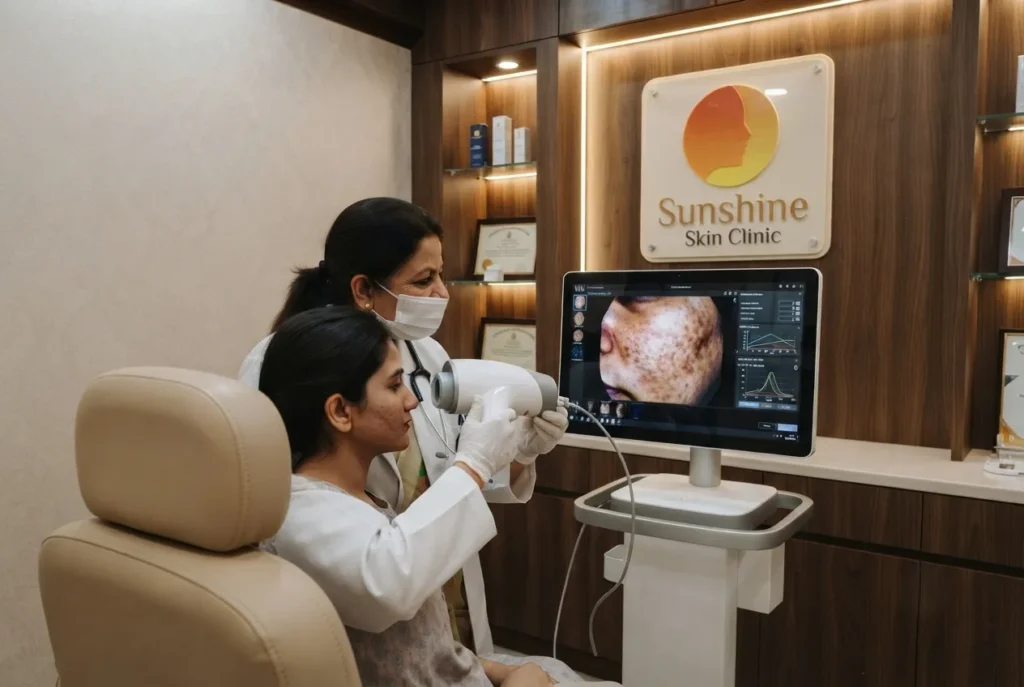
For melasma, the AAD notes that dermatologists may use tools such as a Wood’s lamp or dermatoscope to help understand how deeply the pigment extends and to distinguish melasma from other conditions.
The 2026 Indian consensus similarly identifies dermoscopy and Wood’s lamp as practical aids in the evaluation of hyperpigmented lesions, while histopathology may be needed in selected cases where diagnoses overlap.
Think of it as a “pigment map”
Instead of asking only:
“How dark is the patch?”
a dermatologist may also need to ask:
“Where is the pigment, and why is it there?”
That can be far more informative when choosing treatment.
What Causes Pigmentation?
Pigmentation can have many triggers, and more than one may be present at the same time.
Sun Exposure
Ultraviolet exposure stimulates melanogenesis and can worsen existing pigmentation.
Sun exposure is particularly important in melasma and several forms of facial hyperpigmentation.
Visible light can also contribute to pigmentation, especially in darker skin types. For melasma and some forms of hyperpigmentation, tinted sunscreen containing iron oxides may offer additional visible-light protection.
Acne and Inflammation
Inflammation from acne can stimulate excess pigment production.
This is why a small pimple can leave behind a brown mark long after the active acne has disappeared. PIH is particularly common in skin of color.
Hormonal Factors
Hormonal influences are strongly associated with melasma, particularly in some women. Pregnancy and estrogen- or progesterone-related factors can contribute, although melasma usually has more than one trigger.
Skin Irritation or Injury
Inflammation caused by harsh skincare, dermatitis, burns, procedures, or repeated rubbing can trigger post-inflammatory pigmentation.
In other words, even a product intended to improve the complexion can sometimes create problems if it irritates the skin.
Medications and Other Medical Conditions
Some medications and systemic disorders can cause or contribute to hyperpigmentation.
That is one reason persistent or unusual pigmentation should not always be treated as a cosmetic issue.
4. Indian Skin Needs a Different Risk-Benefit Conversation
This is especially important for patients in India.
Skin with more melanin is more prone to certain forms of post-inflammatory pigmentation, and procedures that intentionally create controlled skin injury can sometimes themselves trigger unwanted pigment changes.
Reviews of PIH in skin of colour have found that chemical peels and laser treatments can sometimes help but can also aggravate pigmentation if the treatment is not appropriately selected or performed.
The 2026 Indian consensus also specifically emphasizes proactive prevention and recurrence minimization for Fitzpatrick skin types III–VI.
This changes the way treatment should be discussed
The goal should not simply be:
“How aggressively can we remove pigment?”
A better question is:
“How can we reduce the excess pigment while minimizing the chance of creating more inflammation and pigmentation?”
That is a much more useful framework for skin of colour.
5. More Aggressive Treatment Is Not Automatically Better
This is another point that deserves more attention.
People often assume:
stronger cream = faster result
or:
stronger peel/laser = better pigmentation removal
But pigmentation-prone skin can react poorly to unnecessary irritation.
Inflammation itself can stimulate pigment production, particularly in skin of color. Reviews of PIH have highlighted the risk that procedures and topical agents can sometimes worsen pigmentary problems when irritation occurs.
The “irritation paradox”
A person may start using several active products:
exfoliating acid + retinoid + brightening serum + scrub + frequent facials
The intention is to remove pigmentation quickly.
But if the skin becomes inflamed, dry, burning, or irritated, the new inflammation may make pigmentation harder to control.
This is why a treatment plan often needs to balance:
pigment reduction + skin-barrier tolerance
rather than pursuing maximum strength.
6. Treating the Trigger Can Matter More Than Treating the Spot
Imagine that someone develops dark patches after repeated acne.
If the acne is still active, new inflammation continues to create new marks.
Similarly, if pigmentation repeatedly worsens because of sun exposure and inadequate photoprotection, simply using another brightening product may not solve the underlying problem.
This leads to an important concept:
Stop the pigment cycle.
A simplified cycle looks like:
Trigger → inflammation or melanocyte activation → excess pigment → visible darkening → ongoing exposure/irritation → new pigment
Effective management attempts to interrupt this cycle at more than one point.
For acne-associated hyperpigmentation, expert consensus supports early and effective acne treatment alongside therapies aimed at the pigmentation itself.
For melasma, sun protection is considered a cornerstone because sunlight can darken existing pigmentation and contribute to recurrence.
What Are the Main Pigmentation Treatment Options?
The appropriate treatment depends on the diagnosis.
Sunscreen and Photoprotection
This is not simply an “extra” skincare step.
Photoprotection is a foundational part of management for many forms of facial hyperpigmentation.
For melasma, the AAD recommends broad-spectrum sunscreen with SPF 30 or higher along with other sun-protective measures. Tinted sunscreen containing iron oxides can be especially useful because visible light can worsen melasma, particularly in darker skin tones.
For hyperpigmented spots in darker skin tones, the AAD also recommends sunscreen as the starting point before adding pigment-fading treatment.
Topical Treatments
Depending on the type of pigmentation, dermatologists may consider ingredients such as:
Hydroquinone
Hydroquinone is an established depigmenting treatment and remains an important prescription option for conditions such as melasma and some forms of hyperpigmentation.
Because irritation and inappropriate use can cause problems, it should be used under appropriate medical guidance rather than treated as an everyday cosmetic ingredient. The AAD identifies hydroquinone as a common treatment for melasma.
Retinoids
Topical retinoids can be useful for acne and some pigmentary disorders. They may help normalize skin-cell turnover and can be particularly useful when acne and PIH occur together.
However, irritation needs to be managed carefully.
Azelaic Acid
Azelaic acid may be useful for people dealing with acne and pigmentation because it can address inflammatory acne while also having pigment-modulating effects.
Kojic Acid, Vitamin C, Niacinamide and Other Agents
These may be considered in selected routines, depending on the diagnosis, skin sensitivity, and overall treatment plan.
The 2026 Indian expert consensus lists several topical options for different hyperpigmentation disorders, while emphasizing that treatment should be individualized according to the condition and clinical context.
What About Tranexamic Acid?
Tranexamic acid has attracted considerable attention in pigmentation treatment, particularly melasma.
It may be used topically or, in selected patients, orally.
However, oral tranexamic acid is not a simple cosmetic supplement.
The AAD notes that when oral tranexamic acid is being considered for melasma, the dermatologist should review the patient’s health history, including any history of blood clots.
Therefore:
“It is available online” does not mean “it is suitable for everyone.”
The route, dose, risks, and patient selection all matter.
Chemical Peels for Pigmentation
Chemical peels can be used for selected pigmentary disorders, particularly when superficial pigmentation is involved.
Agents such as glycolic acid, salicylic acid, and other peeling solutions may be considered depending on the condition.
However, peels intentionally affect the skin, and overly aggressive treatment may cause irritation or post-inflammatory pigment changes.
DermNet notes that chemical peels may help some forms of epidermal pigmentation but can also aggravate pigmentation by damaging the epidermis.
This is especially important in skin of colour.
A peel should therefore be selected for the right indication, depth, skin type, and treatment setting rather than simply because a stronger peel sounds more effective.
Laser and Light-Based Treatments
Laser and light-based procedures may be considered for certain pigmentary conditions and selected patients.
They can target pigment in different ways depending on the technology used.
But pigmentation treatment with devices is not as simple as “laser removes dark spots.”
The same energy that helps target pigment can sometimes trigger inflammation and unwanted pigmentary change. This is particularly relevant when treating darker skin types or conditions such as melasma that are prone to recurrence.
For this reason, device selection, settings, treatment timing, skin preparation, and aftercare all matter.
The AAD also notes that laser and light treatments may sometimes be added to an existing melasma treatment plan rather than used as a standalone solution.
What About Microneedling?
Microneedling creates controlled micro-injuries in the skin.
It has been studied as a treatment or adjunct for pigmentation problems such as melasma, often alongside topical therapies.
The AAD lists microneedling among procedures that dermatologists may add to melasma treatment plans in selected patients.
However, because microneedling intentionally creates inflammation, it should not automatically be considered a first step for every person with dark spots.
Again, diagnosis comes first.
7. Pigmentation Often Needs a Maintenance Plan, Not Just a “Removal” Session
This is especially important for melasma.
A person may see improvement after treatment and then assume the problem has been permanently removed.
Unfortunately, some pigmentary disorders are relapsing conditions.
AAD guidance notes that melasma can persist for years and commonly requires continued sun protection and individualized treatment. The 2026 Indian consensus also specifically emphasizes recurrence minimization and maintenance-oriented management.
Think of treatment in three stages
Control
Reduce the excess pigmentation.
Stabilize
Reduce the factors that keep stimulating pigment production.
Maintain
Continue an appropriate routine to reduce the likelihood of recurrence.
This is particularly important for people who repeatedly experience melasma.
The goal is not always to “finish treatment.”
Sometimes the goal is to keep the skin stable after improvement.
8. Measure Pigmentation Improvement Differently From Acne Improvement
Acne often gives you visible events:
new pimple → inflammation → healing
Pigmentation is slower.
A dark patch may gradually become lighter, but the change may be subtle from week to week.
This is why daily mirror checking can create the false impression that nothing is happening.
A better tracking system
Take standardized photographs:
- Same room
- Similar lighting
- Same camera
- Similar distance
- Same facial angle
- No beauty filter
- Similar time of day
Then compare at longer intervals.
This can make gradual changes easier to identify.
Track more than colour
Also note:
Size of the patch
Intensity of colour
New areas appearing
Existing areas getting lighter
Skin irritation
Frequency of flare-ups
This approach is more useful than asking whether the face looks “fairer.”
How Is Pigmentation Diagnosed?
A dermatologist may start with a medical history and detailed visual examination.
Important questions can include:
- When did the pigmentation begin?
- Did it appear after acne, rash, injury, or a procedure?
- Is it symmetrical?
- Does it worsen in sunlight?
- Are hormones or pregnancy relevant?
- What skincare products are being used?
- Are there prescription medications involved?
- Has any treatment previously made the pigmentation worse?
Clinical examination may be supplemented with tools such as:
Wood’s lamp
Dermoscopy
and, when clinically indicated:
Skin biopsy / histopathology
The 2026 Indian consensus specifically identifies dermoscopy and Wood’s lamp as useful diagnostic aids and notes that histopathology can help distinguish overlapping disorders when necessary.
Can Pigmentation Be Removed Permanently?
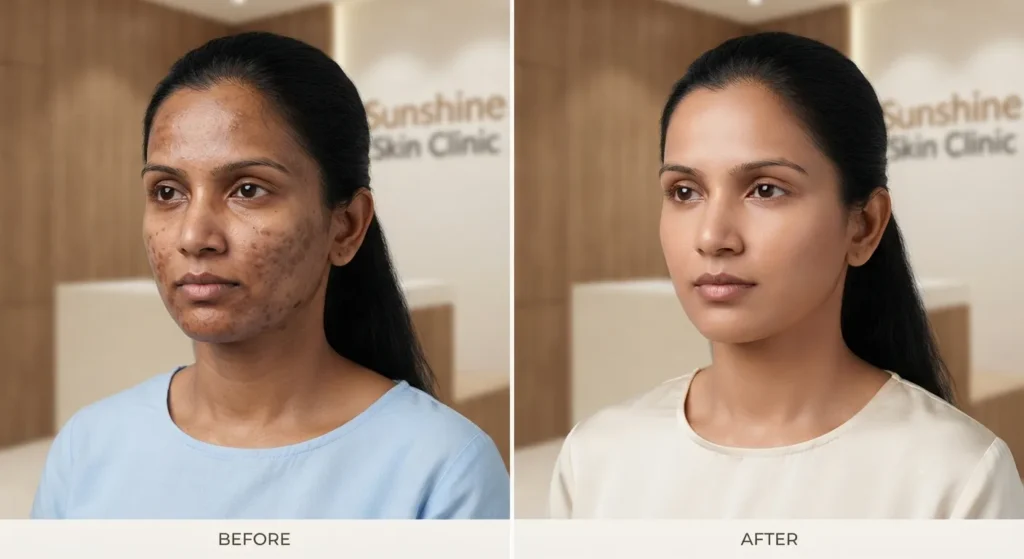
This depends entirely on the cause.
Some pigmentation may fade significantly once the trigger is removed.
Other conditions, particularly melasma, can recur even after successful treatment.
The AAD explains that melasma can last for years and that treatment aims to reduce excess pigment and even out skin tone, while continued sun protection helps reduce recurrence.
So “permanent pigmentation removal” is not an appropriate promise for every patient.
A more medically realistic goal is:
control the cause + reduce visible pigmentation + prevent new pigment + maintain improvement.
How Long Does Pigmentation Treatment Take?
There is no single timeline.
The answer depends on:
- The diagnosis
- Depth of pigmentation
- Duration
- Skin tone
- Trigger
- Treatment used
- Consistency of photoprotection
- Individual response
For melasma, the AAD notes that visible improvement commonly takes months rather than days, with a typical treatment period of roughly 3–12 months and sometimes longer for longstanding disease.
Post-inflammatory pigmentation can also take months to fade, particularly when the pigment is deeper or the trigger continues.
This is why changing products every week can make treatment harder to evaluate.
What Should You Avoid When You Have Pigmentation?
Some habits can make pigmentation harder to control.
Avoid aggressive scrubbing
Physical irritation can trigger inflammation and worsen post-inflammatory pigmentation.
Do not use multiple strong actives without a plan
More ingredients do not necessarily mean better results.
Avoid unlabelled or unsafe “fairness” products
Some poorly regulated products may contain undeclared ingredients or corticosteroids and can cause significant skin problems when used improperly.
Do not pick acne
If acne is causing PIH, repeatedly traumatizing the skin creates another source of inflammation.
Do not ignore sunscreen
Sun exposure can worsen many forms of pigmentation and undermine treatment.
“Skin Brightening” and Pigmentation Treatment Are Not the Same Thing
This distinction is important.
Pigmentation treatment should not be interpreted as an attempt to change someone’s natural skin colour.
In medical dermatology, the goal is generally to:
reduce excess pigment, correct uneven discoloration, and restore a more even appearance.
If the skin has developed a dark patch because of inflammation, melasma, sun exposure, or another condition, the objective is to manage the abnormal pigmentation—not to make healthy skin unnaturally lighter.
That is a much safer and more medically meaningful way to think about treatment.
When Should You See a Dermatologist?
Professional assessment is particularly important when:
- Pigmentation appears suddenly
- A patch keeps enlarging
- One lesion looks very different from surrounding spots
- Pigmentation is associated with itching, scaling, bleeding, or other symptoms
- The cause is unclear
- Darkening is occurring despite a good skincare routine
- Pigmentation repeatedly returns
- Acne, eczema, or another inflammatory condition is present
- Home treatments have caused burning or worsening pigmentation
- You are considering laser, peel, prescription creams, or oral treatment
Not every dark patch is a routine cosmetic issue, and some conditions can resemble one another.
A diagnosis-first approach reduces the risk of treating the wrong problem.
A Simple Daily Routine for Pigmentation-Prone Skin
A routine should remain practical.
Morning
Gentle cleanser → suitable treatment serum/medication if prescribed → moisturizer if needed → broad-spectrum sunscreen
For people with melasma or pigmentary concerns, a tinted sunscreen containing iron oxide may be useful, particularly when visible-light protection is relevant.
Evening
Gentle cleanser → prescribed pigment/acne treatment → moisturizer
Avoid adding multiple exfoliating products just because they promise faster brightening.
Consistency is often more useful than complexity.
A Practical Pigmentation Treatment Roadmap
Instead of asking which product is “best,” use a step-by-step framework.
Step 1: Identify the pattern
Is it:
isolated spots?
patches?
symmetrical pigmentation?
marks after acne?
darkness around the eyes or mouth?
Step 2: Look for the trigger
Sun?
Acne?
Hormones?
Irritation?
Medication?
Another skin disorder?
Step 3: Assess the pigment
How long has it been present?
Is it superficial or deeper?
Is the skin irritated?
Step 4: Protect before chasing results
Start consistent photoprotection and stop obvious sources of irritation.
Step 5: Select treatment according to diagnosis
Topical therapies, peels, lasers, microneedling, or systemic options may be considered depending on the specific condition.
Step 6: Review progress
Do not judge treatment based on a few days.
Step 7: Build maintenance
Especially for conditions that are prone to relapse, such as melasma.
This approach is broadly consistent with current Indian expert consensus, which favors individualized and multimodal management rather than a one-treatment-fits-all model.
Final Takeaway
The biggest mistake in pigmentation treatment is to treat every dark patch as though it were the same problem.
Pigmentation can result from acne-related inflammation, melasma, sun exposure, irritation, medications, or other dermatological conditions. Each has a different story, and sometimes two causes can exist together.
That is why the most useful first step is not:
“Which cream removes pigmentation fastest?”
It is:
“What type of pigmentation do I have, what is causing it, and what is the safest way to control it?”
For many patients, treatment begins with accurate diagnosis, consistent photoprotection, appropriate topical therapy, and control of the trigger. Selected cases may benefit from chemical peels, laser or light-based treatments, microneedling, or systemic options, but procedures should be chosen according to the condition and individual risk rather than simply because they are more advanced.
For Indian skin and other skin types with greater pigmentary reactivity, preventing additional inflammation is especially important because treatment itself can sometimes trigger unwanted pigmentation if it is poorly selected or too aggressive.
And for conditions such as melasma, successful management is often less about a single “removal” session and more about long-term control, relapse prevention, and maintenance.
Healthy-looking skin is not about making the skin unnaturally lighter.
It is about treating the underlying problem and helping the skin return to a more even, healthy and balanced appearance.
Frequently Asked Questions About Pigmentation Treatment
What is the best treatment for pigmentation?
There is no single treatment that is best for every pigmentation problem. Treatment depends on the diagnosis, depth, trigger, skin tone, and whether the condition is likely to recur. Current Indian expert consensus supports individualized treatment rather than a one-size-fits-all approach.
Can pigmentation be completely removed?
Some forms of pigmentation can fade substantially, while others—especially melasma—can recur. A realistic goal is significant improvement and long-term control rather than a guarantee of permanent removal.
Does sunscreen really help pigmentation?
Yes. Photoprotection is a foundation of treatment for many pigmentary disorders because sunlight can worsen existing pigmentation and stimulate new pigment. Tinted sunscreen containing iron oxide may provide additional visible-light protection in relevant conditions such as melasma.
Is pigmentation the same as melasma?
No. Melasma is one specific type of hyperpigmentation. Other causes include post-inflammatory hyperpigmentation, sun-induced spots, acquired dermal macular hyperpigmentation, and other disorders.
Can acne cause pigmentation?
Yes. Acne-related inflammation can leave post-inflammatory hyperpigmentation, particularly in darker skin tones. Early acne control can help reduce the risk of new pigmentary marks.
Is laser treatment safe for pigmentation?
Laser and light treatments can be useful for selected pigmentary conditions, but they are not automatically appropriate for every patient. Skin tone, diagnosis, device, settings, preparation and aftercare all influence risk, and some pigmentary disorders may worsen after aggressive treatment.
Can I use hydroquinone for pigmentation?
Hydroquinone is an established treatment for some pigmentary disorders, including melasma, but it should be used appropriately and, where prescribed, under medical supervision.
Is pigmentation treatment different for Indian skin?
The basic principles are similar, but darker skin can have a greater tendency toward post-inflammatory pigmentation. This makes prevention, tolerability and treatment selection especially important when considering procedures or irritating actives.
How long does pigmentation treatment take?
It varies by condition. Some marks may gradually fade over months, while melasma commonly requires several months of treatment and maintenance.
Why does pigmentation come back after treatment?
Some conditions are triggered by ongoing factors such as sunlight, hormones, inflammation or other individual triggers. Melasma in particular is known for recurrence, which is why long-term maintenance and photoprotection are important.