


Finding the best sunscreen for oily skin can be surprisingly difficult. Many sunscreens provide good sun protection but feel heavy, greasy, sticky, or uncomfortable on an oily face. Others may leave a white cast, make makeup slide off, or feel unsuitable for acne-prone skin.
The good news is that you do not need to choose a sunscreen simply because it is labelled “matte,” “gel,” or “for oily skin.” The better approach is to understand what your skin actually needs.
For oily and acne-prone skin, dermatologists generally recommend looking for a sunscreen that provides broad-spectrum protection, SPF 30 or higher, water resistance, and a non-comedogenic formulation. Lightweight gel, fluid, aqueous-lotion, and silicone-based “dry-touch” textures are often easier for oily skin to tolerate and wear consistently.
At Sunshine Skin Clinic, sunscreen selection should be considered part of an overall skincare plan rather than a one-size-fits-all product recommendation, especially when oily skin is accompanied by acne, pigmentation, melasma, sensitivity, or post-acne marks.
Quick Answer: What Is the Best Sunscreen for Oily Skin?
For most people with oily skin, a good everyday sunscreen should ideally have:
- Broad-spectrum protection against UVA and UVB
- SPF 30 or higher
- Water resistance, particularly if you sweat or spend time outdoors
- Non-comedogenic or “won’t clog pores” labelling
- A lightweight, oil-free or low-grease texture
- A finish that you can comfortably reapply
- Good cosmetic acceptability, especially in hot and humid weather
For oily or acne-prone skin, gel, fluid, aqueous-lotion, and dry-touch formulations can be practical choices because they are generally lighter and less greasy than rich cream-based products.
However, there is no single sunscreen that is automatically the best for every person with oily skin. The right option depends on your skin condition, lifestyle, amount of sun exposure, sensitivity, and what other treatments or skincare products you are using.
Why Does Oily Skin Need Sunscreen?
Oily skin can still be damaged by ultraviolet radiation.
Daily sun exposure contributes to premature skin ageing, tanning, uneven skin tone, pigmentation, and sunburn. UV exposure is also relevant to several dermatological conditions and can make some pigmentation problems more difficult to control.
People with acne may also benefit from consistent photoprotection. Acne itself, picking, inflammation, and some acne treatments can increase the risk of post-inflammatory pigmentation, particularly in darker skin tones. Dermatologists therefore commonly recommend non-comedogenic sunscreen as part of acne care.
This is one reason sunscreen should not be viewed simply as a cosmetic product. It is an important part of everyday skin protection.
What Should You Look for in a Sunscreen for Oily Skin?
1. Look for Broad-Spectrum Protection
Broad-spectrum sunscreen helps protect against both UVA and UVB radiation.
UVB is strongly associated with sunburn, while UVA contributes significantly to photoaging and can play a role in pigmentation. A broad-spectrum sunscreen is therefore preferable to one that provides protection against only one part of the UV spectrum.
When comparing sunscreens, do not focus only on the SPF number. UVA protection also matters.
2. Choose SPF 30 or Higher
The American Academy of Dermatology recommends a sunscreen with SPF 30 or higher.
SPF primarily describes protection against UVB-induced sunburn. A higher SPF does not mean that sunscreen can block every ultraviolet ray, so sunscreen should still be combined with other sun-protective measures such as shade, protective clothing, hats, and sunglasses when appropriate.
For people living in sunny environments or spending substantial time outdoors, a dermatologist may recommend a higher-SPF product depending on individual circumstances.
3. Look for “Non-Comedogenic”
If your skin is oily or acne-prone, one of the most useful things to check on the label is:
Non-comedogenic
or
Won’t clog pores
The AAD specifically recommends non-comedogenic sunscreen for oily and acne-prone skin.
This does not guarantee that a product will suit every individual, because acne-prone skin can react differently to different formulations. However, it is a useful starting point when choosing a sunscreen.
4. Consider a Lightweight Texture
People with oily skin often prefer lightweight formulations because they can feel more comfortable during the day.
Common textures include:
- Gel
- Gel-fluid
- Fluid
- Aqueous lotion
- Lightweight emulsion
- Silicone-based dry-touch formulations
The Indian Sunscreen Forum’s consensus specifically identifies non-comedogenic, oil-free formulations such as gels, aqueous lotions, and silicone-based dry-touch sunscreens as suitable options for oily or acne-prone skin.
Texture is important because the best sunscreen is not the one that looks impressive on the label. It is the one you can apply in the correct amount and continue using regularly.
Gel Sunscreen vs Cream Sunscreen for Oily Skin
A common question is whether people with oily skin should completely avoid cream sunscreens.
Not necessarily.
Creams can be useful for certain skin types, especially when the skin barrier is dry or compromised. But people with very oily skin often find lightweight gels, fluids, and oil-free lotions more comfortable for everyday facial use.
Your skin can also change with the season, age, acne treatment, or climate. A sunscreen that feels comfortable during winter may feel too heavy in hot and humid weather.
So the goal is not simply to find a “gel sunscreen.” The goal is to find a formulation that gives adequate protection while remaining comfortable enough for regular use.
Best Sunscreen for Oily and Acne-Prone Skin
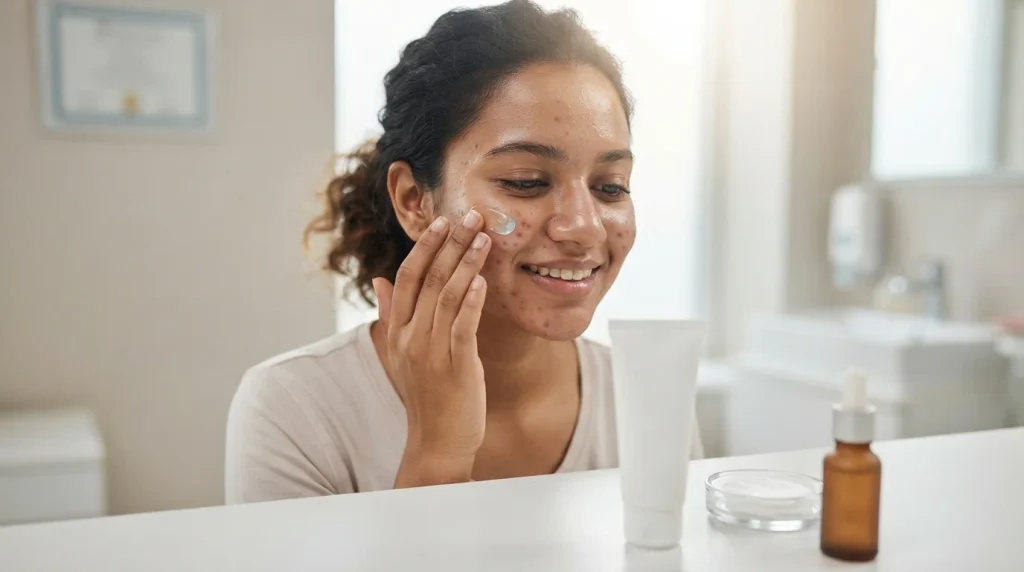
Oily skin and acne-prone skin are not exactly the same thing.
You can have oily skin without acne, and you can have acne with skin that is not consistently oily.
If you have acne-prone skin, consider these points when selecting sunscreen:
Choose non-comedogenic formulas
This is one of the clearest label features to prioritize.
Avoid unnecessarily heavy textures
A sunscreen that feels very greasy may reduce your willingness to use it every day.
Do not stop sunscreen because of acne
People sometimes avoid sunscreen because they believe it will make acne worse. Instead, choosing a suitable non-comedogenic formulation is generally a better approach. The AAD recommends broad-spectrum, water-resistant, SPF 30+ non-comedogenic sunscreen for people with acne.
Consider your acne treatment
Some acne treatments can increase sensitivity to sunlight. In those situations, consistent photoprotection becomes even more important.
Best Sunscreen for Oily Skin With Pigmentation or Dark Spots
If you have oily skin along with pigmentation, simply choosing a matte sunscreen may not be enough.
Sun exposure can contribute to worsening uneven pigmentation. This is particularly relevant for conditions such as melasma and post-inflammatory hyperpigmentation. Expert guidance for skin of color also recognizes that visible light can contribute to pigmentation, particularly in darker skin types.
For people concerned about pigmentation, a tinted sunscreen containing iron oxide may offer an additional advantage because iron oxides can help protect against visible light. The AAD notes that tinted sunscreen with iron oxide can provide better protection against dark spots than sunscreen without that feature.
However, a tinted sunscreen is not automatically necessary for everyone with oily skin. The correct choice depends on your pigmentation problem and individual needs.
Chemical, Mineral, or Hybrid Sunscreen: Which Is Better for Oily Skin?
Sunscreens can generally be described as chemical, mineral, or hybrid depending on their UV-filter composition.
Chemical Sunscreens
These use organic UV filters to absorb ultraviolet radiation.
They are available in many lightweight cosmetic formulations and may be preferred by people who dislike a heavy texture or visible residue.
Mineral Sunscreens
Mineral sunscreens commonly contain filters such as zinc oxide and/or titanium dioxide.
They are often considered useful for people with sensitive skin, particularly when sunscreen tends to sting or irritate the skin.
Hybrid Sunscreens
Hybrid products combine different types of UV filters.
There is no universal rule that says chemical, mineral, or hybrid sunscreen is always the best option for oily skin. The more important factors are adequate protection, formulation, tolerability, and whether you can comfortably use the product consistently. The Indian Sunscreen Forum also emphasizes individualized sunscreen selection according to skin type, condition, climate, lifestyle, and tolerability.
How Much Sunscreen Should You Apply?
Using a high-quality sunscreen is not enough if too little is applied.
A common reason people do not receive the expected level of protection is simply under-application.
Sunscreen should be applied generously to exposed skin. For the face, many dermatologists use practical quantity methods such as the two-finger method, although the exact amount can vary depending on the product and the area being covered.
The important principle is consistency: do not apply only a tiny amount because you dislike the finish.
AAD guidance also recommends applying sunscreen before going outdoors and using adequate coverage over exposed skin.
When Should You Apply Sunscreen?
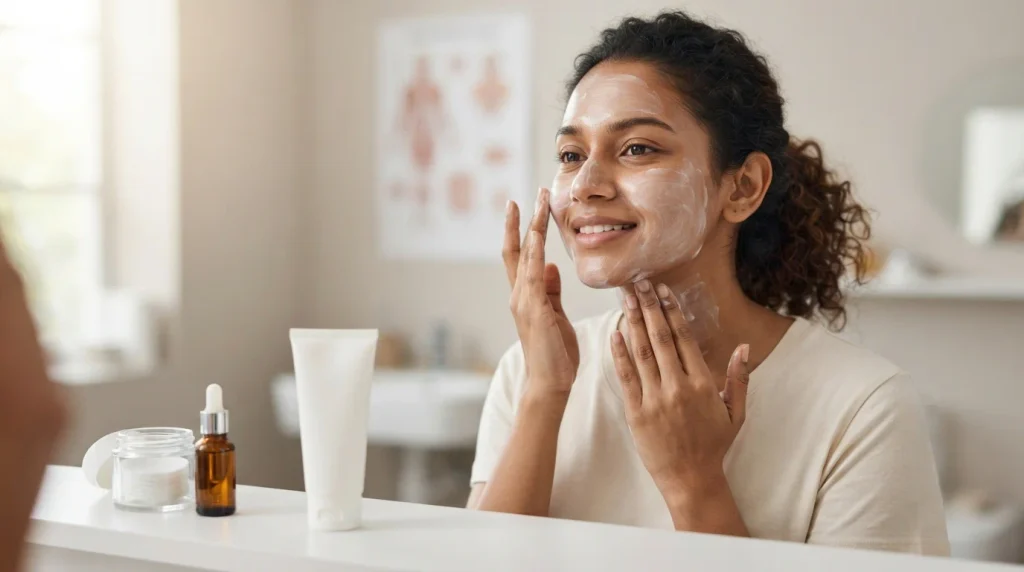
Apply sunscreen as the final step of your morning skincare routine, after other skincare products and before makeup.
For planned outdoor exposure, applying sunscreen before leaving home gives it time to form an effective protective layer. The AAD advises applying sunscreen about 15 minutes before going outdoors.
Do not forget commonly missed areas such as:
- Ears
- Hairline
- Neck
- Around the jawline
- Forehead
- Other exposed areas
How Often Should You Reapply Sunscreen?
Reapplication depends on your daily activities.
If you are outdoors, sweating, swimming, or wiping your face frequently, sunscreen can wear off and should be reapplied.
The AAD recommends reapplying sunscreen approximately every two hours when outdoors, and after swimming or sweating.
This is especially important for people who spend several hours outside rather than remaining indoors most of the day.
Do You Need Sunscreen Every Day?
For most people, daily photoprotection is a sensible habit whenever there is daytime exposure.
Sunscreen can help protect against UV-related skin damage, including sunburn and premature skin ageing. It is also important in the management and prevention of several pigmentation concerns.
However, sunscreen should not be your only method of sun protection.
When possible, combine sunscreen with:
- Shade
- Sun-protective clothing
- A wide-brimmed hat
- UV-protective sunglasses
This is particularly useful during prolonged outdoor exposure.
Why Does Sunscreen Make Oily Skin Look Greasy?
A greasy appearance can result from several factors:
- The sunscreen has a rich emollient base.
- Too much product is layered underneath it.
- The weather is hot or humid.
- The sunscreen is not designed for your skin type.
- Your skin produces more sebum during the day.
- Multiple skincare products are being layered together.
Changing to a lighter formulation can sometimes make a major difference.
It is also worth remembering that “matte” does not automatically mean “better.” A sunscreen should still provide dependable protection and be tolerable enough to use in the proper amount.
Can Sunscreen Cause Acne?
Sunscreen itself is not inherently an acne-causing product.
The problem is that some formulations may be too heavy or may not suit an individual’s skin.
For acne-prone skin, choosing a non-comedogenic sunscreen is generally recommended. If a particular sunscreen repeatedly seems to trigger breakouts, it may be worth changing the formulation rather than abandoning sunscreen altogether.
Persistent acne, frequent breakouts, or painful lesions may require a proper dermatological evaluation rather than simply changing skincare products.
Common Sunscreen Mistakes People With Oily Skin Make
Using too little sunscreen
A thin layer may look better cosmetically, but inadequate application can reduce the level of protection you receive.
Choosing a sunscreen only because it is “matte”
A matte finish is a cosmetic property. It does not replace broad-spectrum protection, sufficient SPF, or correct application.
Skipping sunscreen because you have acne
Acne-prone skin still needs sun protection. A non-comedogenic option is usually a better choice.
Applying sunscreen only on sunny days
UV exposure is not limited to days when the sun feels particularly strong.
Forgetting the neck and ears
These exposed areas are often missed.
Not reapplying during prolonged outdoor activity
Sweating, swimming, and wiping can reduce protection.
How to Build a Simple Morning Routine for Oily Skin
A simple routine can be more sustainable than using too many products.
A practical morning routine may look like:
Gentle cleanser → treatment product if prescribed → lightweight moisturizer if needed → sunscreen
For some oily skin types, the sunscreen may provide enough moisturization on its own. For others, a lightweight moisturizer may still be useful.
The right routine depends on whether you also have acne, pigmentation, sensitivity, rosacea, or another skin concern.
Should You Choose Sunscreen Based on Your Skin Tone?
Skin tone is one of several factors that may influence sunscreen preferences.
People with darker skin tones may be particularly concerned about white cast and pigmentation. Tinted sunscreens can be cosmetically preferable and, when they contain iron oxide, may also provide additional protection against visible light relevant to pigmentation.
That does not mean every person with a darker skin tone needs a tinted sunscreen. The best choice should be based on the person’s goals and skin condition.
When Should You See a Dermatologist?
You may benefit from professional guidance if:
- Your face remains excessively oily despite a consistent routine.
- You have frequent or painful acne.
- You are developing persistent dark spots or pigmentation.
- Your sunscreen causes repeated burning, itching, or irritation.
- You have melasma or pigmentation that keeps returning.
- You are using prescription acne or pigmentation treatments.
- You have recently undergone a dermatological procedure and need post-procedure sun protection.
- You are unsure which sunscreen is appropriate for your particular skin condition.
A dermatologist can determine whether your concern is simply oily skin or whether another condition is contributing to your symptoms.
Choosing the Best Sunscreen for Oily Skin: A Practical Checklist
Before buying a sunscreen, check the label for:
✓ SPF 30 or higher
✓ Broad-spectrum protection
✓ Water resistance, especially for outdoor use
✓ Non-comedogenic / won’t clog pores
✓ Lightweight texture suitable for oily skin
✓ Comfortable finish that you can apply in an adequate amount
✓ Tinted/iron-oxide option when pigmentation and visible-light protection are relevant
There is no need to choose a sunscreen simply because it is expensive, heavily advertised, or popular on social media.
The best sunscreen is the one that gives appropriate protection and is comfortable enough for you to use correctly and consistently.
Final Takeaway
The best sunscreen for oily skin is not necessarily the product with the strongest marketing claims or the most expensive ingredients.
For most oily and acne-prone skin types, look for a broad-spectrum, SPF 30 or higher, water-resistant, non-comedogenic sunscreen in a lightweight formulation. Gel, fluid, aqueous-lotion, and dry-touch textures can be particularly practical for oily skin.
If pigmentation, melasma, or post-acne dark spots are also a concern, your sunscreen choice may need additional consideration, including whether a tinted iron-oxide formulation is appropriate.
Most importantly, sunscreen works best when it is applied generously, used consistently, and combined with other sun-protective measures.
At Sunshine Skin Clinic, sunscreen selection can be considered alongside your overall skin condition, treatment plan, and individual skincare needs. When persistent acne, pigmentation, sensitivity, or another dermatological concern is involved, a dermatologist can help determine the most appropriate approach rather than relying on trial and error.
Frequently Asked Questions
What is the best sunscreen for oily skin?
A lightweight, broad-spectrum, water-resistant, non-comedogenic sunscreen with SPF 30 or higher is a good starting point for oily skin. Gel, fluid, aqueous-lotion, and dry-touch formulations are often more comfortable for oily complexions.
Is SPF 50 better for oily skin?
SPF describes the level of UVB protection and is not a measure of how oily or lightweight a sunscreen is. AAD recommends SPF 30 or higher. Your dermatologist may recommend a higher SPF depending on your level of sun exposure and skin concerns.
Is gel sunscreen good for oily and acne-prone skin?
Gel and other lightweight formulations can be practical choices for oily or acne-prone skin. Look for non-comedogenic labelling and choose a product that feels comfortable enough to use consistently.
Can sunscreen reduce dark spots?
Sunscreen does not instantly remove existing pigmentation, but good photoprotection helps reduce additional sun-related pigment changes and can be an important part of managing hyperpigmentation and melasma. Tinted sunscreens containing iron oxide may provide additional visible-light protection for people concerned about pigmentation.
How often should sunscreen be reapplied?
When outdoors, reapply approximately every two hours and after swimming or sweating.
Can oily skin skip moisturizer when using sunscreen?
Some oily skin types may find that a moisturizing sunscreen is sufficient, while others may still need a lightweight moisturizer. Your routine should be adjusted according to your skin’s hydration needs and any active dermatological treatments.
Is sunscreen necessary if I have acne?
Yes. Dermatologists recommend non-comedogenic sunscreen for acne-prone skin, particularly because sun protection is important and some acne treatments can increase sun sensitivity.
What sunscreen is best for oily skin with pigmentation?
Prioritize broad-spectrum protection and a formulation you can use consistently. A tinted sunscreen containing iron oxide may be particularly useful for some people with pigmentation because visible light can contribute to hyperpigmentation.