


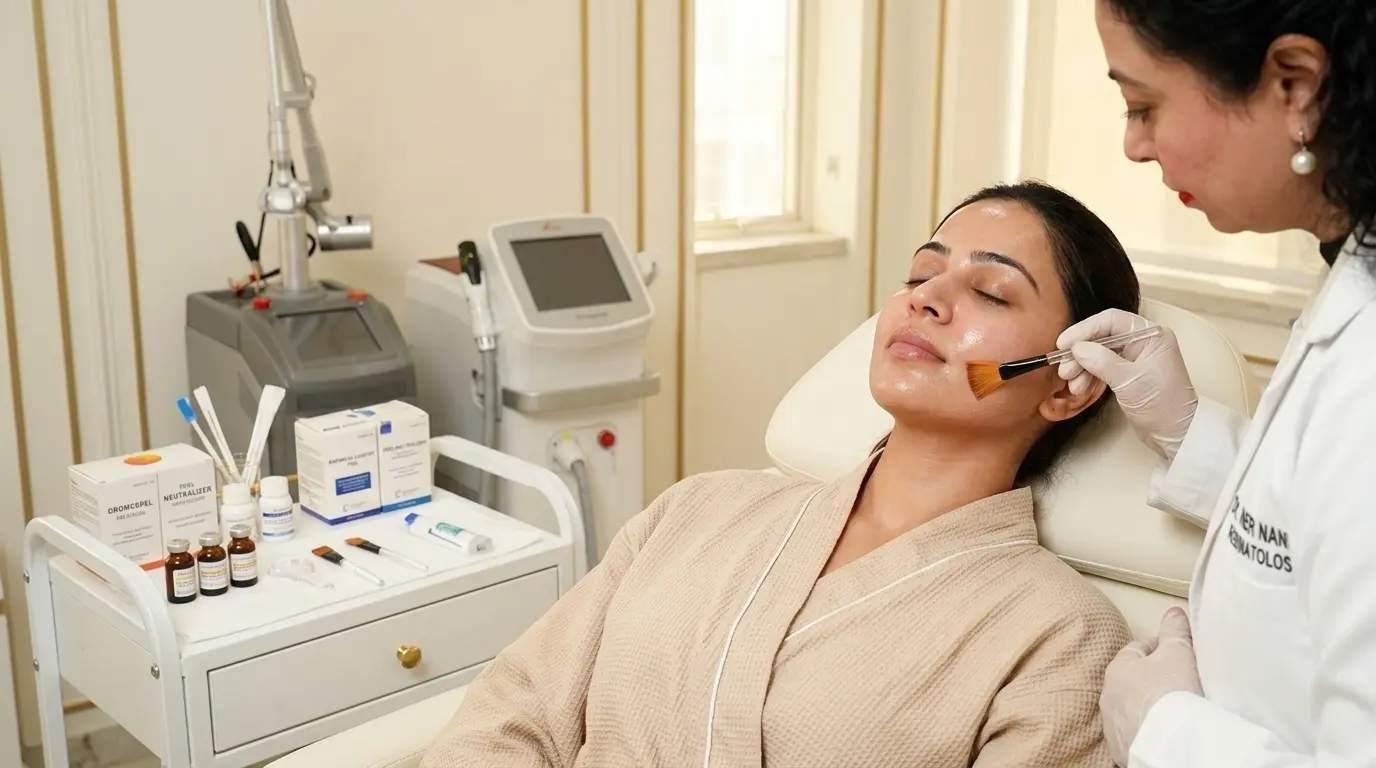
If you have been searching online for chemical peel treatment price, chemical peel cost, or chemical peel near me, chances are you are trying to understand whether a chemical peel is worth the investment and whether it is the right treatment for your skin.
A chemical peel is one of the most widely performed dermatologist-supervised skin resurfacing procedures. It is used to improve concerns such as acne marks, uneven skin tone, pigmentation, sun damage, fine lines, rough skin texture, and dull-looking skin. Unlike a regular facial, a chemical peel works by applying a carefully selected chemical solution that encourages controlled exfoliation of the outer skin layers, allowing healthier skin to gradually replace damaged skin.
The biggest mistake many people make is choosing a chemical peel based only on price. In reality, the right peel depends on your skin type, skin colour, medical history, lifestyle, and the specific skin concern being treated. A superficial peel that works well for mild pigmentation may not be appropriate for acne scars, and a stronger peel may not be suitable for sensitive skin. This is why dermatologist evaluation is important before selecting any peel.
In this guide, you’ll learn:
- What a chemical peel is
- How it works
- Different types of chemical peels
- Chemical peel treatment price and what affects it
- Benefits and limitations
- Recovery timeline
- Possible side effects
- Who is a good candidate
- Frequently asked questions
Rather than promoting one clinic or one product, this guide is designed to help you understand chemical peels from a medical and practical perspective so you can make an informed decision.
What Is a Chemical Peel?
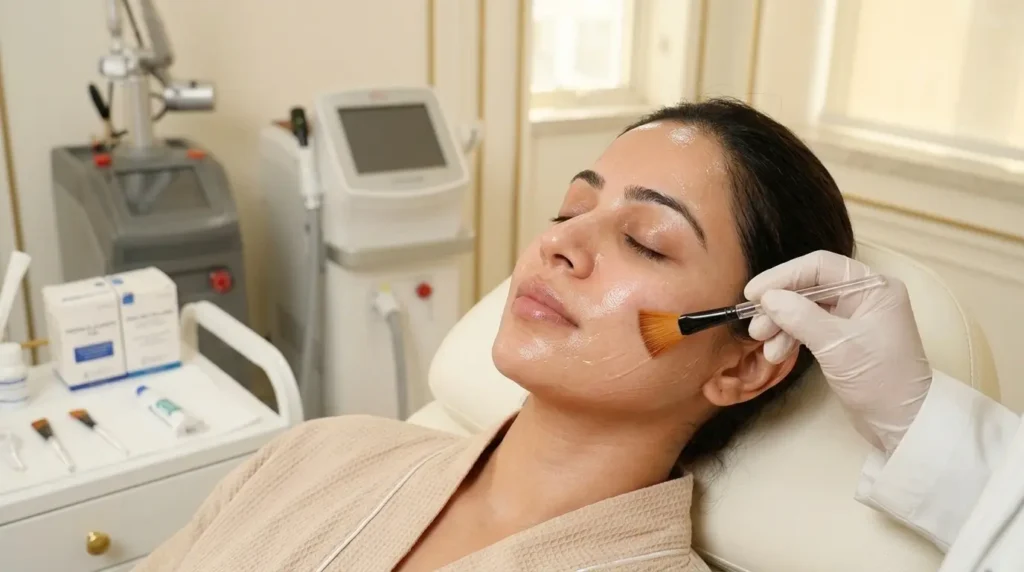
A chemical peel is a skin resurfacing procedure in which a carefully selected chemical solution is applied to the skin to remove damaged outer layers in a controlled manner. As the treated skin heals, new skin gradually appears smoother, brighter, and more even in texture.
Depending on the type and strength of the peel, treatment may help improve:
- Mild to moderate acne
- Post-acne marks
- Sun damage
- Uneven skin tone
- Melasma (in selected patients)
- Fine lines
- Rough skin texture
- Age spots
- Dull complexion
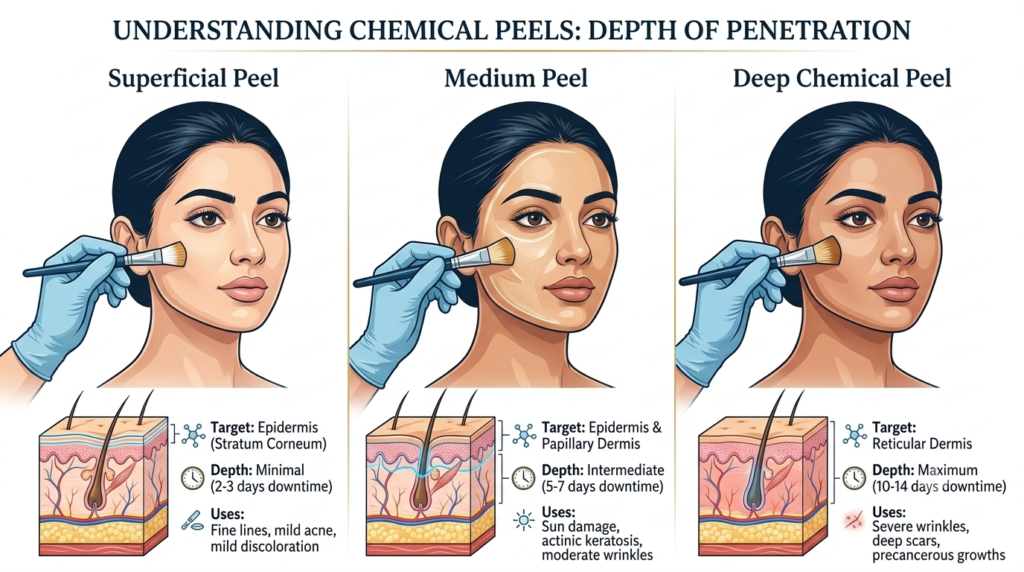
Chemical peels are generally classified into three categories:
Superficial Chemical Peel
This is the mildest type of peel and primarily treats the outermost layer of the skin. It is commonly recommended for dull skin, mild pigmentation, and uneven skin tone with relatively short recovery time.
Medium Chemical Peel
A medium-depth peel penetrates deeper into the skin and may be recommended for moderate pigmentation, acne marks, and more noticeable sun damage. Recovery is longer than with superficial peels and should be performed under appropriate medical supervision.
Deep Chemical Peel
Deep chemical peels affect deeper skin layers and are used only in carefully selected cases. Because recovery is significantly longer and the procedure carries greater risks, it is not appropriate for everyone.
The most suitable peel is determined after evaluating your skin type, treatment goals, and medical history—not simply by choosing the strongest option.
How Does a Chemical Peel Work?
Healthy skin naturally sheds dead cells over time. However, factors such as sun exposure, pollution, aging, acne, and hormonal changes can slow this process and contribute to uneven skin texture and pigmentation.
A chemical peel works by accelerating controlled exfoliation. Once the damaged outer layers are removed, the skin begins its natural repair process. Over time, this can improve skin texture, clarity, and overall appearance.
The exact depth of exfoliation depends on:
- The type of acid used
- The concentration of the peel
- The duration of application
- Your skin type
- Your dermatologist’s treatment plan
Because every person’s skin responds differently, treatment should always be individualized rather than following the same protocol for everyone.
Chemical Peel vs Regular Facial
Many people assume that a chemical peel is simply a stronger facial, but the two treatments have different purposes.
A regular facial primarily focuses on cleansing, massage, temporary hydration, and relaxation.
A chemical peel is a medical skin resurfacing procedure intended to improve specific skin concerns by promoting controlled exfoliation and skin renewal.
While both treatments have their place, the better choice depends on your skin concerns rather than popularity or price.
Benefits of Chemical Peel: Why Dermatologists Recommend It
One of the most common questions patients ask is whether a chemical peel is actually worth it. The answer depends on your skin concerns and treatment goals. Chemical peels are not designed to change your skin overnight, but when used appropriately, they can improve skin quality, texture, and overall appearance over time.
Rather than treating only the surface, a properly selected chemical peel encourages controlled skin renewal. As older, damaged skin cells are replaced, the skin often appears smoother, brighter, and more even-toned.
Below are some of the most recognized benefits of chemical peel treatments.
1. Improves Uneven Skin Tone
Uneven skin tone caused by sun exposure, post-inflammatory pigmentation, or mild discoloration is one of the most common reasons people choose chemical peels.
By promoting the removal of damaged outer skin layers, chemical peels can gradually improve skin brightness and help create a more even complexion.
2. Helps Reduce Acne Marks
Many people confuse acne scars with acne marks.
Fresh acne marks often respond better to chemical peels than deep acne scars. Repeated dermatologist-guided sessions may gradually improve the appearance of post-acne pigmentation.
However, deep acne scars usually require combination treatments such as microneedling, subcision, laser procedures, or other advanced techniques.
3. Improves Skin Texture
Rough skin texture caused by dead skin buildup can make the face appear dull and tired.
Chemical peels remove damaged surface cells, allowing smoother skin to gradually replace older layers.
Many patients notice that their skin feels softer after recovery.
4. Brightens Dull Skin
Pollution, UV exposure, stress, and aging often reduce the skin’s natural radiance.
A chemical peel encourages fresh skin renewal, which may improve overall brightness and produce a healthier-looking complexion.
5. Helps Control Excess Oil
For patients with oily skin, superficial chemical peels containing ingredients such as salicylic acid may help reduce excess oil production and keep pores cleaner.
Cleaner pores may also reduce the chance of future breakouts in suitable patients.
6. May Improve Mild Pigmentation
Pigmentation has many causes.
Chemical peels may improve certain types of superficial pigmentation, including mild sun spots and post-inflammatory pigmentation.
However, deeper pigmentation disorders such as melasma often require a customized treatment plan rather than chemical peels alone.
7. Supports Skin Renewal
Healthy skin naturally renews itself every few weeks.
As we age, this natural process slows down.
Chemical peels encourage controlled exfoliation, allowing newer skin cells to replace damaged outer layers more efficiently.
Chemical Peel for Acne
Many patients search specifically for:
- Chemical Peel for Acne
- Best Chemical Peel for Pimples
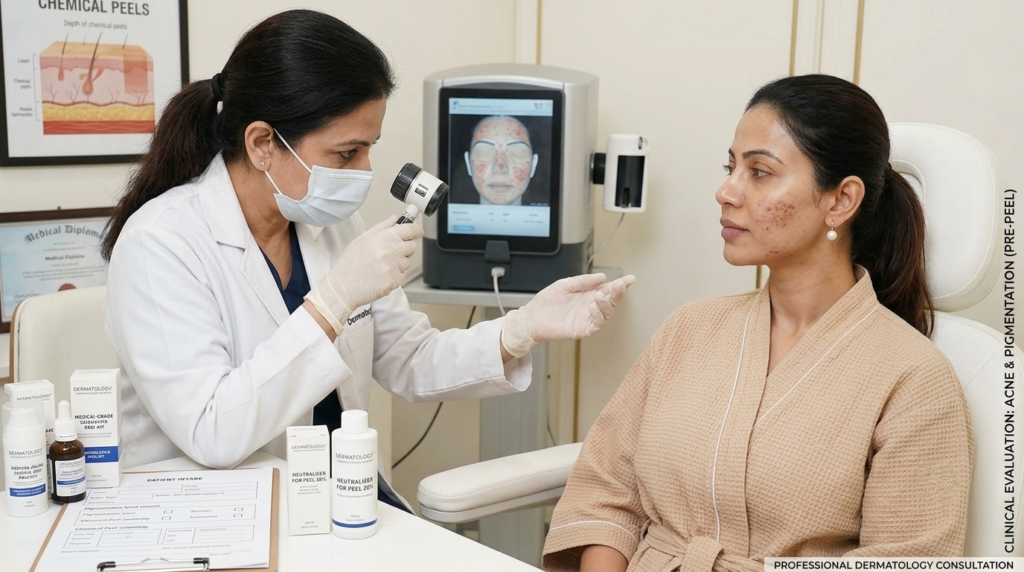
Chemical peels may help patients with mild to moderate acne by reducing clogged pores, controlling excess oil, and improving skin turnover.
However, active severe acne should always be evaluated by a dermatologist before beginning treatment.
Not every acne patient is an ideal candidate for chemical peeling.
Chemical Peel for Acne Scars
One of the biggest misconceptions is that one chemical peel session can permanently remove acne scars.
Unfortunately, this is not true.
Chemical peels may improve:
- Post-acne pigmentation
- Mild textural irregularities
- Superficial acne marks
Deep boxcar scars, rolling scars, and ice-pick scars generally require additional procedures.
Being honest about treatment expectations helps patients make informed decisions and builds trust.
Chemical Peel for Pigmentation
Chemical peels are commonly used to improve:
- Sun damage
- Age spots
- Uneven skin tone
- Post-inflammatory pigmentation
The number of sessions varies depending on:
- Cause of pigmentation
- Skin type
- Peel strength
- Sun protection habits
- Individual healing response
Patients who consistently use sunscreen and follow post-treatment instructions generally achieve better long-term results.
Chemical Peel for Melasma

Melasma is one of the most challenging pigmentation disorders.
Although chemical peels may be included as part of a treatment plan for selected patients, they are usually not considered a permanent cure.
Successful melasma management often requires a combination of:
- Sun protection
- Prescription topical medications
- Chemical peels (in suitable cases)
- Maintenance skincare
Long-term management is usually more effective than expecting immediate results.
Chemical Peel Before and After: What Should You Expect?
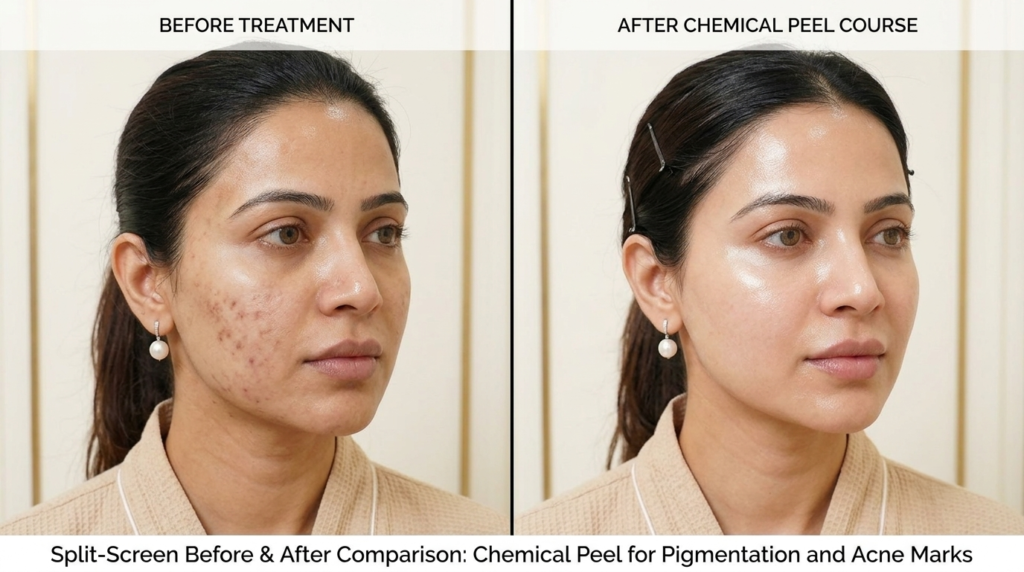
One of the most searched topics is Chemical Peel Before After.
Most patients want to know whether they will notice dramatic improvement after one session.
The answer depends on the condition being treated.
Many people notice:
- Brighter skin
- Smoother texture
- Better hydration
- Fresher appearance
- Cleaner-looking pores
However, concerns such as acne scars, stubborn pigmentation, and deeper wrinkles usually require multiple sessions or combination treatments.
A realistic expectation is one of the most important factors in patient satisfaction.
Who Is an Ideal Candidate for a Chemical Peel?
A dermatologist may recommend a chemical peel for patients who have:
- Mild pigmentation
- Acne marks
- Uneven skin tone
- Dull complexion
- Sun damage
- Fine lines
- Rough skin texture
- Oily skin
- Enlarged pores
However, treatment suitability depends on several factors, including skin type, medical history, and the specific skin concern being addressed.
When a Chemical Peel May Not Be the Best Choice
A chemical peel may not be appropriate for everyone.
Your dermatologist may postpone or avoid treatment if you have:
- Active skin infections
- Open wounds
- Severe inflammatory acne
- Certain skin allergies
- Recent facial surgery
- Uncontrolled skin diseases
A proper consultation helps determine whether a chemical peel is suitable or whether another treatment would provide better results.
Expert Tip
The best chemical peel is not the strongest one.
The best chemical peel is the one that matches:
- Your skin type
- Your skin colour
- Your concern
- Your lifestyle
- Your recovery expectations
Choosing a peel simply because it is stronger or more expensive does not necessarily lead to better results.