


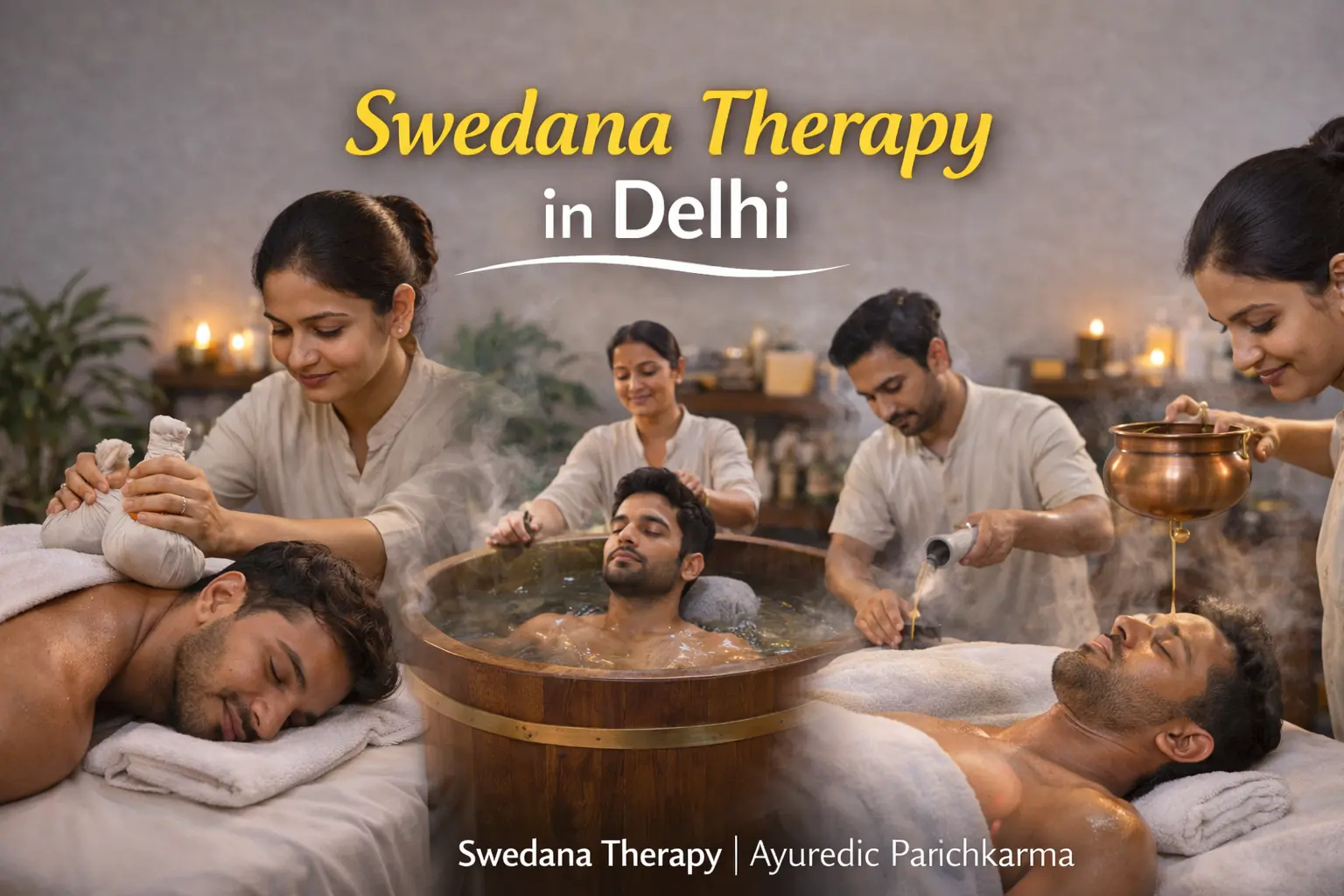
Swedana therapy is a core Panchakarma procedure in Ayurveda that uses therapeutic heat and steam to open channels, relax muscles, improve circulation and support detoxification. If you are searching for “Swedana therapy in Delhi”, “Swedana in Ayurveda” or “Swedana therapy near me”, this article explains everything: the many forms of Swedana (Sankara, Prastara, Nadi, Parisheka, Avagaha, Jentaka, Asmaghana, Karshu, Kuti, Bhu, Kumbhi, Kupa, Holaka), how it’s performed safely, who benefits, what to expect at a clinic, home options, costs in Delhi, and why Sunshine Skin & Hair Clinic is a trusted choice (South & West Delhi).
What is Swedana (Ayurvedic steam therapy)?
Swedana (literally “to sweat”) uses controlled heat—steam, fomentation, or localized warming—to dilate skin pores and deeper channels (srotas). In classical Ayurveda, Swedana follows Abhyanga (oil massage) to mobilise doshic toxins toward the skin and then encourages their elimination through sweating and improved circulation. Clinically, Swedana reduces muscle stiffness, eases joint pain, improves mobility, and enhances the effects of other Panchakarma procedures.
Related search phrases included naturally: Swedana therapy benefits, Swedana treatment, Swedana therapy cost, Swedana at home, Swedana therapy in South Delhi, Swedana therapy in West Delhi.
The 13 classical types of Swedana — brief practical guide
Below are the commonly cited Swedana types, with practical modern descriptions and therapeutic uses:
- Sankara (Fomentation with warm poultice)
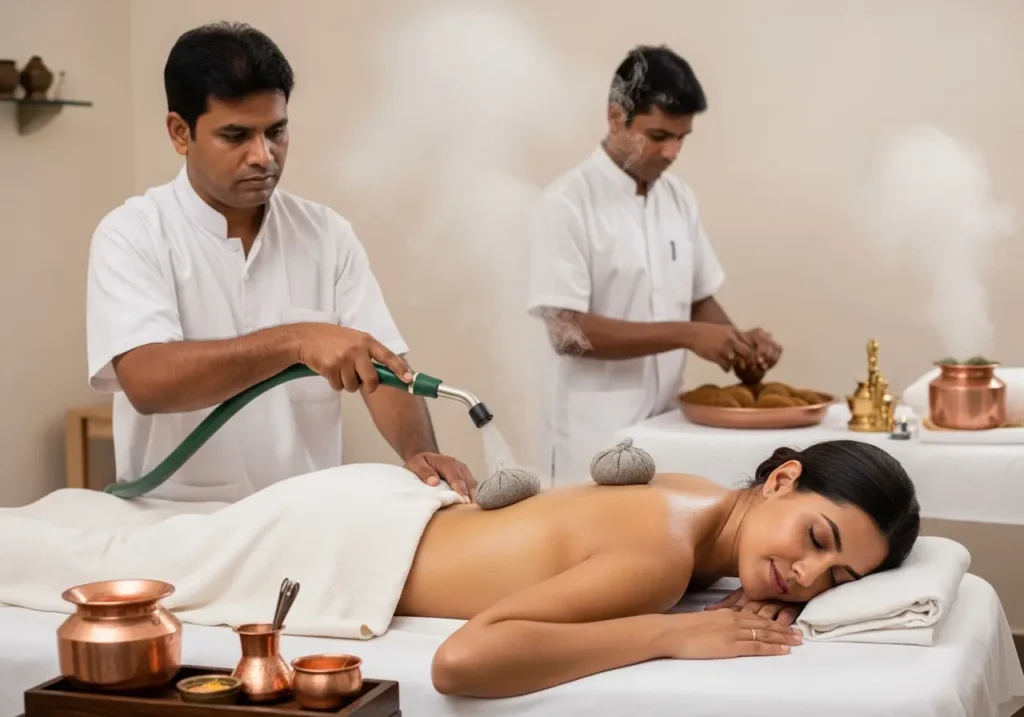
- Warm herbal poultices or potli applied over joints or muscle areas. Good for localized pain and stiffness.
- Prastara (Spreading fomentation)
- A dry or oily herbal rub followed by warming; used to loosen deeper adhesions and muscles.
- Nadi (Steam through tubes or cloth channels)
- Directs gentle steam along limbs or spine; useful for targeted pain relief.
- Parisheka (Continuous pouring)
- Warm medicated decoction or herbal oil is poured over the body area (similar principle to Shirodhara but for other regions).
- Avagaha (Tub or immersion steam)
- Patient sits or lies in a shallow tub of warm medicated decoction or steam bath — helpful for general detox and relaxation.
- Jentaka (Fomentation with a small vessel)
- Localized hot compresses applied using small pots; used for acute joint aches.
- Asmaghana (Bone-targeted fomentation)
- Focused steam and herb application around bone/joint areas for chronic arthritic pain.
- Karshu (Steam with grain or herbal paste)
- Warm herbal pastes combined with steam are used for chronic stiffness.
- Kuti (Enclosed steam cabin)
- Full-body steam inside a tent or cabin (modern steam cabins) — used for systemic detox and muscle relaxation.
- Bhu (Soil or heated earth poultice)
- Warm mud or heated earth packs applied locally — useful for chronic cold-type conditions.
- Kumbhi (Steam in a pot with pouring)
- Similar to Kumbha, warm herbal decoction poured from a pot over specific sites.
- Kupa (Steam from a pit or vessel)
- Traditional pit steam or specialized vessel steam; modern equivalent is a steam chamber.
- Holaka (Enclosed medicated steam box)
- Patient exposed to medicated vapor inside a wooden or metal box — historically used for localized sweat therapy.
Note: Modern clinical practice maps these classical types to safe, evidence-based techniques: steam cabinets (Kuti), potli fomentation (Sankara/Jentaka), localized warm compress (Avagaha/Asmaghana) and medicated tub baths (Avagaha). A trained Ayurvedic clinician decides the appropriate type based on condition, dosha and contraindications.
Swedana therapy benefits (what patients commonly report)
- Reduced muscle stiffness and improved mobility (back, neck, shoulders, knees).
- Relief from chronic joint pain and early osteoarthritis discomfort.
- Enhanced blood circulation and lymphatic flow.
- Relaxation, reduced stress, improved sleep via parasympathetic activation.
- Better response to other Panchakarma treatments (Abhyanga, Virechana) when used in a protocol.
- Support for detoxification under clinical supervision.
Swedana is supportive rather than curative on its own — it works best as part of a personalised Panchakarma pathway.
Who should avoid or take precautions?
Swedana is generally safe but not for everyone. Avoid or modify Swedana if the patient has:
- Fever, infectious illness, active inflammation or open wounds.
- Uncontrolled hypertension, serious cardiac disease, or advanced pregnancy (consult clinician).
- Severe neurological conditions or uncontrolled diabetes with neuropathy (use extreme caution).
- Acute inflammatory joint swelling (consult your physician).
A clinical screening always precedes any Swedana plan at Sunshine.
How Swedana is performed in a clinical setting (step-by-step)
- Medical assessment: We review history, allergies, and medications.
- Abhyanga (optional first step): Warm oil massage to mobilise toxins.
- Selected Swedana method: The therapist uses Kuti/steam cabin, potli fomentation, tub immersion, or localized fomentation as appropriate.
- Monitoring: Temperature and patient response are monitored throughout to avoid overheating.
- Post-care: Cool down, light rest, hydration, and gentle movement; clinicians provide follow-up advice and exercises.
Clinics often give a course of sessions (e.g., daily for 7–14 days) depending on goals.
Swedana at home — safe tips & realistic alternatives
You can gain mild benefits at home but avoid replicating full clinical Swedana without supervision. Safe home tips:
- Warm compresses & steam inhalation: Use a warm (not scalding) towel or steam tent for 10–15 minutes to relieve stiffness.
- Warm tub soak with mild herbal decoction: Short, warm baths (not hot) can relax muscles.
- Avoid prolonged high heat or self-administered pot pouring — risk of burns is high.
- Always test temperatures and avoid if you have open wounds or skin infections.
For therapeutic courses and complex conditions, prefer clinic sessions for safety and effectiveness.
Typical costs in Delhi (indicative ranges)
- Single clinical Swedana session (30–60 min): ₹1,000 – ₹3,000 depending on method and oil/decoction quality.
- Therapeutic course (7–14 sessions): ₹6,000 – ₹30,000 depending on customization and add-ons (Abhyanga, diet counselling).
- Packages with Panchakarma (Abhyanga + Swedana + follow-ups): customized pricing available.
Sunshine offers introductory trial rates and staged packages so patients can evaluate benefit before full commitment.
What other clinics often miss — our key differentiators
- Clinical screening & medical integration: Many spas skip medical evaluation. At Sunshine, every Swedana plan begins with a clinician review to avoid contraindications.
- Calibrated steam & modern equipment: We use temperature-controlled steam cabins and calibrated oil warmers to prevent burns and provide consistent therapy (modern equivalent of Kuti/Holaka).
- Premium, lab-tested medicated oils & decoctions: Low-quality oils increase irritation risk — we source clinically tested supplies.
- Therapist training in classical and clinical protocols: Our therapists are trained in traditional Panchakarma methods and modern medical safety.
- Integration with physiotherapy & dermatology: For musculoskeletal or skin conditions we combine Swedana with exercises, topical care or dermatology input for better outcomes.
- Transparent pricing & staged packages: We avoid upsell tactics; you get clear written plans and expected outcomes.
These differences produce safer, reproducible results and better long-term benefit.
Why choose Sunshine Skin & Hair Clinic (South & West Delhi)?
- Experienced clinical oversight by Dr. Namrata Ghai (21 years). She supervises protocols for patients with dermatologic or systemic concerns.
- Two accessible branches: Safdarjung Enclave (South Delhi) and Bali Nagar (West Delhi) for easy follow-up.
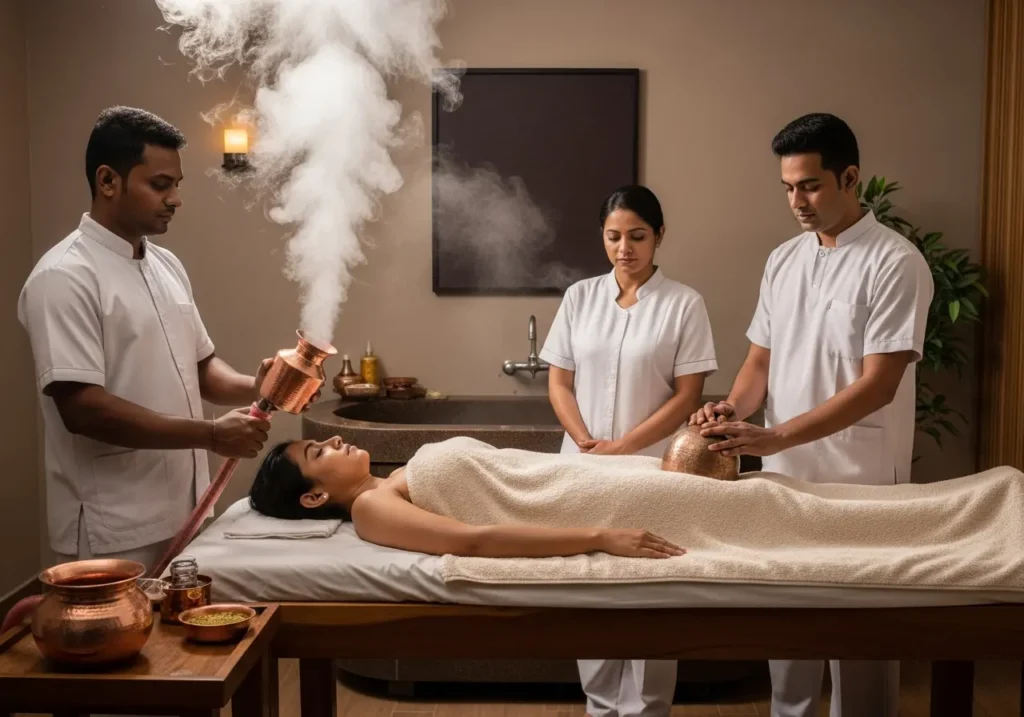
- Modern Panchakarma suite: temperature-controlled Kuti/steam cabins, potli stations, and medicated tub facilities.
- Hygiene, single-use linens, and high therapist standards.
- Personalised plans & affordable courses to match clinical need, not just luxury pricing.
People Also Ask — concise, answers
What is the procedure of Swedana?
A trained therapist applies controlled heat or steam (whole-body or localized) after an assessment; sessions typically follow Abhyanga and include monitoring, cool-down and aftercare.
What are the 13 types of Swedana?
Classically: Sankara, Prastara, Nadi, Parisheka, Avagaha, Jentaka, Asmaghana, Karshu, Kuti, Bhu, Kumbhi, Kupa and Holaka — each is a form of fomentation, steam or localized warming with specific clinical uses.
What is shodhana treatment?
Shodhana refers to detoxification therapies in Ayurveda (Panchakarma) that remove accumulated toxins, and Swedana is often a preparatory or supporting procedure for shodhana.
How to do Swedana at home?
Use mild steam or warm compresses for short durations; do not attempt prolonged or high-temperature treatments at home. For therapeutic results, clinical Swedana is recommended.
What is swedha in Ayurveda?
“Swedha” (or “Swedana”) means sweating induced by therapeutic heat; it is used to mobilise toxins and relieve stiffness and vata-related conditions.
Practical aftercare & follow-up
- Rest and hydrate after sessions.
- Avoid heavy exercise immediately after a Swedana session.
- Follow dietary and lifestyle guidance given by the clinician (light, warming foods are often recommended).
- Attend recommended follow-ups and combine with physiotherapy or Abhyanga where advised.
Final note
Swedana therapy is a powerful Ayurvedic modality when delivered safely and clinically. For best results in Delhi, choose a clinic that combines traditional knowledge with calibrated equipment, thorough screening, trained therapists and an integrated care plan. Sunshine Skin & Hair Clinic offers supervised Swedana across South and West Delhi under the clinical supervision of Dr. Namrata Ghai, with transparent pricing and patient-centric programs.