


If you’re searching for a safe, effective and modern skin whitening treatment in Delhi, this guide explains everything you need to know — from how different treatments work to realistic expectations, safety considerations, typical cost factors (why prices vary), and why Sunshine Skin & Hair Clinic is a good place to start. We also explain which steps most clinics miss (and why that matters), and how to arrange a free consultation with Dr. Namrata Ghai for personalised advice.
What does “skin whitening” actually mean?
“Skin whitening” is a broad term used by patients to describe treatments that lighten or even out skin tone, reduce dark patches, and improve brightness. In medical terms this involves reducing excessive melanin production (hyperpigmentation) or removing superficial pigmented layers. Common clinical aims are:
- Reduce melasma, freckles and post-inflammatory hyperpigmentation
- Even out sun damage and age spots
- Improve overall skin clarity and radiance
Important: “Whitening” is not necessarily the same as permanent bleaching. Most modern dermatology aims for safer, natural-looking lightening and tone improvement, not drastic or risky bleaching.
Main treatment options available in Delhi
1. Medical topical therapy (first-line)
Topical prescriptions are often the safest starting point and include:
- Hydroquinone (prescription) — a long-used depigmenting agent (used under supervision).
- Azelaic acid, kojic acid, tranexamic acid, niacinamide — alternatives with good safety profiles.
- Topical retinoids (to increase cell turnover) combined with brightening agents.
These are often the backbone of treatment and are combined with in-clinic procedures for better results.
2. Chemical peels
Superficial to medium-depth chemical peels (glycolic, salicylic, TCA, lactic) remove pigmented surface layers and stimulate new skin growth. Repeated sessions are commonly recommended for lasting improvement.
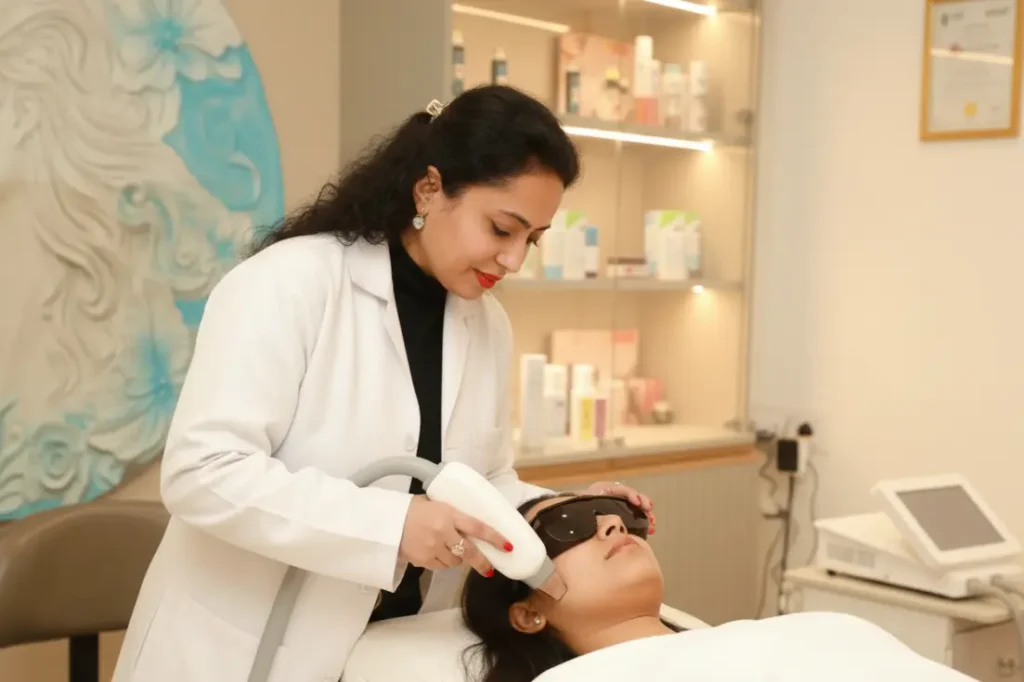
3. Laser & light-based treatments
Often searched as laser skin whitening treatment or laser skin whitening treatment price, these include:
- Q-switched lasers (e.g., Nd:YAG) — target pigment granules and are useful for certain spots.
- Picosecond lasers — faster pigment disruption with less heat.
- Fractional lasers (non-ablative) — improve texture and pigmentation over sessions.
- Intense Pulsed Light (IPL) — for general sun/damage-related pigmentation in lighter skin tones.
Laser toning and targeted pigment lasers can give fast, visible improvement — but require correct selection and experienced operators to avoid complications, especially on darker skin tones.
4. Combination protocols
Best results usually come from a combination: topical treatment + chemical peels + selective lasers + strict sun protection. Combination treatments reduce the need for aggressive single approaches and improve safety.
Are skin whitening treatments permanent?
Short answer: No single treatment guarantees permanent whitening.
Longer answer: Some pigmented spots can be permanently removed, but many conditions (melasma, sun damage) can recur without ongoing maintenance and strict sun protection. Maintenance therapy and lifestyle changes are essential for long-term results.
Safety — what every patient must know
- Correct diagnosis first. Treating the wrong type of pigmentation with the wrong method causes poor results or worsening.
- Avoid unregulated bleaching injections or unapproved glutathione injections. They carry health risks.
- Laser safety on darker skin: requires specialist experience to avoid post-inflammatory hyperpigmentation (PIH).
- Sun protection is mandatory before, during and after any procedure — failure to use sunscreen is the main cause of recurrence.
Why many clinics get results wrong (and how Sunshine does it differently)
Many clinics focus only on quick procedures (one laser session, aggressive peel) and miss the diagnostic and maintenance steps. At Sunshine Skin & Hair Clinic we emphasise:
- Accurate diagnosis (melasma vs lentigines vs post-inflammatory pigment) so you get the right treatment.
- Tailored combination plans — topical stabilisation before any laser or peel to reduce risk.
- Gradual, measured improvement rather than aggressive one-time “whitening” that risks complications.
- Aftercare & maintenance (topicals, sunscreen, lifestyle counselling) to prolong benefits.
- Experience: Dr. Namrata Ghai (21 years) leads treatment planning — especially important for darker Indian skin tones.
Cost & “laser skin whitening treatment price” — how to think about price
Prices vary because of these factors:
- Type of treatment (topical-only vs peel vs laser session vs combination).
- Number of sessions required — most protocols require multiple visits.
- Equipment & technology: newer lasers (picosecond, advanced fractionals) are costlier.
- Doctor’s experience and clinic standard.
Instead of quoting a single number, ask clinics for a written treatment plan and itemised cost estimate during consultation — that’s the most reliable way to compare. At Sunshine, we provide a clear plan and discuss financing or package pricing when appropriate.
How long until I see results?
- Topicals: visible change in 6–12 weeks.
- Chemical peels: cumulative improvement over 3–6 months.
- Laser/light: noticeable after 1–3 sessions, but best results after a course and topical maintenance.
At-home care and maintenance
- Apply broad-spectrum sunscreen daily (SPF 30+).
- Use gentle cleansers; avoid harsh scrubs.
- Continue prescribed maintenance creams (niacinamide, azelaic acid, SPF).
- Avoid unlicensed “bleaching” products or DIY peels.
People also ask
Which treatment is best for skin whitening permanently?
No single treatment guarantees permanent whitening. The safest approach is a tailored combination of medical topicals, controlled peels and selective laser therapy combined with ongoing sun protection and maintenance.
Which treatment is best for skin whitening?
Best depends on diagnosis. For uniform sunspots, lasers or IPL may be effective. For melasma, a combination of topical agents plus gentle in-clinic procedures is usually superior.
What is skin whitening treatment?
A set of medical or cosmetic procedures aimed at reducing excess pigmentation and evening skin tone — including topical creams, peels and laser/light therapies.
Is skin whitening treatment permanent?
Not always. Some spots can be permanently removed, but many pigmentation issues can recur without maintenance and sun protection.
Is skin whitening treatment safe?
When performed by qualified dermatologists using approved methods and with proper diagnosis and aftercare, treatments are generally safe. Avoid unregulated products and unlicensed providers.
Why choose Sunshine Skin & Hair Clinic (short)
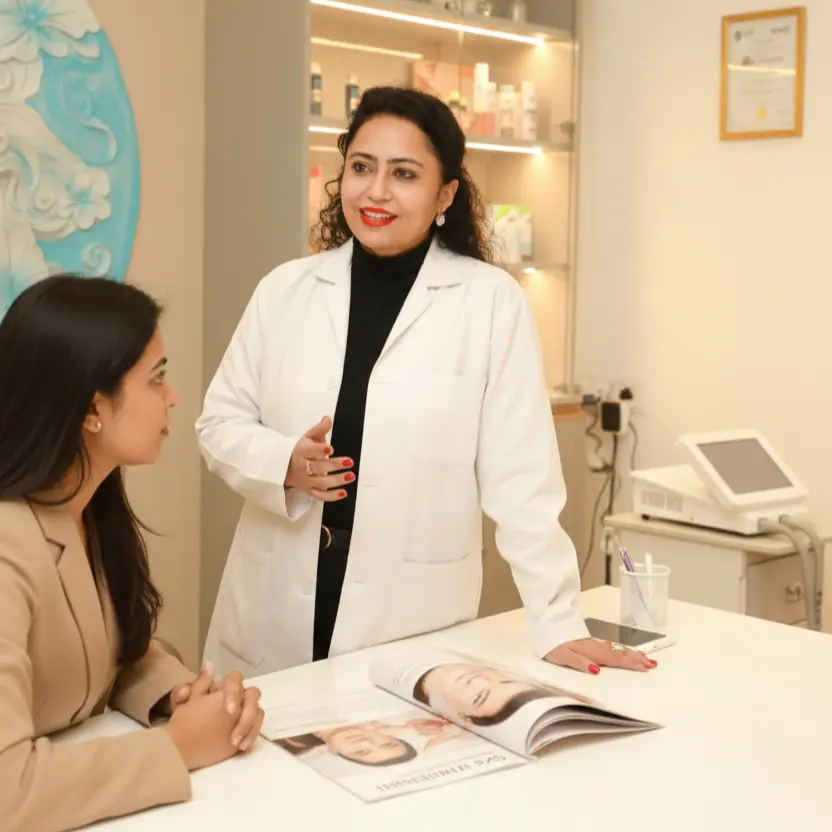
- Experienced team led by Dr. Namrata Ghai (21 years of dermatology & cosmetic experience).
- Two convenient Delhi branches: South Delhi (Safdarjung Enclave) and West Delhi (Bali Nagar) — making skin whitening treatment in South Delhi and skin whitening treatment in West Delhi accessible.
- Personalised plans, transparent pricing and free initial consultation to assess your condition and give a written estimate.
Want a free consultation with Dr. Namrata Ghai? Call 8860760770 or email doctor.namo@gmail.com to book a direct call or appointment.
Final checklist before you book any whitening treatment
- Confirm the diagnosis and expected outcome.
- Ask for a written treatment plan and cost breakdown.
- Check the doctor’s experience with your skin type.
- Understand aftercare and how recurrence will be managed.
- Avoid providers promising “permanent whitening” without proper assessment.