


What is Posture Therapy?
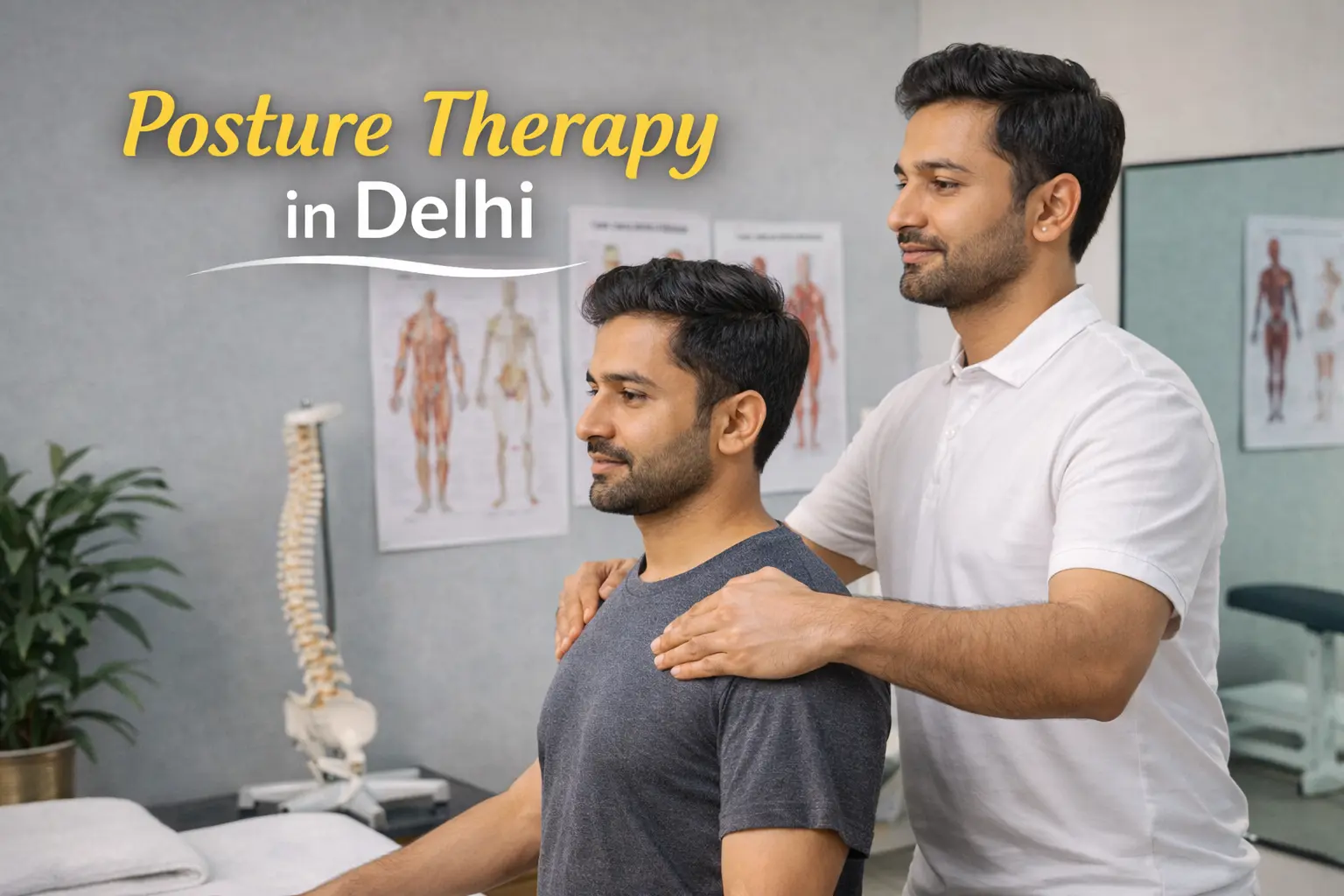
Posture therapy is a targeted, evidence-based program designed to correct poor body alignment, reduce pain and restore functional mobility. It combines clinical assessment, corrective exercise, manual therapy and technology such as biofeedback or motion analysis to retrain muscles and movement patterns. People search for “posture therapy in Delhi”, “posture therapy near me”, or branch-specific terms like “posture therapy in South Delhi Safdarjung Enclave” and “posture therapy in West Delhi Bali Nagar” when they want real, measurable change rather than short-term relief.
Why posture matters — the problem explained simply
Good posture distributes forces evenly across joints, reduces strain on muscles and maintains healthy spinal curves. Conversely, slumping at a desk, forward head posture from phones, or one-sided activities create imbalances. Over months and years these small stresses accumulate and cause:
- Chronic neck and shoulder pain
- Upper and lower back discomfort
- Recurrent headaches and jaw tension
- Reduced breathing efficiency and fatigue
- Joint wear and early degenerative changes
Posture therapy addresses the root causes — movement patterns and muscular imbalances — instead of just masking symptoms with painkillers.
What a clinical posture therapy program includes
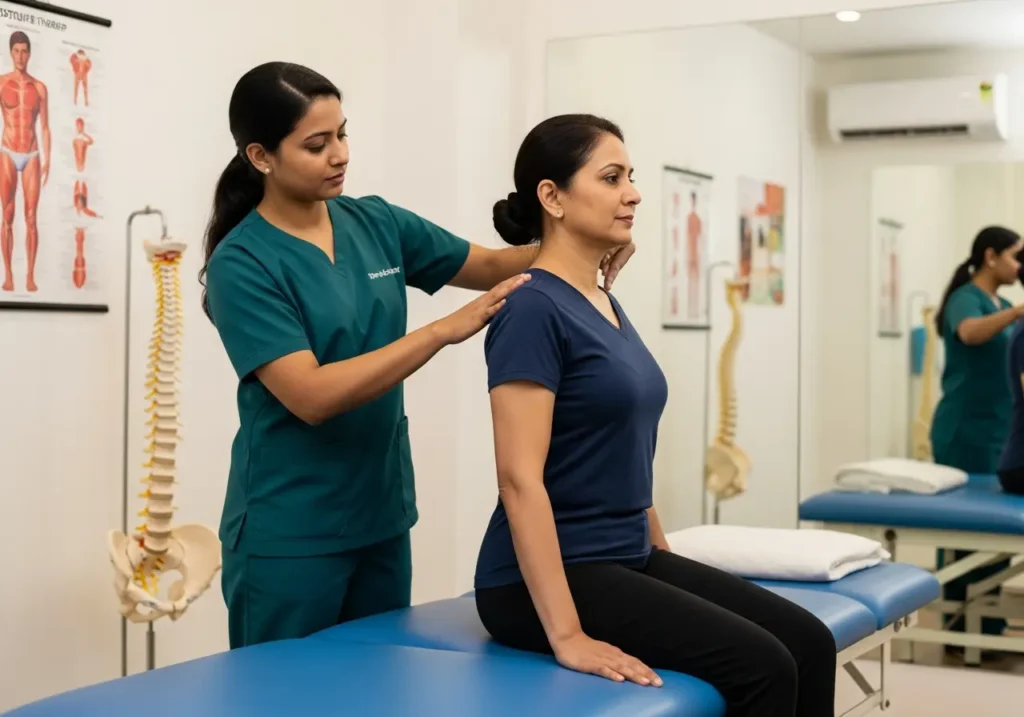
A professional program is structured, measurable and progressive. Typical steps include:
- Detailed postural assessment — visual screening, range of motion, strength tests, gait and balance analysis.
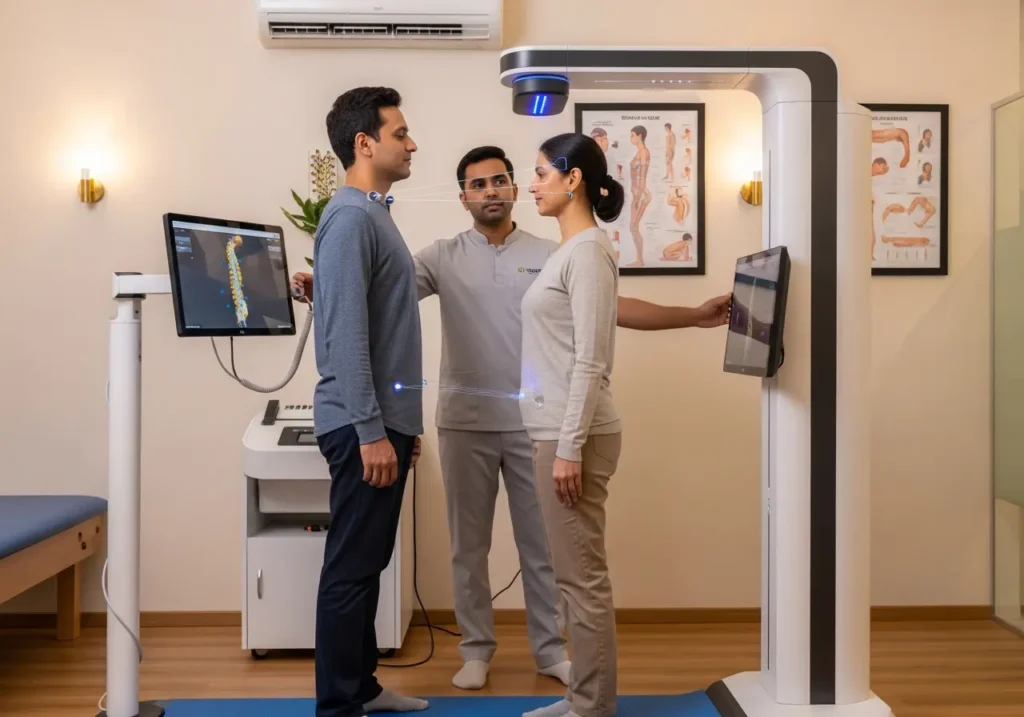
- Technology-assisted evaluation — optional tools such as digital posture scanners, mobile motion capture, surface EMG or pressure mapping for objective baseline data.
- Personalised exercise plan — strength and mobility work focused on the core, thoracic spine, scapular stabilisers and hip rotators.
- Manual therapy — soft tissue release, joint mobilisations and targeted myofascial work to restore mobility.
- Neuromuscular retraining — motor control exercises and proprioceptive drills to embed new movement habits.
- Ergonomic coaching — workstation setup, footwear advice and activity modifications.
- Progress tracking & home program — regular reviews and a practical home routine to maintain gains.
The goal is measurable posture improvement, reduced pain and a sustainable plan you can follow independently.
Evidence-based techniques often used in posture therapy
- Postural corrective exercise (strengthening weak muscles, stretching tight muscles)
- Pilates-based core training for spinal support
- Scapular stabilisation to treat rounded shoulders and neck strain
- Thoracic mobility work to reduce compensatory neck movement
- Balance and proprioception training to prevent falls and improve coordination
- Biofeedback / wearable posture trainers that prompt you to correct mid-day slouching
- Gait retraining and footwear analysis for lower-limb alignment
Combining approaches yields better, longer-lasting results than a single technique alone.
Who benefits from posture therapy?
- Office workers with chronic neck/upper back pain
- Drivers and delivery workers with lower back symptoms
- Students and device-heavy users with forward head posture
- Athletes wanting performance gains through better alignment
- People recovering from minor spinal injuries or early degenerative changes
Anyone with persistent mechanical pain related to posture is a candidate. A clinical screen rules out red flags (inflammatory disease, progressive neurological signs) and confirms suitability.
How posture therapy at Sunshine Skin & Hair Clinic is different
Many local centres offer “posture classes” or quick fixes, but we prioritise medical safety and measurable outcomes. Here’s what we do differently:
- Clinical assessment first — A clinician (supervised by Dr. Namrata Ghai, 21 years’ experience in clinical care) evaluates medical history, prior imaging and risk factors before therapy begins.
- Objective baseline & outcome tracking — We use posture scanning, simple range-of-motion charts and progress photos to show change.
- Multidisciplinary approach — Our program blends Ayurvedic supportive therapies (where appropriate), physiotherapy, ergonomic coaching and dermatology input for skin or wound-related issues.
- Therapist training & protocols — All therapists follow standardised, evidence-based rehab protocols and receive continuing education.
- Practical home programs — Each patient gets a short, achievable home routine and ergonomic checklist — we emphasise consistency over complexity.
- Affordability & transparency — We offer trial sessions and packages with clear pricing so you commit only after seeing early results.
Because of this approach, patients get safer, longer-lasting relief rather than temporary symptom masking.
Typical course length & cost (Delhi — indicative)
- Initial assessment (1 session): ₹900–₹2,000
- Single therapy session (45–60 min): ₹800–₹2,500
- Short course (6–8 sessions): ₹5,000–₹18,000 depending on tech use (scanning, EMG) and add-ons
Prices vary across clinics. Sunshine offers staged plans so you can try an assessment and a small course before committing to a full program.
What many clinics miss (and why it matters)
- No objective measurement: Clinics that rely purely on visual checks cannot show real progress. We use simple tools to keep therapy accountable.
- Lack of integration: Posture is affected by sleep, footwear and work ergonomics; many centres ignore these. We coach ergonomics and lifestyle.
- One-size-fits-all programs: Generic classes rarely address individual biomechanical problems. Our exercises are tailored.
- Poor follow-up: Maintenance is essential; patients often relapse without a simple home routine. We provide clear, short follow-up plans.
Choosing a clinic that addresses these gaps leads to reproducible, long-term improvement.
Practical tips you can start today
- Set your screen at eye level and sit with feet flat, hips slightly higher than knees.
- Perform short hourly posture breaks: stand, chest open, scapular retraction, 30 seconds.
- Strengthen mid-back with rows or resistance band pull-aparts three times per week.
- Practice diaphragmatic breathing to reduce upper-chest breathing and neck strain.
- Use a posture reminder app or gentle wearable posture trainer if you sit long hours.
Small consistent changes beat sporadic intense efforts.
People Also Ask — short answers
What is posture therapy?
Posture therapy is a personalised rehabilitation plan combining assessment, corrective exercise, manual therapy and ergonomic coaching to restore healthy alignment.
What is the best remedy for posture?
A combination of strengthening weak muscles, improving thoracic mobility, and correcting ergonomic setup offers the best, evidence-based remedy.
What are the 5 types of posture?
Common categories include ideal/neutral, kyphotic (rounded upper back), swayback, lordotic (excess lower back curve), and flat-back; each needs a tailored approach.
How to correct posture in 7 days?
You can make small improvements in one week with posture cues, consistent micro-breaks, and daily mobility drills — but lasting change takes several weeks of training.
Book an assessment
If you’re searching for posture therapy in South Delhi (Safdarjung Enclave) or posture therapy in West Delhi (Bali Nagar), Sunshine Skin & Hair Clinic offers clinical assessments, measurable programs and affordable packages. Schedule an initial posture screen; bring any past X-rays or reports for a faster, safer plan.