


Quick summary (what this article covers)
This guide explains how melasma creams work, lists dermatologist-recommended topical options and product types (prescription & OTC), and gives a realistic roadmap for treatment. It also explains useful clinic practices many providers skip — and how Sunshine Skin Clinic keeps costs competitive while using advanced, evidence-based care.
What is melasma and why a cream alone may not be enough
Melasma is a common form of facial hyperpigmentation driven by hormones, genetics and sun/light exposure. It usually appears as brown-grey patches on cheeks, forehead, upper lip and chin. Because melasma has multiple triggers, no single cream guarantees permanent removal on its own — the best results come from a dermatologist-led combination of: correct diagnosis → targeted topical therapy → in-clinic procedures if needed → strict sun/maintenance care.
(Throughout this article we use proven ingredient names: hydroquinone, azelaic acid, tranexamic acid, retinoids, niacinamide and chemical exfoliants.)
How melasma creams work (simple, clinical logic)
Melasma creams usually act by one or more of these mechanisms:
- Reduce melanin production (hydroquinone, tranexamic acid, kojic acid).
- Inhibit melanin transfer to surface cells (niacinamide).
- Calm inflammation and normalise turnover (azelaic acid, retinoids, gentle AHAs).
- Support barrier repair and antioxidant defence (vitamin C derivatives, tocopherol).
A well-designed regimen combines actives with proven mechanisms and protects skin from UV and visible light (sunblock and pigment-protective measures).
Dermatologist-recommended cream types (what clinicians commonly use)
Important: many of these are prescription or clinician-supervised options. Always consult a dermatologist before starting.
- Hydroquinone (2–4%) — prescription depigmenter
- One of the most effective topical lighteners for melasma when used short-term with supervision. Often combined in a “Kligman” style regimen (hydroquinone + retinoid + mild steroid) for flare control.
- Tranexamic acid (topical serums or oral in selected cases)
- Increasingly used for melasma; good evidence as an adjunctive therapy and often included in dermatologist formulations or serum blends.
- Azelaic acid (10–20%)
- A gentler, effective option for many skin types and a good choice when hydroquinone is unsuitable. Well tolerated on darker skin tones.
- Retinoids (tretinoin, adapalene, retinol derivatives)
- Improve cell turnover and enhance penetration of other actives; often part of a combined plan.
- Niacinamide, kojic acid, vitamin C (support actives)
- Helpful adjuncts to reduce pigment transfer and provide antioxidant support; best used in stable, leave-on formulations.
- Combination formulas/clinic serums
- Many dermatologist-formulated serums combine tranexamic acid + niacinamide + vitamin C or azelaic acid blends — these target melasma through multiple pathways.
Topical product strategy — how dermatologists typically prescribe
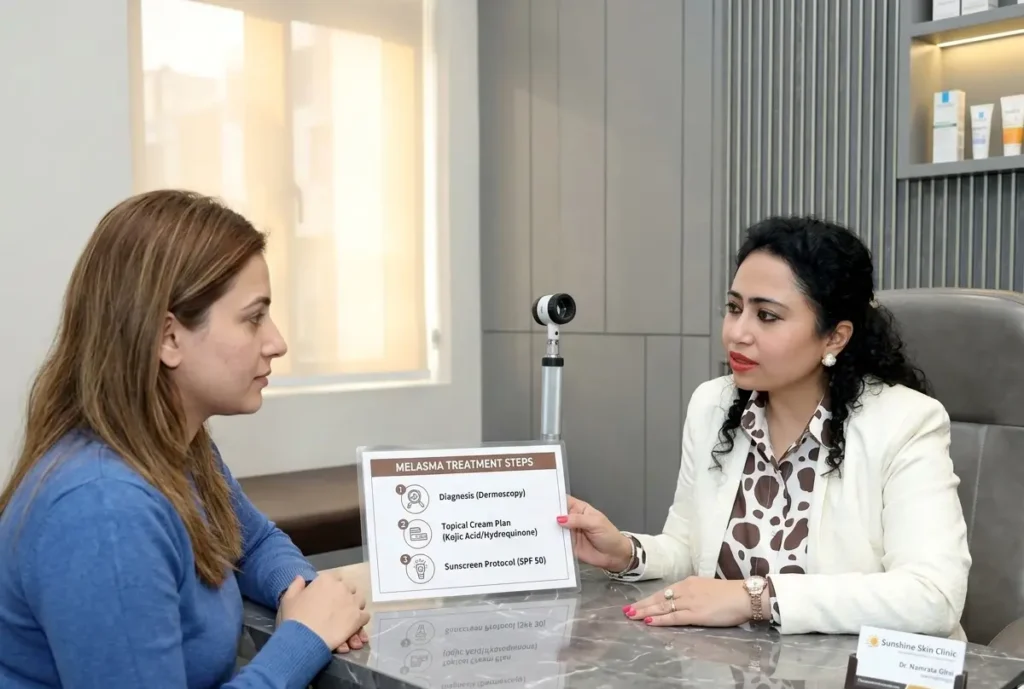
- Step 1: Diagnosis. Confirm melasma vs PIH vs other pigment by exam (sometimes Wood’s lamp).
- Step 2: Start a low-irritation, evidence-based topical (e.g., azelaic acid or tranexamic serum + sunscreen) and patch test.
- Step 3: Escalate only if needed — add hydroquinone short-term or a retinoid under monitoring.
- Step 4: Consider in-clinic boosts (light chemical peels, microneedling, or selective lasers) only after topical response; always protect skin after procedures.
- Step 5: Maintenance & prevention — daily broad-spectrum sunscreen, visible-light protection (tinted physical sunscreens), and periodic top-ups.
Product examples clinicians often reference (types, not endorsements)
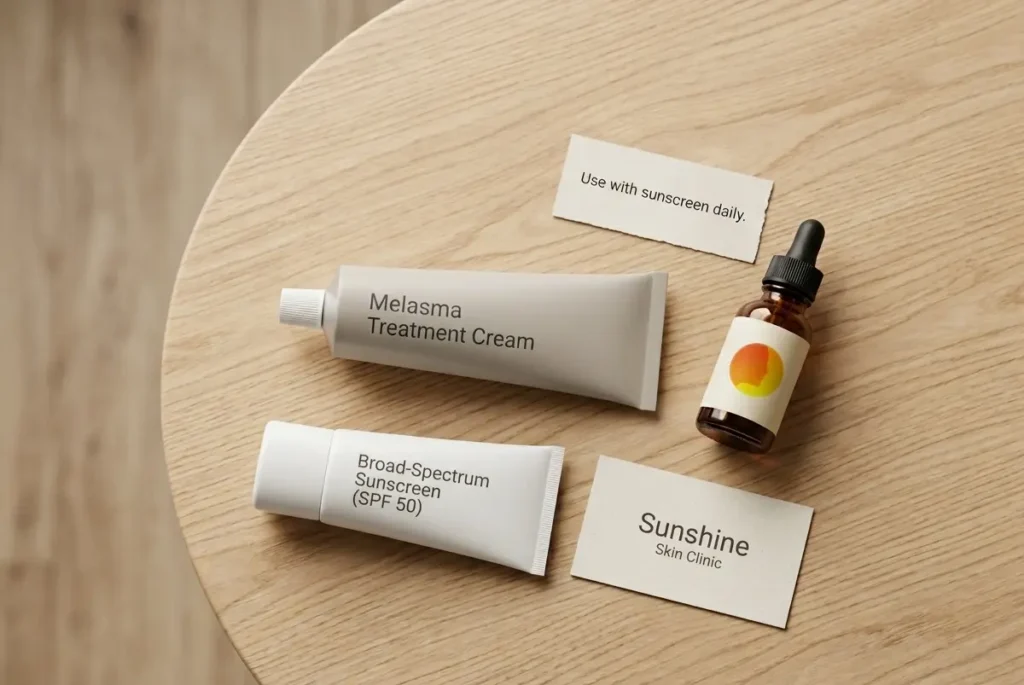
- Prescription hydroquinone creams (for supervised, short-term use).
- Topical tranexamic acid serums (clinic or pharmacy brands).
- Azelaic acid creams (15–20%) — good starter option for many.
- Combined OTC serums with niacinamide + vitamin C or alpha-arbutin for mild support.
Note: I’ve focused on ingredient classes and product types because the right brand and concentration must be matched to your skin by a dermatologist. All products we recommend at Sunshine Skin Clinic are reviewed by our dermatology team.
What most clinics miss — Sunshine Skin Clinic’s extra steps
Many providers give a single cream and expect results. At Sunshine Skin Clinic we add clinical steps most clinics skip:
- Ingredient Transparency Audit: we check actual concentrations and batch info before recommending a product — marketing claims can be misleading.
- Phased Introduction Plan: we introduce one active at a time to reduce irritation and improve adherence.
- Visible-Light & Barrier Guidance: we advise on physical/chemical sunscreen combos and cosmetic camouflage for daytime management — many clinics ignore visible-light triggers.
- Outcome Tracking: standardised photos at 0, 6 & 12 weeks so results are objectively documented.
- Lip/Delicate Area Safety List: a curated set of lip-safe treatments (many providers overlook this).
These clinical details improve safety, reduce retreatments, and make the whole plan more cost-effective.
Why our prices are competitive (short explanation)
- We procure medical-grade formulations directly (bulk purchasing), lowering patient cost.
- Our stepwise, evidence-based approach reduces the need for repeated corrective procedures — saving patients money long-term.
- Transparent treatment packages bundle consult + treatment + follow-up, avoiding hidden fees.
Safety & must-know cautions
- Always consult a dermatologist before starting hydroquinone or potent actives.
- Avoid unlabelled lightening creams (some contain steroids).
- Pregnant or breastfeeding? Discuss with your dermatologist — many actives are contraindicated.
- Perform patch tests and stop any product causing irritation or worsening pigmentation.
People Also Ask (SEO-friendly answers)
Q: Which melasma cream is best?
A: The “best” melasma cream depends on the diagnosis. Dermatologists commonly use azelaic acid, tranexamic acid serums, and short-term hydroquinone protocols. A personalised plan gives the best outcomes.
Q: Is there a melasma cream recommended by dermatologists?
A: Yes — dermatologists often recommend azelaic acid or tranexamic acid topicals as safe first lines; hydroquinone is used under supervision for stubborn cases.
Q: How long does a melasma cream take to work?
A: Expect visible improvement in 6–12 weeks for many topical regimens; stubborn cases may need months and in-clinic procedures.
Q: Can melasma be removed permanently with a cream?
A: Absolute permanence is rare. The realistic goal is long-term control through combined therapy, strict sun protection and maintenance.
Ready for a personalised plan? Free dermatologist exam
For a free skin examination and a customised melasma treatment plan, you can consult Dr. Namrata Ghai at Sunshine Skin Clinic. Dr. Ghai personally evaluates melasma cases and prescribes the minimum-effective topical or combination protocol.
Clinics: South Delhi & West Delhi — book via WhatsApp or call through the clinic contact page.
Final takeaway
Melasma responds best to a diagnosis-driven, multi-modal plan. The right melasma cream is important, but it’s only one part of a durable solution that includes sun protection, patient education, and occasional in-clinic procedures. A dermatologist-supervised plan gives the safest, most cost-effective path to long-lasting improvement.