


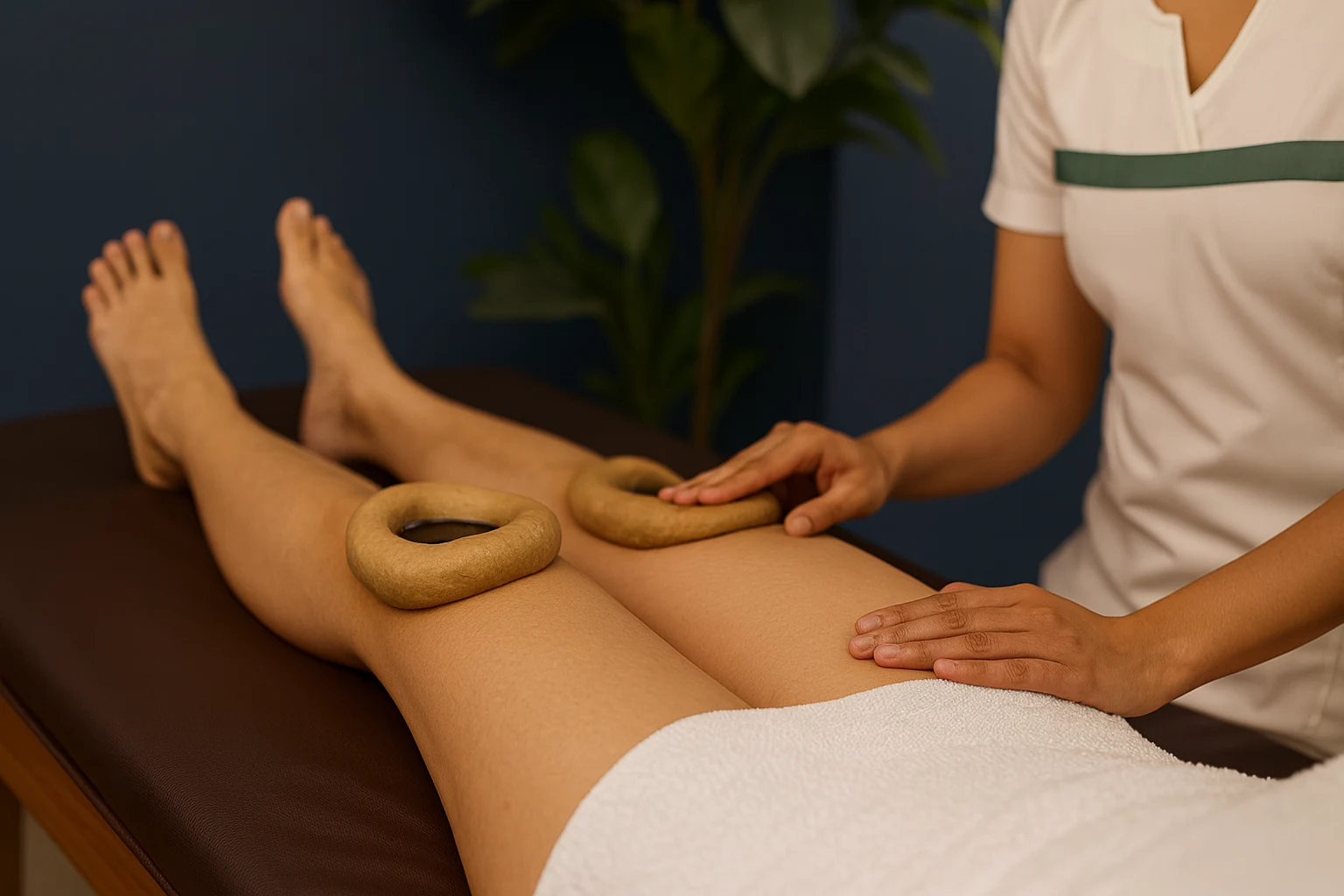
Overview — what is Janu Basti?
Janu Basti (also spelled Janu Vasti) is a classical Panchkarma procedure that concentrates warm, medicated oil on the knee joint for a fixed duration. It is traditionally used to treat knee pain, stiffness, osteoarthritis symptoms, ligament strains and early degenerative changes. If you are searching for “Janu Basti treatment in Delhi”, “Janu Basti benefits” or “Janu Basti treatment near me”, this guide explains how the therapy works, who benefits, realistic expectations, at-home alternatives, typical costs in Delhi, and why medically supervised care (like Sunshine Skin & Hair Clinic in South Delhi — Safdarjung Enclave and West Delhi — Bali Nagar) produces the best, lasting results.
Why Janu Basti helps knee pain (simple physiology)
Janu Basti creates a sealed reservoir over the knee so warm medicated oil can deeply penetrate soft tissues, ligaments and joint capsules. The combined effects of warmth, oil-based herbal medicine and gentle local massage:
- Improve local circulation and lymphatic drainage
- Soften and relax contracted muscles and tendons
- Reduce local inflammation and pain signals
- Nourish cartilage and joint structures (supportive effect)
While Janu Basti is not a miracle cure for advanced joint destruction, many patients experience meaningful pain reduction, improved mobility and reduced reliance on painkillers when it is part of a comprehensive care plan.
Step-by-step: How Janu Basti is performed (clinic procedure)
- Clinical assessment: A healthcare professional assesses the knee, reviews X-rays/MRI if available, and rules out contraindications (infection, open wounds, unstable fracture).
- Positioning: Patient lies comfortably with knee slightly flexed; the area is cleaned and warmed.
- Forming the reservoir: A soft dough ring (traditionally made from black gram or wheat flour) or a clinic silicone ring is shaped and placed around the knee to create a leak-proof well.
- Oil selection & warming: A medicated oil (see list below) is warmed to a comfortable therapeutic temperature.
- Retention period: Warm oil is poured into the reservoir and retained for 20–40 minutes while the knee may receive gentle local massage.
- Drainage & aftercare: The oil is drained, the knee is wiped and a warm compress may be applied. Patient receives advice on activity modification and follow-up sessions.
- Course plan: Typically repeated across several sessions (3–14) based on severity and response.
Which oils are used in Janu Basti?
Clinical practice uses time-tested medicated oils selected for their warming, analgesic and nourishing properties. Commonly used oils include:
- Mahanarayana oil — for chronic musculoskeletal pain and stiffness
- Dhanwantaram oil — nourishing, used in degenerative conditions
- Ksheerabala taila — beneficial for nerve pain and stiffness
- Dashamoola or Bala oil blends — for anti-inflammatory and strengthening effects
Your clinician selects the appropriate oil based on diagnosis, skin sensitivity and your overall constitution.
Benefits of Janu Basti — what patients can expect
- Reduced knee pain and tenderness
- Decreased stiffness and improved range of motion
- Less swelling and better joint lubrication sensation
- Improved ability to walk, climb stairs and perform daily tasks
- Reduced dependency on oral pain medicines for some patients
Benefits are cumulative — most patients report gradual improvement across sessions, with clearer gains when Janu Basti is combined with physiotherapy, posture correction and lifestyle changes.
Who is a good candidate — and who should avoid it?
Good candidates: early osteoarthritis, mechanical knee pain, chronic ligament strains, rehabilitative care after mild injuries, and patients seeking non-surgical, conservative therapy.
Not suitable: active skin infection over the knee, acute deep vein thrombosis, high fever, severe uncontrolled systemic disease, open wounds or unstable fractures. Always consult a qualified clinician before booking.
Janu Basti at home — safe alternatives & limitations
Some people ask “Can I do Janu Basti at home?” There are conservative, safe home measures but true Janu Basti is best in clinic for hygiene and effectiveness. Safe at-home options include:
- Warm compresses and contrast baths to reduce stiffness
- Gentle knee mobilization and range-of-motion exercises recommended by a physiotherapist
- Topical medicated oils (as suggested by a doctor) applied with gentle massage — do not attempt a dough well at home without training
- Weight reduction, supportive footwear, and quadriceps-strengthening exercises
DIY Janu Basti is not recommended because creating a leak-proof reservoir, maintaining safe oil temperature, and choosing the correct medicated oil require clinical training. Poor technique risks burns, infection or no benefit.
Typical costs for Janu Basti treatment in Delhi
Costs vary widely by clinic, oil quality, therapist skill and package length. Indicative ranges (subject to change):
- Single session: ₹700 – ₹2,000
- Package (3–10 sessions): ₹2,500 – ₹15,000 depending on oil grade and add-ons (Swedana/physio)
Sunshine Skin & Hair Clinic follows a staged pricing approach: trial session → tailored course only if effective. That keeps initial cost low and avoids unnecessary expenses.
What many clinics miss — key quality checks patients should demand
- Medical screening first: Clinics that treat Janu Basti like a spa ritual often skip proper assessment. Always ask for a medical review and, if needed, imaging.
- Oil quality and temperature control: Cheap oils and overheated liquids can irritate or burn; clinic-grade medicated oils and calibrated warmers reduce risk and improve absorption.
- Therapist training: Classical Panchkarma requires trained therapists; ask about certifications and clinical oversight.
- Integration & follow-up: Best results come when Janu Basti is combined with strengthening exercises, posture modification and weight management — not offered as a single session fix.
- Hygiene & sterile practice: Dough rings and equipment must be fresh or single-use; many clinics reuse materials — avoid them.
Why choose Sunshine Skin & Hair Clinic for Janu Basti in Delhi?
(Confirm accuracy before publishing.)
- Medical supervision: All sessions prescribed and reviewed by clinicians to ensure safety in patients with comorbidities.
- Certified Panchkarma therapists: Therapies delivered by trained staff following classical protocols.
- Premium medicated oils & controlled warming: We use vetted oil formulations and calibrated warmers to ensure comfort and maximum benefit.
- Integrated care pathway: Janu Basti is offered with complementary Abhyanga, Swedana, posture therapy and physiotherapy for lasting outcomes.
- Affordable structured packages: We emphasise trial sessions and step-up care so you pay only for what helps — saving money versus clinics that upsell unnecessary courses.
- Two convenient Delhi locations: Regular slots at South Delhi (Safdarjung Enclave) and West Delhi (Bali Nagar) so follow-ups are easy.
Practical aftercare & home recommendations
- Rest the knee for 24 hours after a session and avoid heavy lifting.
- Continue gentle range-of-motion exercises and prescribed physiotherapy.
- Use warm compresses between sessions if recommended.
- Maintain a healthy weight and use knee support/orthoses for high-impact activities.
- Monitor for signs of infection (redness, warmth, pus) — report immediately if present.
People Also Ask — short answers
What is Janu Basti?
Janu Basti is an Ayurvedic knee therapy where warm medicated oil is retained on the knee in a sealed reservoir to relieve pain and stiffness.
What is Janu Basti treatment?
A clinician forms a dough or silicone ring around the knee, pours warmed medicated oil into the well, retains it for 20–40 minutes, then drains and cleans the area. Repeated sessions form a therapeutic course.
How to do Janu Basti at home?
True Janu Basti should be performed in clinic. At home you may use warm compresses, gentle oil massage with doctor-approved oils, and physiotherapy exercises — but avoid DIY oil reservoirs or heated containers.
Which oil is used in Janu Basti?
Common oils include Mahanarayana oil, Dhanwantaram oil and Ksheerabala taila; the clinician selects the best oil based on diagnosis and skin sensitivity.
Realistic expectations & when to see a specialist
Janu Basti can significantly reduce pain and stiffness for many patients, especially when started early. Patients with advanced joint destruction or severe mechanical instability may still need orthopaedic evaluation. If knee pain is rapidly worsening, associated with fever, swelling or functional loss, seek medical evaluation promptly.
How to book & what to bring
- Bring prior imaging (X-ray/MRI) and a list of current medicines.
- Wear comfortable clothing and avoid heavy lotions on the treatment day.
- Plan a short rest period after the session.
Final note
Janu Basti is a focused, clinically valuable Panchkarma therapy for knee pain and stiffness. For safe, effective results choose a clinic that combines authentic Ayurvedic technique with medical assessment, high-quality oils and an integrated rehabilitation plan. Sunshine Skin & Hair Clinic provides supervised Janu Basti packages in Delhi designed for real improvement, affordability and long-term mobility.