


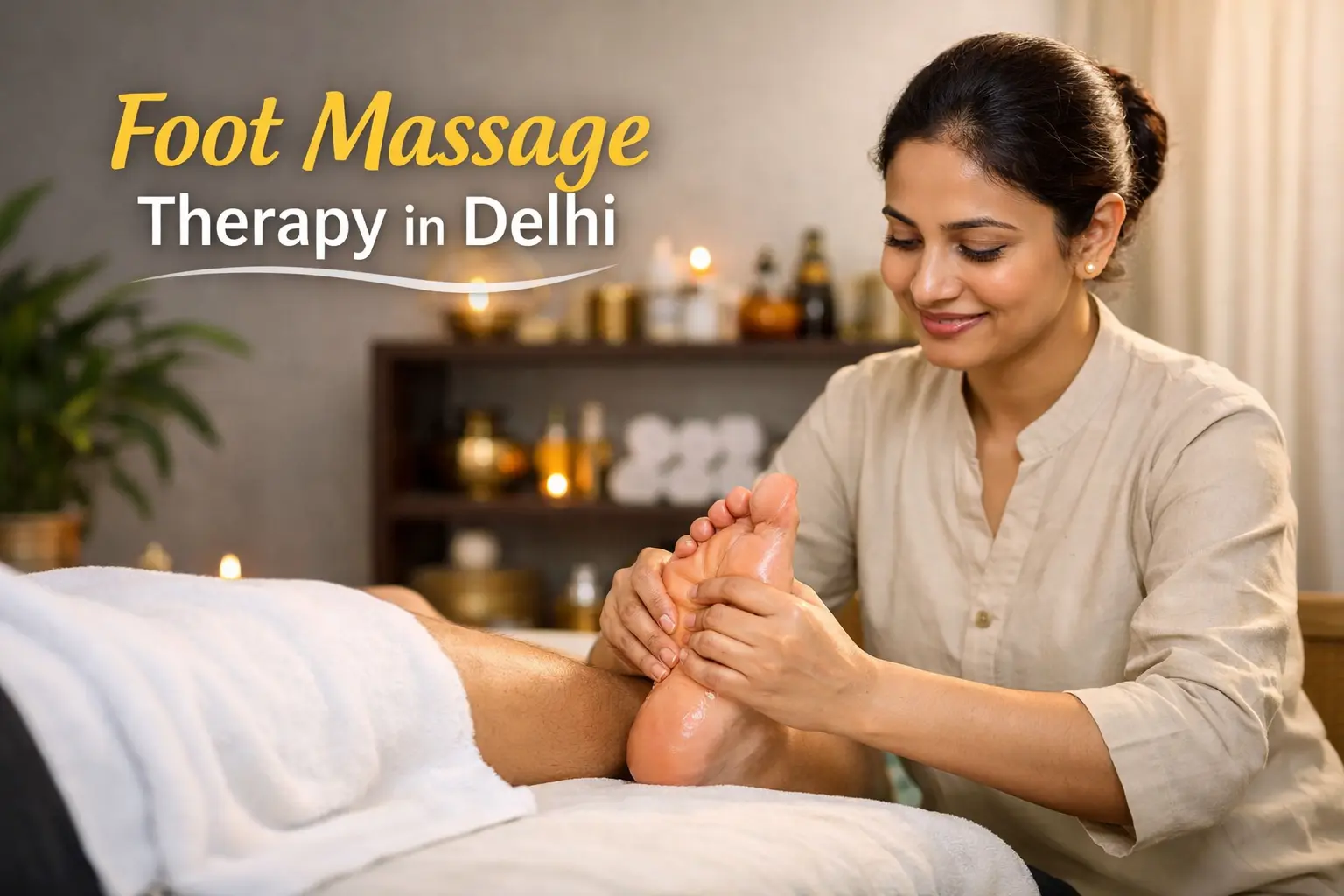
A focused foot massage in Delhi does more than relax tired feet — it improves circulation, reduces swelling, eases pain and supports whole-body wellness. At Sunshine Skin & Hair Clinic, our foot massage therapy blends Ayurvedic techniques (Kansa thali / Kansa vatki), reflexology, and clinical best practices to deliver measurable results in South Delhi (Safdarjung Enclave) and West Delhi (Bali Nagar).
Below you’ll find everything: benefits, therapy types, step-by-step what to expect, home methods, and why our clinic’s approach stands out.
What is foot massage therapy?
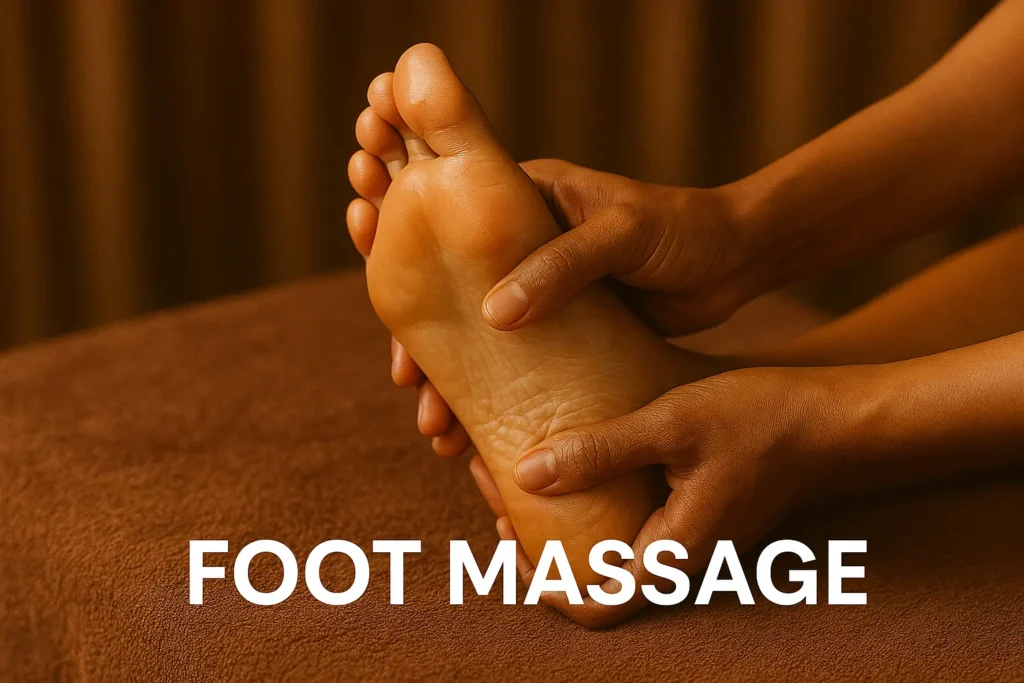
Foot massage therapy includes several techniques that target muscles, connective tissue, and reflex points in the feet. Common forms include:
- Reflexology: Pressure applied to mapped reflex points that correspond to organs and systems.
- Ayurvedic Kansa thali / Kansa vatki massage: Using a Kansa (bronze) bowl to massage the sole and ankle; the metal is believed to balance energies and soothe joints.
- Thai foot massage: Includes rhythmic thumb pressure and gentle yoga-style stretches for the lower leg.
- Therapeutic oil foot massage: Warm medicated oils combined with kneading and long strokes to improve circulation and moisturize skin.
- Machine-assisted foot massage: Devices that provide compression and vibration for repetitive maintenance care.
Each approach targets different goals: pain relief, circulation, relaxation, or reflex-mediated balance.
Key benefits of foot massage (evidence-backed)
- Reduced foot, ankle and calf pain by relaxing muscles and improving blood flow.
- Better circulation and reduced edema (common in desk jobs and pregnancy) through manual lymphatic stimulation.
- Improved sleep and reduced stress via activation of the parasympathetic nervous system.
- Enhanced mobility and reduced plantar fasciitis symptoms when combined with targeted exercises.
- Reflexive whole-body support — reflexology may help digestive comfort, headache relief, and hormonal balance for some patients.
What to expect in a clinical foot massage session
- Brief assessment: We ask about pain, circulation, allergies, and footwear habits.
- Cleansing and warming: Feet are cleaned and gently warmed (steam or warm towel).
- Technique selection: Therapist chooses Kansa thali, reflexology, Thai strokes or oil massage based on need.
- Therapy (25–60 minutes): Controlled pressure on reflex points, rolling of the sole, ankle mobilization and calf work.
- Finish & aftercare: Moisturizer or medicated oil applied, and you receive simple exercises and footwear advice.
We use medical-grade oils and single-use towels to maximize hygiene.
Kansa Thali & Kansa Vatki — what are they?
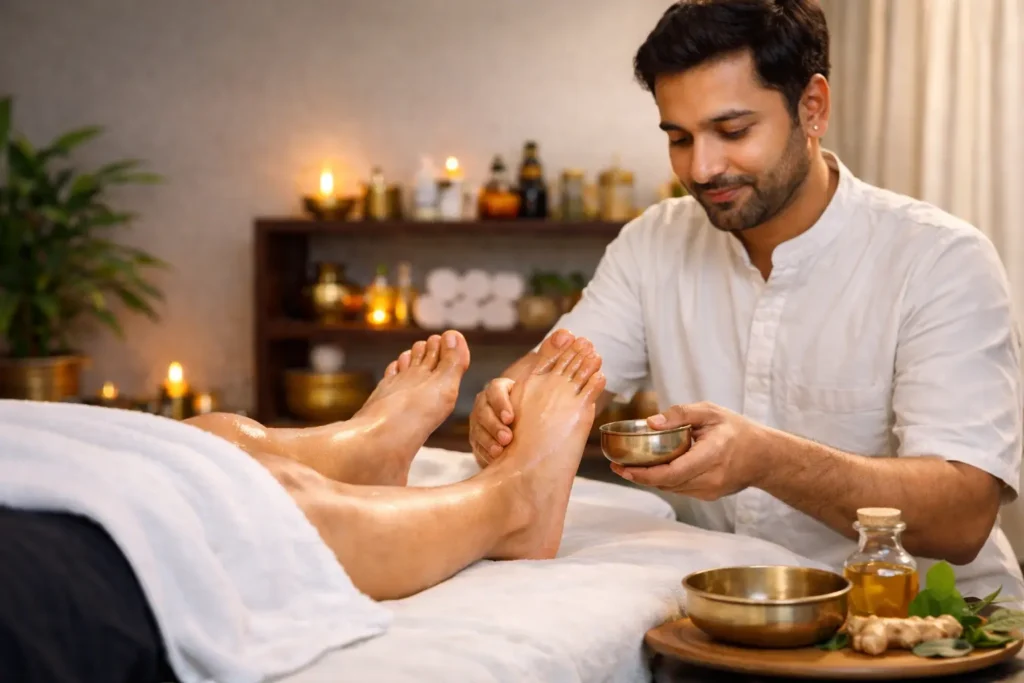
- Kansa thali uses a circular bronze bowl (Kansa) to massage the sole. The metal produces a cool, grounding sensation and glides smoothly with oil.
- Kansa vatki is similar but often uses a smaller rounded tool for focused pressure on reflex points.
Patients report quick relief from joint ache and a pleasant cooling aftereffect. We pair Kansa techniques with short calf stretches and orthotic recommendations for lasting gains.
Foot massage at home — safe methods
You can perform useful self foot massage with minimal tools:
- Self foot massage: Use thumb pressure along the arch and circular motions at the heel for 5–10 minutes daily.
- Kansa at home: If you own a Kansa bowl, glide it with warm oil over the sole — never press too hard and test temperature first.
- Foot massage machines: Good for maintenance; prefer models that offer adjustable intensity and heat.
- DIY reflexology: Focus on the inner arch for spine-related discomfort and the ball of the foot for chest/upper-body reflexes — but keep pressure gentle.
Always stop if you feel sharp pain, numbness, or skin irritation.
Who should avoid or take precautions?
- People with open wounds, fungal infections, blood clots (DVT) or recent lower-limb surgery should avoid or consult a doctor.
- During pregnancy, avoid deep pressure on specific reflex points (we provide pregnancy-safe protocols).
- Individuals with uncontrolled diabetes should consult both physician and podiatrist before deep foot work.
What other clinics miss — our difference
- Clinical screening: Many spas skip vascular and neuropathy checks. We assess blood flow, neuropathy risk and footwear habits.
- Integration with dermatology: Our foot treatments align with skin care and fungal-care protocols — essential for diabetic or athlete’s foot patients.
- Therapist training: Our therapists receive medical training in pressure points and contraindications (not just spa training).
- Custom follow-up plan: We prescribe exercises, footwear changes, and orthotic referrals when needed.
- Hygiene & single-use supplies: We never reuse foot soak water or unsterilized instruments.
These features reduce risk and produce longer-lasting benefits compared with standard spas.
Why Sunshine Skin & Hair Clinic is a top choice in Delhi
- Medically supervised foot therapy under Dr. Namrata Ghai (21 years’ experience).
- Two convenient clinics: Safdarjung Enclave (South Delhi) & Bali Nagar (West Delhi).
- Affordable tiered pricing so patients start with a trial session and then commit to courses when they see results.
- Advanced options: Kansa thali, reflexology packages, and medical compression devices for swelling.
- Holistic pathway: We combine foot massage with podiatric referrals, physiotherapy, and dermatology as needed.
Typical cost (indicative — Delhi market)
- Basic foot massage (30 min): ₹500–₹1,200
- Therapeutic/reflexology (45–60 min): ₹1,000–₹2,500
- Kansa thali or specialized package: ₹1,200–₹3,000
- Machine-assisted maintenance: subscription or single-session options available
Ask for written pricing and package discounts at the clinic.
People Also Ask — concise answers (snippets)
Which oil is best for foot massage?
Light sesame oil, mustard oil (for warming), or medicated ayurvedic oils (like Mahanarayana mixed blends) work well — choose based on skin sensitivity.
How to do Kansa vatki foot massage?
Warm the Kansa bowl slightly, add oil, and glide the bowl around the sole with medium pressure. Focus on arches and heel; avoid excessive force.
Why does foot massage feel so good?
Feet have dense nerve endings and reflex points; massage stimulates circulation and releases endorphins, producing deep relaxation.
Where to avoid foot massage during pregnancy?
Avoid deep pressure on the inner ankle and specific reflex points known to trigger uterine activity; always use pregnancy-safe protocols.
What is foot massage good for?
It helps pain relief, circulation, edema reduction, stress relief, and can complement treatment for plantar fasciitis and neuropathic discomfort.
How to give a foot massage?
Start with warm soak, apply oil, use thumbs for arch pressure, then knead heel and stroke toes; finish with ankle mobilization.
What is a Thai foot massage?
A Thai foot massage uses rhythmic thumb pressure over reflex points plus stretches and sometimes a wooden stick for reflex stimulation. It blends Thai and reflexology principles.
Book your foot therapy — practical tips
- Arrive with clean feet and short nails.
- Bring a list of any foot issues or medical conditions.
- Start with a single therapeutic session to assess response.
- Follow recommended footwear and exercises to prolong benefits.
Final note
A professional foot massage in Delhi can rapidly improve comfort and mobility. When performed within a medically integrated clinic—like Sunshine Skin & Hair Clinic—you gain safety checks, combined care and lasting results. Book a consultation today to find the right foot therapy for your needs.