


Abhyanga is the classical Ayurvedic full-body oil massage that restores balance, improves circulation and calms the nervous system. If you search for “Abhyanga massage in Delhi” or “Abhyanga massage near me”, read on. Below, you’ll find clear explanations, practical tips, and clinic-level details so you can choose the best, safest care in South Delhi (Safdarjung Enclave) or West Delhi (Bali Nagar).
What is Abhyanga and why choose it?
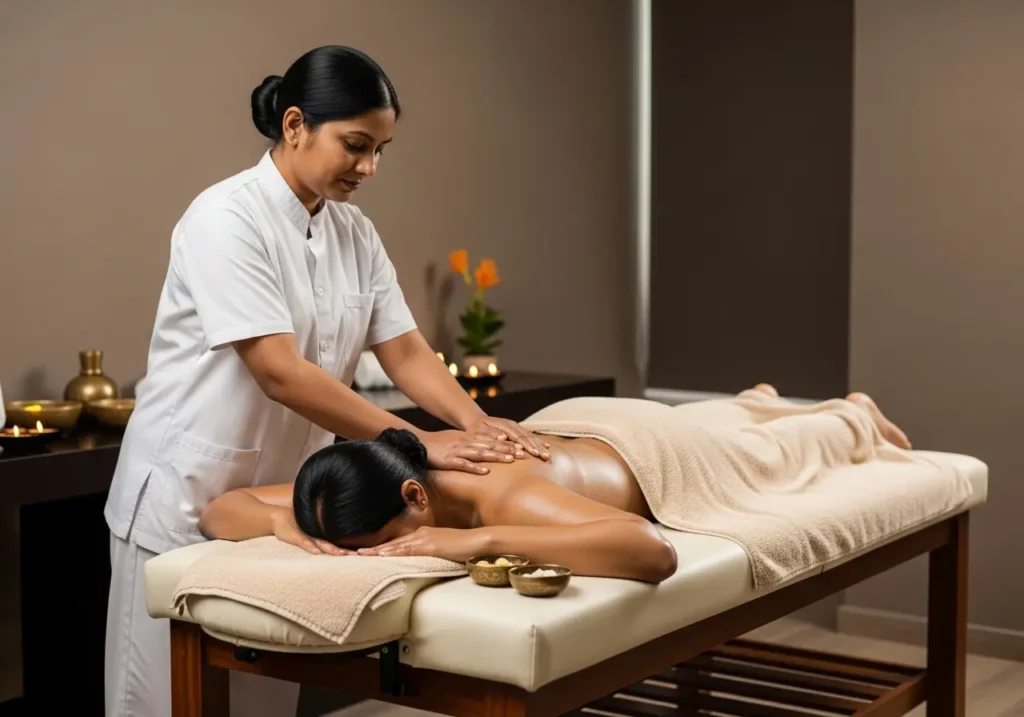
Abhyanga uses warm, medicated herbal oils and rhythmic strokes to nourish tissues and support detoxification. Moreover, the treatment soothes tired muscles, and consequently it improves sleep and skin tone. For many clients, Abhyanga provides immediate relaxation; over time, regular sessions reduce stiffness and enhance mobility. Therefore, Abhyanga works both as a weekly wellness ritual and as part of a deeper Panchakarma programme.
Key benefits of Abhyanga massage
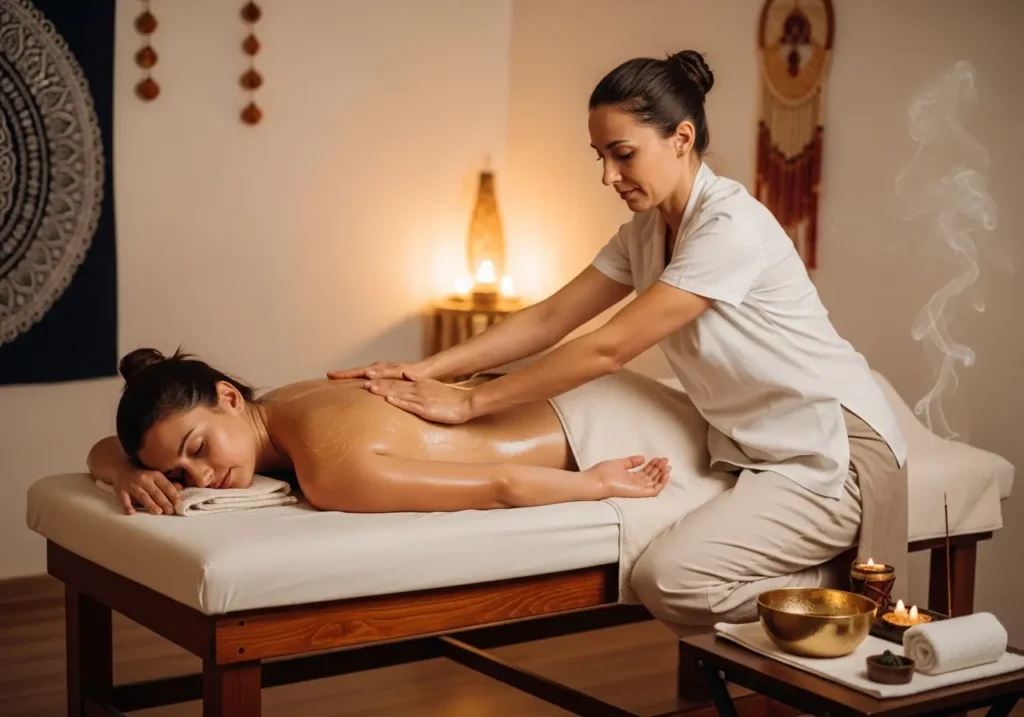
- Deep relaxation and reduced stress.
- Improved blood and lymph circulation, which supports detox and swelling reduction.
- Nourished, glowing skin and better skin texture.
- Reduced muscle tension and joint stiffness; better mobility.
- Support for sleep quality and nervous-system balance.
- When combined with exercise and diet, Abhyanga can help complement weight-management efforts.
In addition, Abhyanga strengthens the mind-body connection. Many patients report clearer thinking and less daytime anxiety after a short course of treatments.
The seven positions of Abhyanga — sequence and purpose
A classical Abhyanga uses seven positions to treat the whole body methodically. First, therapists work in a sitting position to prepare the neck and shoulders. Next, they move to supine (front of body) for chest and abdomen. Then they treat the left lateral side, return to supine for additional attention, and treat the right lateral side. Afterwards, they revisit supine for final checks and finish in sitting for scalp and closure. By following this sequence, therapists ensure even oil distribution and balanced results.
To summarise the sequence:
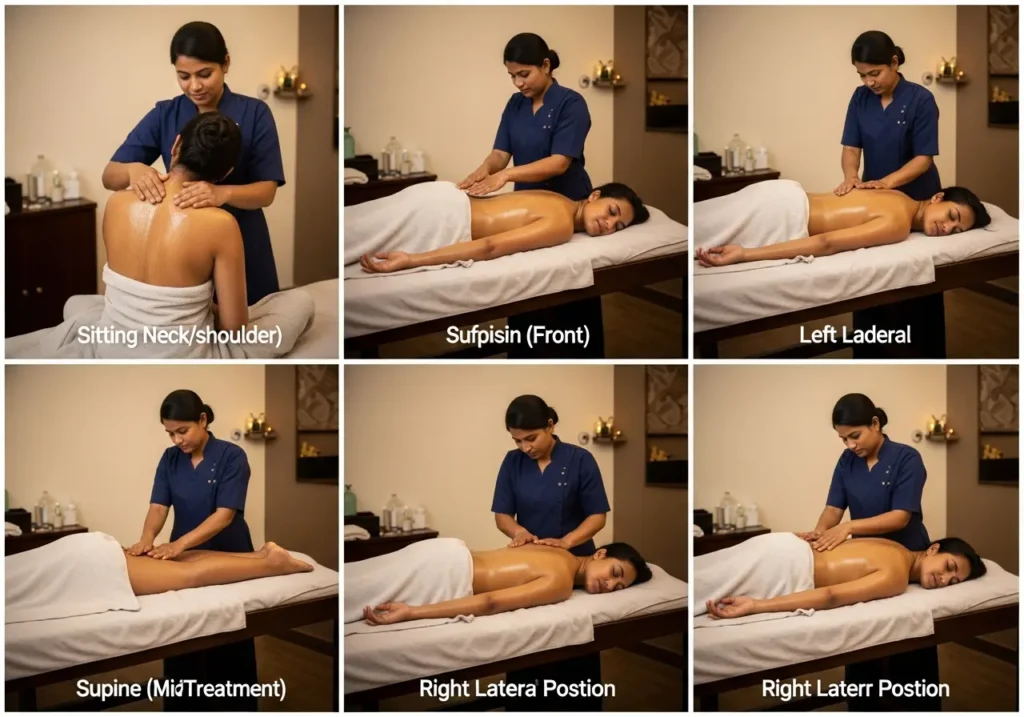
- Sitting (initial warm-up)
- Supine (front of body)
- Left lateral (left side lying)
- Supine (focused front work)
- Right lateral (right side lying)
- Supine (final anterior checks)
- Sitting (final scalp and neck work + closure)
Because each position serves a purpose, skilled therapists avoid shortcuts. As a result, you gain full therapeutic benefits rather than a rushed “massage.”
Oils and techniques — how we personalise treatment
We choose oil based on your constitution and condition. Traditionally, sesame oil serves as the base; however, we also use coconut oil in hot weather and medicated oils (for example, Mahanarayana or Dashamoola) when patients need pain relief or nerve support. Furthermore, therapists adjust pressure and stroke length to match each person’s needs. They apply long flowing strokes toward the heart, knead joints with circular motions, and stimulate marma points where appropriate.
Therefore, the session feels therapeutic and comfortable rather than one-size-fits-all.
Typical session lengths and pricing (Delhi — indicative)
- Short session (30–45 min): ₹800 – ₹1,800.
- Full Abhyanga (60–90 min): ₹1,500 – ₹3,500.
- Package (5–10 sessions / Panchakarma bundle): ₹6,000 – ₹25,000 depending on add-ons.
We recommend a trial session first. Then, if you feel benefit, consider a short course or integrate Abhyanga into a larger Panchakarma plan.
Safe home Abhyanga — practical steps
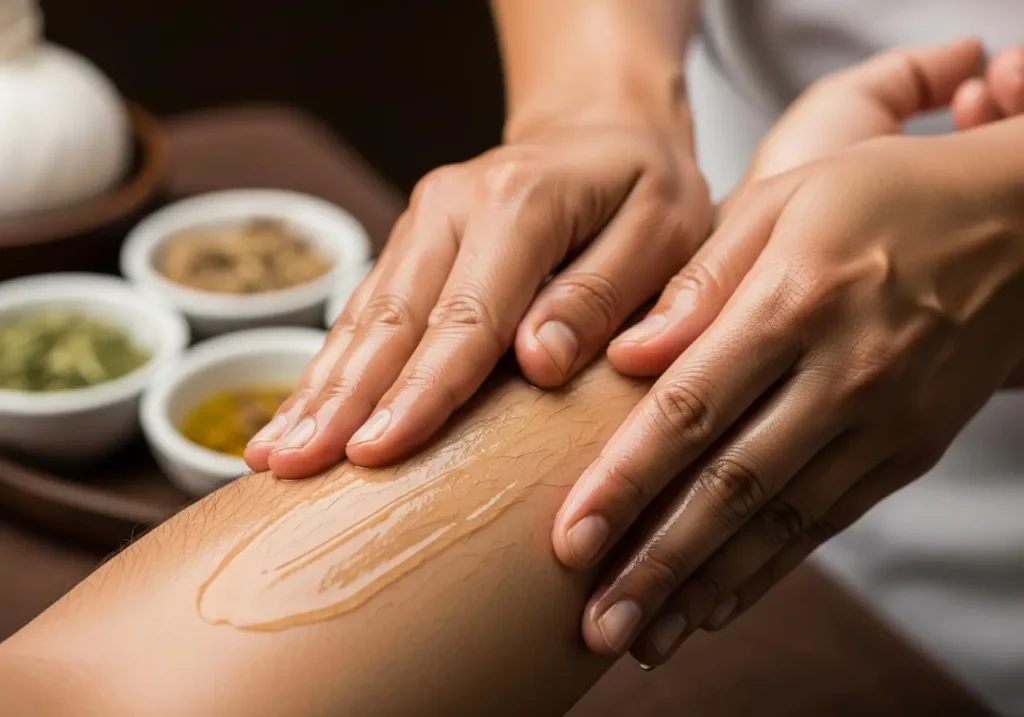
You can practise a simple self-Abhyanga safely at home. First, warm a small amount of sesame oil until lukewarm (test on your wrist). Then, apply oil to the scalp in circular motions. Next, massage hands and feet — these areas hold many marma points. After that, use long strokes on arms and legs toward the heart. Finally, perform gentle joint circles and rest for 10–20 minutes before taking a lukewarm shower.
However, avoid hot oil and deep pressure if you have active inflammation or injury. Also, do not attempt medicated oil protocols at home without guidance.
What many clinics miss — and why that matters
Many centres call a simple rub “Abhyanga,” but they miss essential clinical steps. For example:
- They often skip medical screening. At Sunshine, we check for contraindications before any session.
- They sometimes reuse oil; we always use fresh, lab-tested oil for therapeutic courses.
- They frequently lack training in classical sequences; we train therapists in authentic Panchakarma technique.
- They provide no aftercare or home routine; we give each patient a practical plan to maintain gains.
Therefore, choose a clinic that treats Abhyanga as a therapeutic care pathway and not merely a spa service.
Why choose Sunshine Skin & Hair Clinic for Abhyanga in Delhi?
- Clinical oversight by Dr. Namrata Ghai with over 21 years’ experience.
- Trained Panchakarma therapists who follow classical sequences and safety protocols.
- Premium, single-use, lab-tested medicated oils.
- Integrated care: we combine Abhyanga with Swedana (steam), posture advice, physiotherapy and dermatology when needed.
- Two convenient branches in South Delhi (Safdarjung Enclave) and West Delhi (Bali Nagar).
- Transparent pricing and staged packages so you can try before committing.
Because we combine tradition with clinical safety, patients feel better faster and sustain results longer.
People Also Ask — short, answers
What is Abhyanga massage?
Abhyanga is the Ayurvedic full-body oil massage that uses warm medicated oils and rhythmic strokes to nourish tissues, improve circulation and calm the nervous system.
What are the 7 positions of Abhyanga?
Sitting; supine (front); left lateral; supine; right lateral; supine (final checks); sitting (closure). Each position ensures complete, balanced treatment.
How long is an Abhyanga massage?
A full Abhyanga session lasts 60–90 minutes, though 30–45 minute sessions are available for maintenance.
Which oil is best for Abhyanga?
Sesame oil is classical; medicated oils are selected based on your needs. Coconut oil suits hot climates or very dry skin.
How to do Abhyanga at home?
Warm sesame oil to lukewarm, use long strokes toward the heart, massage joints in circular motions, rest for 10–20 minutes and rinse. Avoid hot oil and high pressure.
Aftercare and practical tips
- Rest 15–30 minutes after the session.
- Prefer lukewarm water for the first shower.
- Follow the clinician’s diet and lifestyle recommendations (usually light, warming foods for a few hours).
- Continue the short home routine to extend benefits.
Final note
Abhyanga brings real, measurable benefits only when therapists follow classical technique and clinical safety. If you want authentic Abhyanga massage in Delhi — supervised, personalised and affordable — Sunshine Skin & Hair Clinic offers structured programmes at both South and West Delhi branches. Book a trial session and experience the difference between true Panchakarma care and a simple spa rub.